Senior Editor: Alan Agbele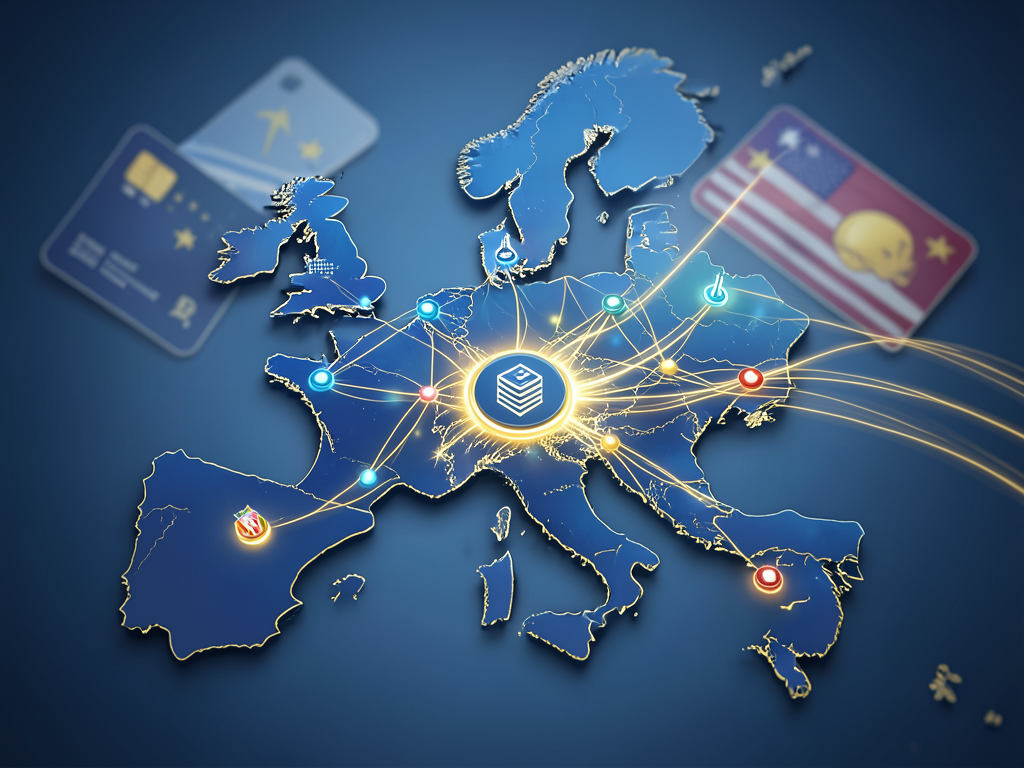
A consortium of European payment processors is preparing to launch a unified network designed to counter the long-standing dominance of American card companies. The collaboration, which brings together major national players from across the continent, marks the most serious attempt yet to establish a homegrown alternative to Visa and Mastercard in the rapidly digitizing payments landscape.
Consolidation in European Payments
Several of Europe's largest payment service providers have agreed to combine their domestic networks into a single interoperable system. The partners include companies that currently operate separate national infrastructure in countries such as France, Germany, Italy and Spain. By pooling resources, they hope to achieve the scale needed to rival the US card networks, which currently process a majority of European card transactions.
The exact structure of the joint venture is still being finalized, but sources indicate it will function as a neutral clearinghouse that banks and merchants can use across borders. This approach would eliminate the need for multiple bilateral agreements and potentially lower transaction costs for businesses operating in several European markets.
Strategic Rationale
The push for a European alternative comes amid growing regulatory pressure on US card networks. The European Union has repeatedly targeted interchange fees and anti-competitive practices through legislation such as the Payment Services Directive (PSD2) and the interchange fee cap. Yet despite these efforts, Visa and Mastercard still handle roughly two-thirds of all card transactions in Europe, according to industry estimates.
European payment groups argue that relying on US infrastructure leaves the continent vulnerable to extraterritorial sanctions and fee changes imposed by American regulators. A joint European network would give local players greater control over pricing, data residency and innovation timelines. It would also allow them to develop features tailored to European consumer preferences, such as instant payments or integration with the European Central Bank's digital euro initiative.
Why This Matters
For European merchants and consumers, the joint venture could mean lower transaction costs and more choice in payment methods. Currently, Visa and Mastercard's dominance gives them significant pricing power, and their fees represent a major expense for retailers with thin margins. A competitive European rival would likely force the incumbents to reduce fees or improve services to retain market share.
Banks and fintech startups also stand to benefit. The new network could enable faster cross-border payments without relying on correspondent banking or US-based intermediaries. This would be particularly valuable for small and medium-sized enterprises that struggle with the complexity and cost of international transactions today.
On a broader level, the initiative reflects a growing trend of regional payment systems pushing back against US tech dominance. Similar efforts are underway in India with RuPay, in China with UnionPay and in several African countries with pan-African networks. If Europe succeeds, it could accelerate the fragmentation of the global payment system into regional blocs. That shift would reduce the systemic risk of a single point of failure but could also create new interoperability challenges for global commerce.
What Comes Next
The European groups still face significant hurdles. Building a network that matches the reliability and reach of Visa or Mastercard will require years of investment and testing. They must also persuade merchants and banks to switch from established systems, a process that typically involves complex migration projects and upfront costs.
The consortium plans to submit its model to European regulators for antitrust approval in the coming months. If given the green light, the network could begin pilot operations in select markets by 2026. Success will depend on whether the partners can maintain cohesion and resist the temptation to prioritize national interests over the collective goal. For now, the largest European payment groups have made clear that they see unity as the only path to breaking America's grip on the region's digital payments.