Senior Editor: Alan Agbele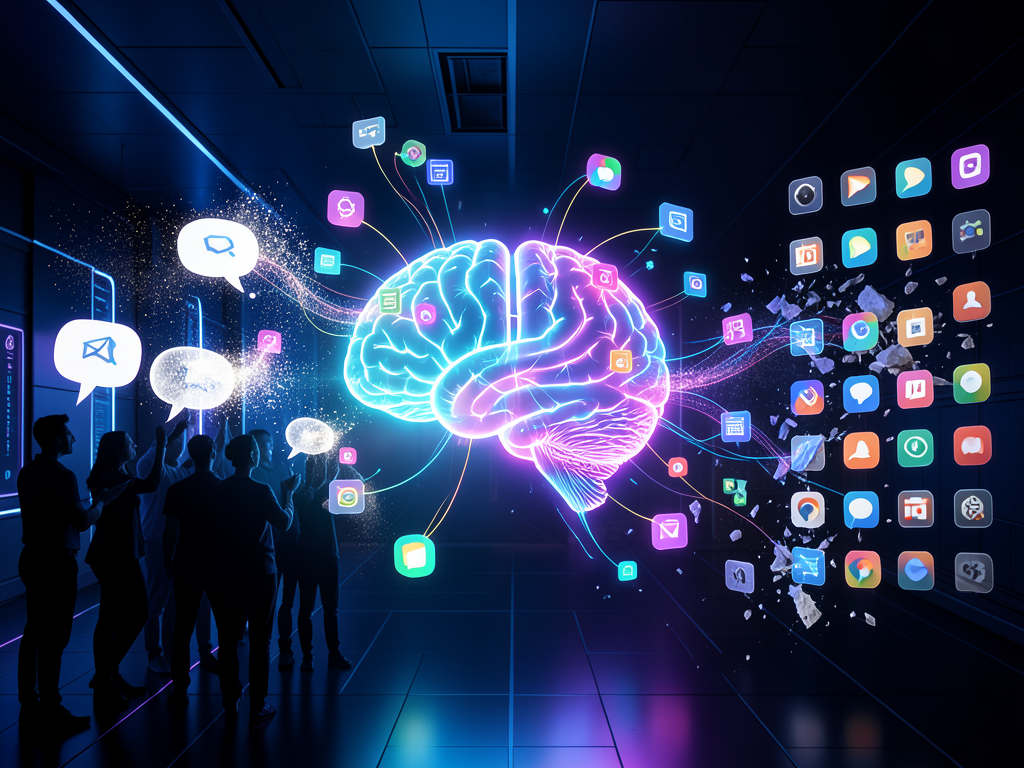
OpenAI is quietly assembling the infrastructure to position ChatGPT as a genuine alternative to the app store model, turning a chatbot into a discovery and execution engine for third-party software. If the strategy takes hold, users and AI agents could soon interact with applications through natural language, bypassing the traditional install-and-launch paradigm that Apple and Google have dominated for over a decade.
The Pieces of a New Platform
OpenAI has not reached the scale of the Apple App Store or Google Play, but its recent product additions form the skeleton of a parallel distribution channel. Custom GPTs allow users to create tailored AI assistants for specific tasks, while the GPT Store provides a marketplace to discover them. Actions, meanwhile, enable these assistants to call external services directly, bridging the gap between conversation and execution.
- Custom GPTs: Let users build purpose-built assistants without writing code.
- GPT Store: Offers a searchable catalog of these AI tools for discovery.
- Actions: Connect GPTs to third-party APIs for real-world task completion.
These features turn ChatGPT into more than a chatbot. They make it a runtime environment where software runs on demand, triggered by user intent rather than clicks on app icons.
Why Developers Should Pay Attention
For developers, a ChatGPT-native distribution layer offers a way to reach OpenAI's hundreds of millions of users without paying the typical 15% to 30% commission imposed by Apple and Google. That cost advantage is substantial, especially for startups and indie developers who see profit margins erode under the current app store tax.
Developers, however, face a new set of trade-offs. They depend on OpenAI's API pricing, moderation policies, and the company's roadmap. A platform shift driven by a single provider could carry as much risk as the closed ecosystems they hope to escape.
The Broader Market Context
This is not an isolated experiment. The rise of AI agents, which can plan and execute multi-step tasks, collapses the distance between discovery and action. If an agent can book a flight, order groceries, or file tax documents through a single conversational interface, the need for dedicated mobile apps fades. OpenAI is betting that this agentic future will be governed by its platform rather than by traditional storefronts.
Apple and Google have responded with their own AI initiatives, but their strategies remain tethered to the app-as-install model. That difference in vision could become the defining competitive battle of the next software era.
Why This Matters
The immediate winners stand to be developers who gain a cheaper, more flexible way to ship software and users who get faster, more intuitive access to tools. The longer-term stakes, however, concern control. If OpenAI becomes the primary gateway for agentic commerce, it will wield enormous power over what software gets used, how it is monetized, and what data flows through the system. That concentration of gatekeeping could invite regulatory scrutiny similar to what Apple and Google already face.
The app store model is not dying tomorrow, but its moat is shrinking. OpenAI has identified the weak spot: the friction of installation. By removing that friction and making software act as conversation, the company is forcing the industry to rethink what a platform truly is. Not every bet will pay off, but the direction is clear and the pressure on incumbents is mounting.