Editor: Porcia Akua Holmes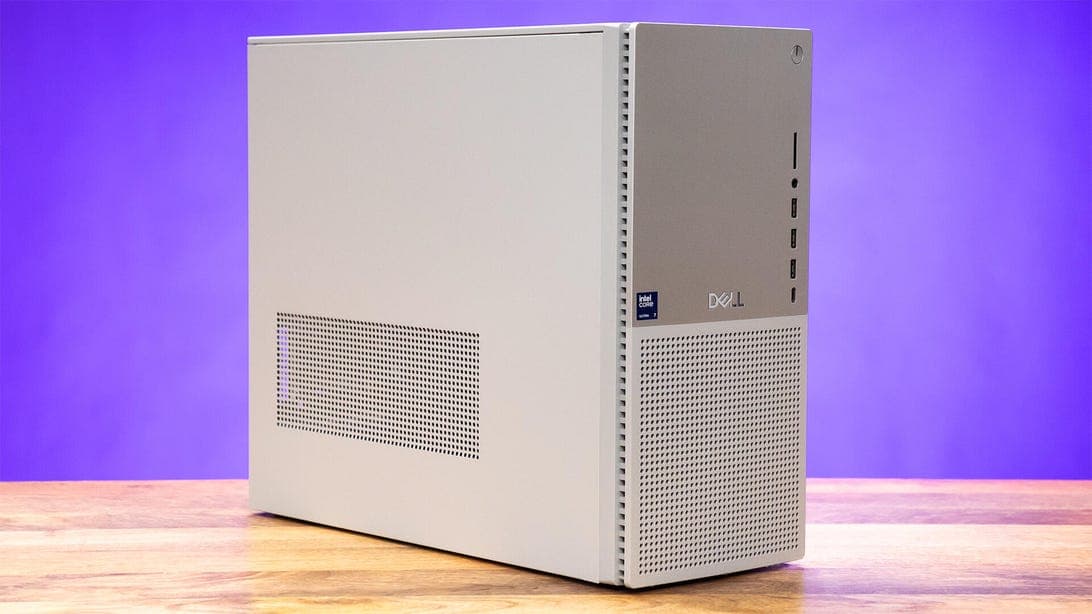
Dell has introduced the Tower Plus (EBT2250), a desktop that pairs a classic tower chassis with current-generation hardware, aiming at users who prioritize upgradability and performance over ultra-compact designs. The system arrives as many manufacturers push toward smaller form factors, signaling that demand for traditional tower PCs remains strong among professionals and power users.
Classic Design Meets Modern Hardware
The Tower Plus retains the understated aesthetic of Dell's business-class machines, with a matte black finish and minimal front panel. Port selection includes USB-C, USB-A, HDMI, and DisplayPort outputs, along with legacy connections for older peripherals. Inside, the motherboard uses a standard ATX layout but employs Dell-specific connectors for power and front I/O, which could complicate third-party replacements.
Performance and Upgrade Path
Under the hood, the EBT2250 supports Intel's 14th-gen Core processors up to the Core i9-14900K, paired with up to 128GB of DDR5 memory. Storage options include dual M.2 NVMe slots and two SATA bays for traditional hard drives. Graphics come via an optional NVIDIA GeForce RTX 4060, though the power supply is capped at 500 watts, limiting future GPU upgrades. Key specifications include:
While the use of standard RAM and storage makes basic upgrades straightforward, the proprietary power supply and motherboard layout mean significant component swaps require Dell-specific parts. This approach mirrors Dell's strategy with its Precision workstations, offering a middle ground between fully locked-down systems and fully customizable builds.
Market Positioning
The Tower Plus sits between Dell's XPS desktop line, which emphasizes sleek design, and the OptiPlex series, which focuses on enterprise manageability. By reviving the classic tower format, Dell targets users who need reliable performance for tasks like video editing, software compilation, or data analysis but prefer a prebuilt system with warranty support. The EBT2250 also competes with offerings from HP and Lenovo in the traditional desktop segment, where serviceability remains a selling point.
Why This Matters
The launch of the Tower Plus signals that Dell sees sustained demand for upgradeable tower PCs despite the rise of all-in-ones and mini PCs. For consumers, this means more choice in a market increasingly dominated by soldered components and sealed chassis. However, the proprietary elements embedded in the design may frustrate users who expect full compatibility with off-the-shelf parts. The real test will be whether Dell can balance its desire for ecosystem lock-in with the openness that tower buyers traditionally expect.