Senior Editor: Alan Agbele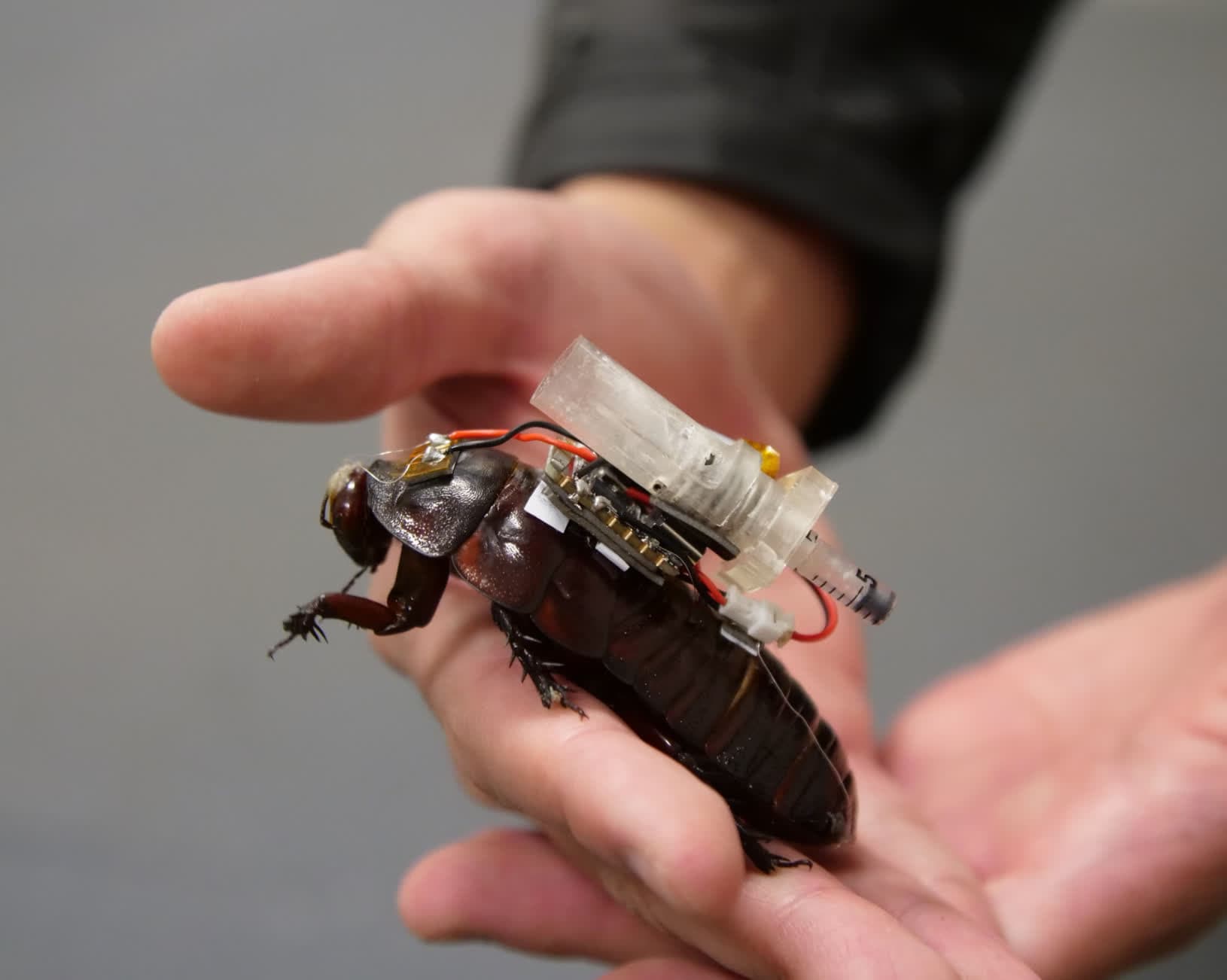
Researchers at the University of Queensland have developed cyborg cockroaches armed with tiny syringes and cameras that could one day deliver life-saving medicine to people trapped in disaster rubble. The insects, termed paraborgs, merge a living cockroach's natural mobility with miniature medical hardware to navigate terrain that stymies larger robots.
How the Paraborgs Work
The development represents a collaboration between biorobotics researchers at the University of Queensland and biomedical engineers at the University of New South Wales. Each cyborg cockroach carries two key components:
The insect's own nervous system is not directly hacked; instead, electronic stimulation guides its movement. This approach preserves the cockroach's innate ability to traverse uneven and collapsed structures that wheeled or legged robots cannot handle.
Why This Matters
The practical implications for disaster medicine are significant. After earthquakes or building collapses, first responders often cannot reach victims for hours. A cyborg cockroach carrying a syringe could deliver time-critical treatments such as epinephrine for allergic reactions or naloxone for opioid overdoses long before human rescuers arrive. For patients bleeding or in shock, even a few minutes of earlier medication could mean the difference between life and death.
The economic advantage is also clear. Cockroaches are cheap and abundant, making each paraborg a low-cost disposable asset compared to specialized rescue robots. This cost profile could allow emergency services to deploy dozens of them simultaneously across a disaster site.
Challenges Ahead
The road to real-world use, however, is steep. The research team must solve several technical hurdles: ensuring the syringe penetrates clothing or debris reliably, maintaining precise injection depth, and keeping the electronics powered long enough to complete a mission. The cyborg cockroaches also raise ethical questions about using living insects as disposable medical tools. Critics argue that such applications blur the line between animal welfare and technological benefit. Moreover, regulatory frameworks for biohybrid medical devices are essentially nonexistent, meaning any field deployment would require new safety and oversight rules.
Battery life remains another constraint. The current prototypes operate for only a limited window, forcing teams to balance mission time against the risk of losing control. Despite these obstacles, the project demonstrates that the convergence of insects and machines is advancing rapidly. The University of Queensland team plans further refinements, including swarm coordination and automated target detection, to make the paraborgs more autonomous and practical for emergency use.