Editor: Porcia Akua Holmes
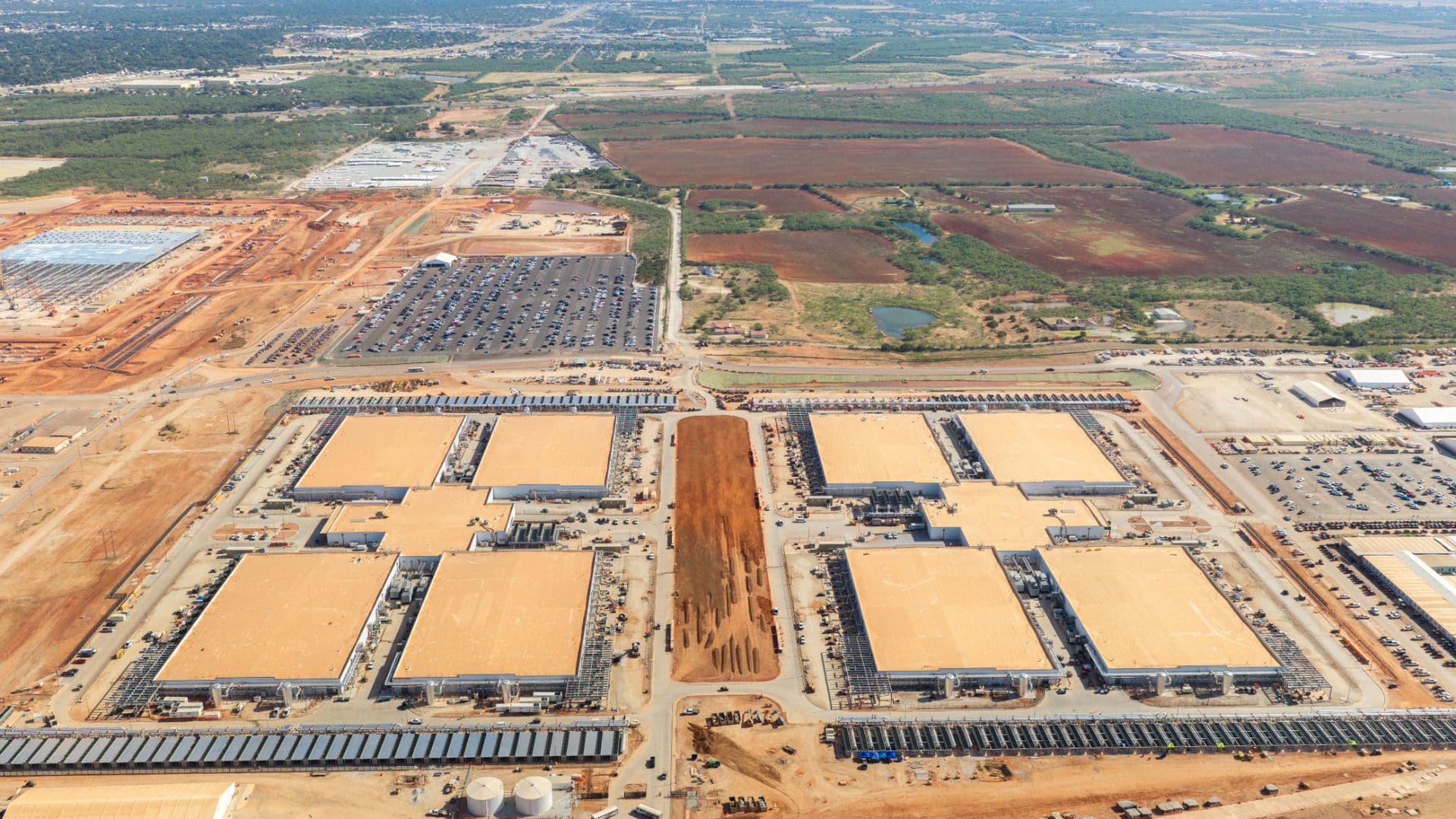
China has quietly assembled the first 120 megawatts of an AI data center campus in Inner Mongolia that its developers claim cost roughly one-fifth of comparable US builds. The site, called Galaxy, is being developed by Envision and is designed to reach 800MW of IT capacity by the end of 2027, according to a report from research firm SemiAnalysis.
How Envision Is Rewriting the Data Center Power Playbook
US developers have increasingly turned to on-site gas turbines to work around grid constraints. Envision, however, is taking a different route. The company has installed more than 100GW of wind turbines globally and wants its wind farms to supply over 60% of the electricity needed by Galaxy's first two phases.
Those farms sit about 80 kilometers apart and carry a combined capacity of 420MW. That is well above the 240MW load expected from the first two phases, though wind turbines rarely run at full output. Ulanqab's wind capacity factor sits between 35% and 40%, so Envision is adding four-hour battery storage to keep power flowing when wind drops.
The approach contrasts sharply with the US, where turbine shortages have pushed delivery estimates to 2030. SpaceX has even started manufacturing its own turbine blades to cut generator delays. Envision, by placing generation and storage next to its servers, avoids that bottleneck entirely.
Inside the 800V DC Hall and Shared-Loop Cooling
SemiAnalysis visited a 5MW hall where solid-state transformers take 10kV AC electricity from the grid and convert it directly into 800V DC for server racks. That is a substantial departure from conventional data center power distribution, which typically involves several intermediate conversion stages.
The design removes low voltage transformers, uninterruptible power supplies and rectifiers. Fewer conversion stages can reduce equipment requirements and energy losses, though SemiAnalysis did not provide a measured efficiency improvement for the pilot. The 5MW installation is small relative to the full campus, but it puts the technology into operation at a live facility. Envision plans a larger deployment in later phases, aligning with Nvidia's push for 800V DC distribution in future high-density AI systems.
Cooling follows a similarly unconventional path. Liquid-cooled and air-cooled servers share a single water loop, eliminating conventional central chiller plants. That matters as AI servers generate more heat and demand increasingly sophisticated cooling. Removing central chillers can simplify infrastructure, though the design depends on local climate conditions and the facility's ability to reject heat through its water loop.
Why This Matters
The Galaxy campus changes the competitive calculus for AI infrastructure. If Envision can deliver 800MW by 2027 at a fraction of US costs, the economics of training and serving frontier models shift. Chinese internet companies would gain access to large-scale compute without the power bottlenecks constraining American developers.
US operators face a harder path. Turbine shortages, grid interconnection queues and rising construction costs are already delaying projects tied to Stargate. A cheaper, faster Chinese alternative narrows the infrastructure gap that US policymakers have treated as a strategic advantage. The question is no longer whether China can build at scale, but whether US developers can match the cost and speed of a vertically integrated power model.
The 3GW Ambition Beyond Galaxy
Galaxy is only the first major project in Envision's wider Inner Mongolia plans. SemiAnalysis says the broader buildout adds up to 3GW, with the rest of the capacity yet to be detailed. That scale would make the region a significant cluster for AI compute in Asia.
The two unnamed internet companies behind Galaxy have not been disclosed. Their identity will matter for how the capacity is used, whether for training large models or serving inference at scale. For now, the campus stands as a proof point: China can pair renewable generation, battery storage and advanced power electronics inside a single data center boundary.