Senior Editor: Alan Agbele
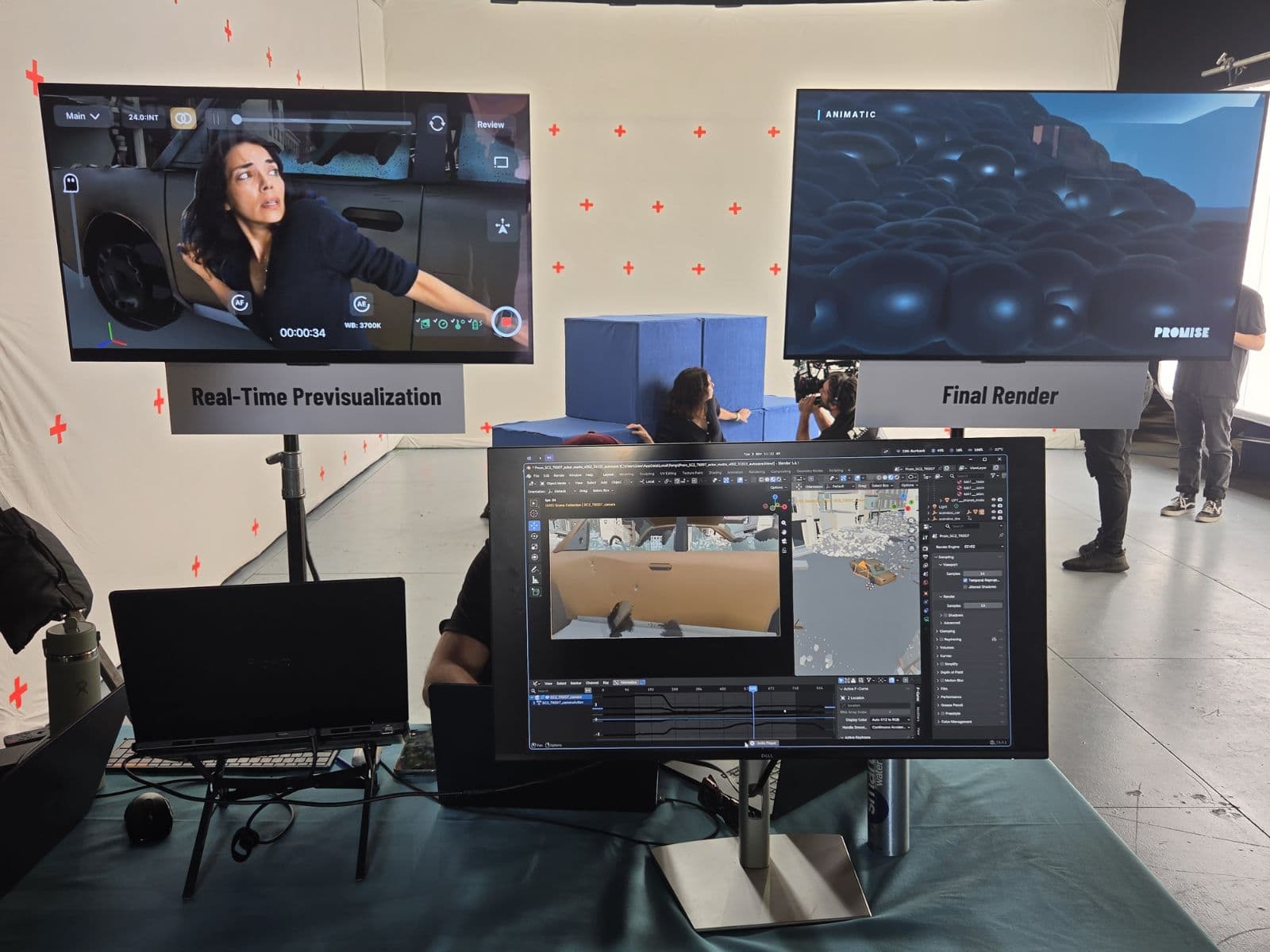
Hollywood's sound stages are being rebuilt around a new center of gravity. The green screen, for decades the default tool for placing actors in imaginary worlds, is giving way to the Gray Box and the LED volume, a shift that moves AI from postproduction cleanup into the middle of the shoot itself.
The Shift Away From Green Screen
For years, the green screen was a compromise. Actors performed against a blank color, trusting that a later team would build the world around them. The Gray Box approach changes that equation by giving performers and directors a rendered environment in real time.
The technique relies on LED volumes and camera tracking. A production can display a photoreal backdrop that moves with the camera, so parallax and lighting behave as they would on location. AI fills the seams where the physical set ends and the digital world begins.
The result is a shoot that looks less like a blank stage and more like a controllable location. Directors can see the final frame while the actor is still in it.
Why This Matters
The move from green screen to gray box changes who holds leverage on a production. When the background is generated on set, the visual effects vendor is no longer the sole gatekeeper of the final image. Cinematographers and production designers gain direct control over lighting and composition.
Studios also gain a financial lever. Location shoots carry travel, permitting and weather risk. A stage that can render a jungle or a city skyline on demand reduces those variables. The trade-off is a heavier dependence on the technology vendor and on the stability of the real-time pipeline.
Crews feel the shift directly. Actors no longer perform to a blank wall, which can improve performance. Camera teams, however, must learn to light for LED walls rather than for postproduction replacement. The skill set of a modern sound stage is being rewritten in real time.
The Business Case for Virtual Stages
Virtual production is not a novelty for its own sake. It answers a concrete problem: the cost and unpredictability of shooting on location. A stage that can be reconfigured in hours rather than days changes the economics of a schedule.
AI adds a second layer of savings. Instead of building every set extension practically, a production can generate the far edges of a scene and composite them live. That reduces both build time and the postproduction hours traditionally spent on cleanup.
The risk sits with smaller productions. LED volumes and real-time pipelines carry high upfront costs. Independent filmmakers may find themselves priced out of the very tools that make larger productions more efficient.
What Changes for the People on Set
The most visible change is for actors. Performing against a rendered world rather than a green wall gives them eyelines and lighting cues that were previously imagined. Directors report faster iteration because the frame is visible immediately.
Cinematographers face a steeper adjustment. Lighting a green screen and lighting an LED wall are different disciplines. The wall emits its own light, which can contaminate a shot if not managed carefully. Camera teams must now think about the screen as both a backdrop and a light source.
Visual effects artists see their role move earlier in the schedule. Instead of fixing a scene months after the shoot, they build the environment before the camera rolls. That shift demands closer collaboration between departments that once worked in sequence.
The Road Ahead for Hollywood Sound Stages
The green screen will not disappear overnight. It remains cheaper for productions that cannot afford a volume or that need heavy postproduction flexibility. The Gray Box and LED volume, however, are becoming the default for effects-heavy films that want control on set.
The larger question is standardization. As AI-generated environments become common, the industry will need shared conventions for how those assets are built, stored and handed between departments. Without them, each production reinvents the pipeline.
Hollywood has absorbed new production tools before, from the Steadicam to the digital intermediate. The difference this time is that the tool sits at the center of the shoot, not at its edges. The sound stage is becoming a computing environment as much as a physical one.