Senior Editor: Alan Agbele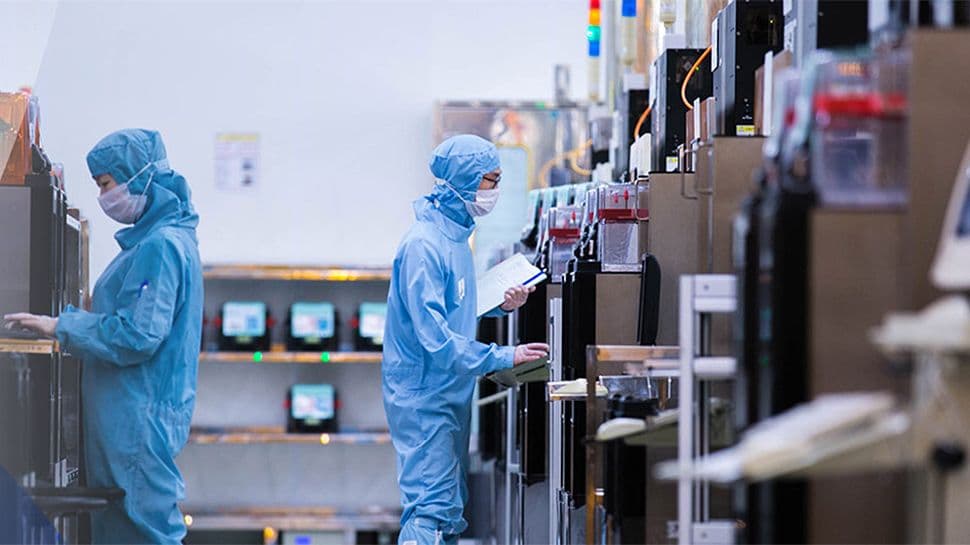
China has reached a milestone in its pursuit of semiconductor self-sufficiency. A state-backed manufacturer in Shanghai has begun mass-producing immersion deep ultraviolet (DUV) lithography machines, with the first units scheduled for delivery this year to foundry SMIC, Hua Hong Semiconductor, and memory maker CXMT, according to a report from The Information.
Production Targets and Domestic Supply Chain
The manufacturer, believed to be state-backed startup Shanghai Yuliangsheng Technology, assembled DUV development teams from several Chinese companies. Output targets call for roughly five machines in 2026 and about 20 in 2027. Most components are domestic, though some critical parts still come from Japan, and delays at local suppliers have held back output this year.
The Technology Gap
Immersion DUV lithography prints 28nm-class features in a single exposure. It can reach 7nm through multipatterning, but that approach adds overlay errors and reduces yield. ASML CEO Christophe Fouquet noted that rising DRAM lithography intensity partly reflects customers replacing multipatterning with cheaper single-exposure EUV. ASML expects to ship about 130 immersion systems in 2026, matching 2025 levels, and plans to increase immersion capacity by 30% in 2027.
Why This Matters
China's push into domestic DUV production is a direct response to tightening U.S. export controls. The MATCH Act, reported out of the House Foreign Affairs Committee in April, would designate SMIC, Hua Hong, CXMT, Huawei, and YMTC as restricted entities by law, cutting off not just new ASML exports but also servicing and technical assistance for installed tools. ASML's installed base in Chinese fabs has been stretched through secondary-channel upgrades over the past two years, and that fleet now faces potential isolation. Even with accelerated production, Chinese immersion DUV tools remain years behind ASML's on performance and yield. Qualifying them for production lines could take many months, and a domestic EUV effort is still in the prototype stage. The outcome will shape whether China can sustain advanced chip production without access to Dutch lithography systems.