Editor: Porcia Akua Holmes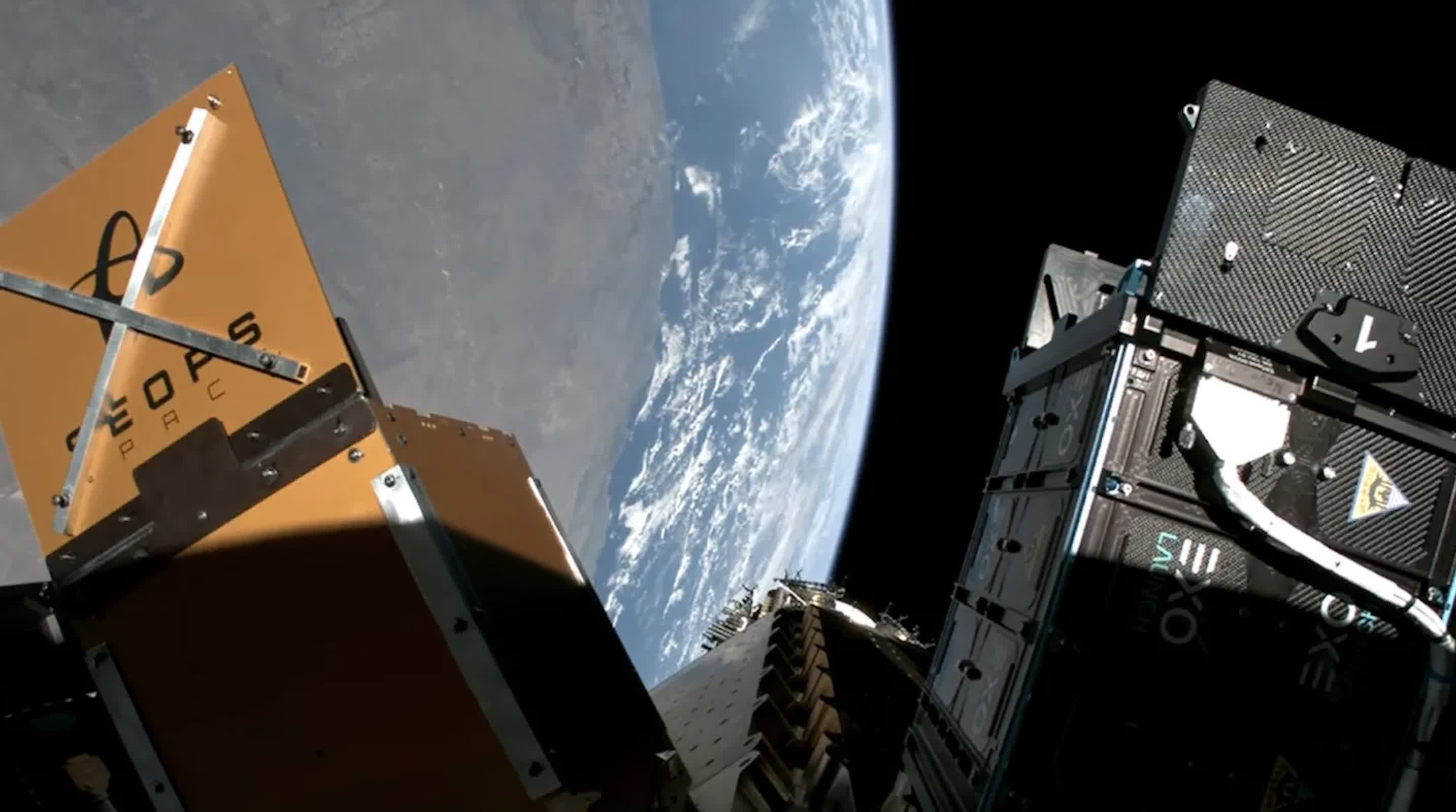
A small satellite is preparing to challenge the decades-old reliance on solar panels for spacecraft power. The BOHR CubeSat will carry City Labs' NanoTritium system into orbit, aiming to prove that betavoltaic cells can generate steady electricity from radioactive decay without sunlight.
How Betavoltaic Power Differs From Existing Systems
Spacecraft today depend almost exclusively on solar panels for missions near the sun or on RTGs for distant probes. RTGs use plutonium-238 to generate heat, which is then converted to electricity. Betavoltaic systems, by contrast, use tritium a less hazardous isotope and produce power through direct semiconductor conversion. The NanoTritium unit built by City Labs is compact enough to fit inside a CubeSat, a class of miniature satellite often used for technology demonstrations.
Why This Matters
If successful, betavoltaic power could open new mission profiles for small satellites. Solar panels become ineffective beyond the asteroid belt or in permanently shadowed craters on the moon. The ability to generate continuous low-level power from a compact source like tritium would allow CubeSats to operate for years without sunlight. This could reduce mission costs and enable distributed sensor networks in deep space. For commercial satellite operators, it offers a potential backup power source that does not degrade as quickly as batteries in cold environments. The demonstration also advances regulatory understanding of small nuclear power sources in space, a step toward broader adoption of atomic batteries for civilian spacecraft.
The Technical Challenge
Betavoltaic cells produce much less power per unit mass than solar panels or RTGs. The trade-off is longevity and consistency. Tritium has a half-life of about 12.3 years, meaning a NanoTritium unit could provide power for a decade or more with gradual decline. The BOHR mission must verify that the semiconductor material can withstand radiation damage and that the electrical output remains stable across temperature swings typical of orbit. City Labs has tested the system on the ground, but space introduces thermal cycling, vacuum, and charged particle bombardment that can degrade electronics differently.
Engineers will monitor the voltage and current produced by the NanoTritium cell over the satellite's operational lifetime. Any unexpected drop in performance could signal a design flaw, while steady output would validate the approach. The data will inform future designs for larger betavoltaic arrays or hybrid systems that pair betavoltaics with batteries.
Broader Implications for Space Power
The BOHR mission arrives at a time when the space industry is actively seeking alternatives to solar. Lunar night lasts 14 Earth days, too long for battery-only survival. Mars dust storms can choke off sunlight for weeks. Betavoltaic power, even at low wattage, could keep critical electronics alive through such periods. The technology also avoids the regulatory hurdles of plutonium-238, which is tightly controlled and expensive. Tritium, while still regulated, is more accessible and safer to handle. If BOHR succeeds, it could accelerate development of nuclear-powered CubeSats for science, communications, and defense applications.