Senior Editor: Alan Agbele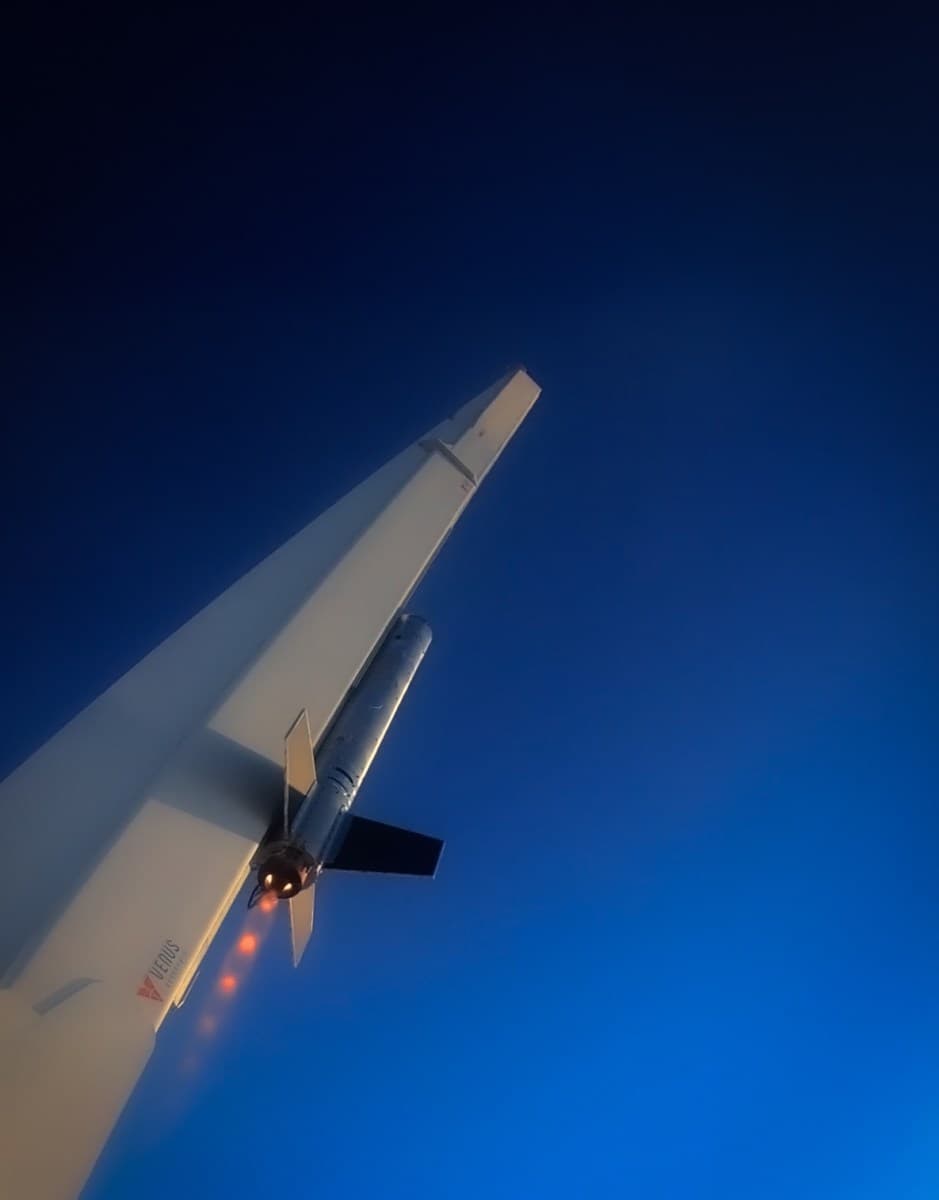
A startup aiming to build a radically different rocket engine has secured a significant funding round, signaling continued investor appetite for next-generation propulsion technology. Venus Aerospace closed a $90 million Series B, money it will use to advance a design that could change how fast we move through the atmosphere and beyond.
Series B Backing for a New Engine
The round was led by a group of strategic investors, though Venus Aerospace did not disclose the full list. The company plans to use the capital to expand its engineering team, complete ground testing of its engine, and move toward flight tests. The fresh funding arrives at a time when the aerospace industry is increasingly looking for ways to make hypersonic travel commercially viable and to reduce the cost of launching payloads into orbit.
Venus Aerospace has been working on a concept called the "rotating detonation rocket engine" (RDRE). Unlike conventional rocket engines that burn fuel in a steady flame, the RDRE uses supersonic detonation waves that travel around a circular channel. This design can extract more energy from the same amount of propellant, potentially offering a 15 to 20 percent improvement in specific impulse over traditional engines.
Technical Ambitions and Challenges
Building a detonation-based engine is not straightforward. The extreme pressures and temperatures generated by the detonation waves require advanced materials and precise control systems. Venus Aerospace has been testing subscale prototypes and must now scale up to a full-size unit. The company claims its engine can operate at a lower cost per pound of thrust, which could make it attractive for both atmospheric and space applications.
The company's technology builds on research originally conducted at the University of Texas and the Air Force Research Laboratory. Key technical hurdles include:
If successful, Venus Aerospace's engine could power a new class of hypersonic vehicles capable of flying at Mach 5 or higher. The company has also discussed using the engine as a upper stage for small satellite launchers, where its high efficiency could reduce the number of stages needed.
Why This Matters
The implications extend beyond just one company. Venus Aerospace's approach represents a shift away from the dominant rocket engine architectures that have been refined over decades. If the RDRE technology proves viable, it could lower the cost of access to space and make hypersonic point-to-point travel a realistic commercial proposition. For the defense sector, a reliable, high-thrust engine could enable faster response times for military aircraft and missiles. The funding round demonstrates that investors are willing to bet on high-risk, high-reward propulsion advances, a trend that could accelerate the pace of innovation in aerospace. The next few years will be critical as Venus Aerospace moves from the lab to the launch pad.