Senior Editor: Alan Agbele
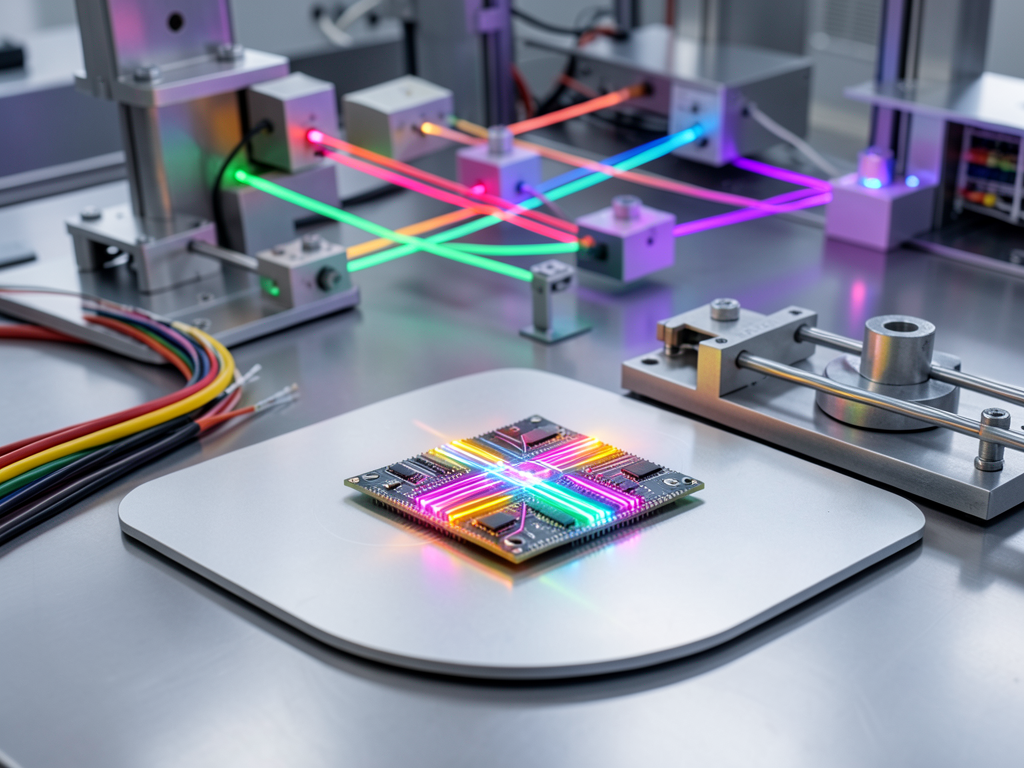
The American Photonics Coalition has moved to standardize how photonic chips are designed and built, a step aimed at pulling light-based computing out of the laboratory and into high-volume factories. The group's push targets the fragmented processes that have kept photonics expensive and slow to scale.
The Fragmentation Problem Holding Photonics Back
Photonics has long promised faster, cooler computing. The industry, however, has never settled on common building blocks. Designers pick different materials, packaging methods and testing regimes, so a chip that works in one fab may be unbuildable in another.
That fragmentation raises costs at every stage. Companies must redesign for each foundry, and foundries must retool for each customer. The result is a sector that behaves more like custom craft than mass manufacturing.
The American Photonics Coalition wants to change that by defining shared specifications for how photonic integrated circuits are described, fabricated and verified. The goal is to let designers target multiple fabs without rebuilding their work from scratch.
Why Standards Could Unlock Volume Production
Standardization has a track record in hardware. The semiconductor industry's common design rules and process nodes turned chipmaking into a global, high-volume business. Photonics is trying to follow the same path.
Common standards would lower the barrier for new entrants. Startups could design against a published process instead of negotiating a bespoke deal with a foundry. Larger buyers could source from multiple suppliers without requalifying every part.
The coalition's effort also targets testing and packaging, two areas where photonics loses yield and money. Agreed test methods would let customers compare parts on equal terms and reduce the rework that plagues optical assemblies.
Where Photonics Standards Will Be Tested First
Data centers are the most likely early proving ground. Optical links already carry traffic between servers, and operators want cheaper, cooler components as AI workloads strain power budgets. Standard photonic parts would let them buy from more vendors.
Telecom networks face similar pressure. Coherent optical modules are complex and costly, and standardized interfaces would simplify procurement. Sensing applications, from lidar to medical diagnostics, could also benefit from lower-cost optical chips.
The coalition's work, however, will be judged by whether foundries actually adopt the specifications. Standards that exist only on paper do not lower costs. Adoption requires foundries to invest in new process flows and customers to trust the results.
Why This Matters
The outcome will determine whether photonics becomes a mainstream manufacturing technology or remains a niche craft. If the American Photonics Coalition's standards gain traction, chip designers gain leverage over foundries and buyers gain alternatives. That shift would lower prices and speed adoption across computing, telecom and sensing.
Foundries that resist standardization risk losing customers to rivals that embrace it. Companies that build proprietary processes may see their advantage erode as common platforms mature. The biggest winners would be smaller designers and large buyers who currently lack bargaining power.
The effort also carries strategic weight. Photonics is seen as a path to lower-energy computing, and countries that control its manufacturing base will shape the next generation of hardware. Standards are a quiet but powerful tool in that contest.