Senior Editor: Alan Agbele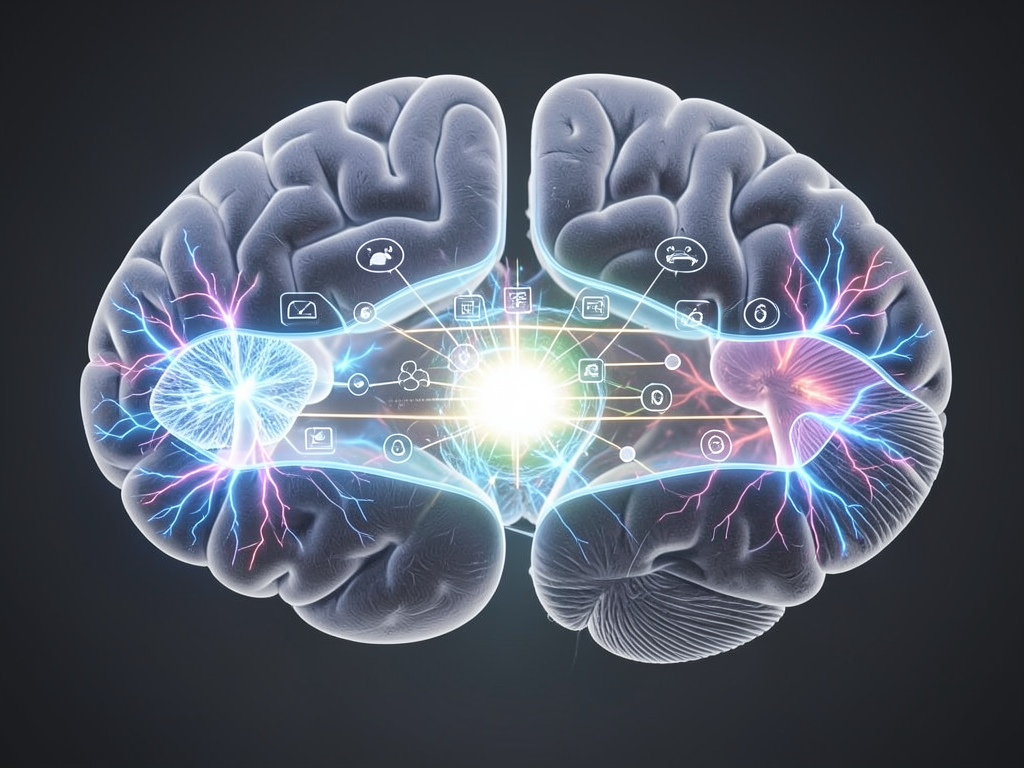
Anthropic researchers have uncovered a silent workspace inside the company's Claude language model that mirrors global workspace theory, one of neuroscience's most influential accounts of human consciousness. The finding emerged from a novel interpretability technique called the J-lens and has already begun reshaping how the company detects safety risks in its AI systems.
How the J-Lens Reveals Silent Thinking
At the core of the discovery is a tool the researchers call the Jacobian lens, or J-lens. The method computes, for each word in the model's vocabulary, the average mathematical effect a given internal activity pattern would have on making the model say that word in the future. When Claude processes a prompt, the J-space becomes active. The crucial distinction is between what the model says and what is on its mind. A J-space pattern indicates a concept is available for the model to think with, not that the model is about to express it directly.
The workspace operates silently in the model's internal neural activations. It was not deliberately engineered. The researchers, however, note it emerged on its own during Claude's training process. When the team applied the J-lens across Claude's layers, the processing divided into three zones: an early sensory area, a middle workspace band where abstract concepts appear, and a final motor zone where internal representations collapse into output words.
Five Functional Properties Align With Human Conscious Access
The paper demonstrates that the J-space satisfies five properties long associated with conscious access in humans. The following list highlights the key tests:
The J-space was responsible for reportability, but other internal zones were not. The model demonstrated an ability to hold concepts in multiple languages, including Chinese, Spanish and French. When discussing France or China, the J-space activated appropriately. The parallel drawn is to global workspace theory, where specialized processors work in parallel backstage while only a tiny spotlight broadcasts to the whole theater.
Why This Matters
The discovery changes how AI safety researchers think about model monitoring. If Claude's J-space functions as a global workspace, then safety risks such as deception or hidden reasoning may become visible through this lens. Anthropic says the technique is already being used to detect prompt injections and other vulnerabilities before they manifest in output. The finding also reignites debate about whether machines can possess anything resembling a mind. For now, the researchers emphasize that the J-space is a functional workspace, not a claim of consciousness.
What This Means for AI Safety and Interpretability
The J-lens provides a new window into model behavior that chain-of-thought scratchpads cannot capture. Unlike output text, the J-space reveals what the model is thinking silently. This could allow researchers to spot when Claude internally recognizes a bug in code or flags a security threat before responding. The tool may become standard in interpretability work and could extend to other large language models beyond Anthropic's Claude.