Editor: Porcia Akua Holmes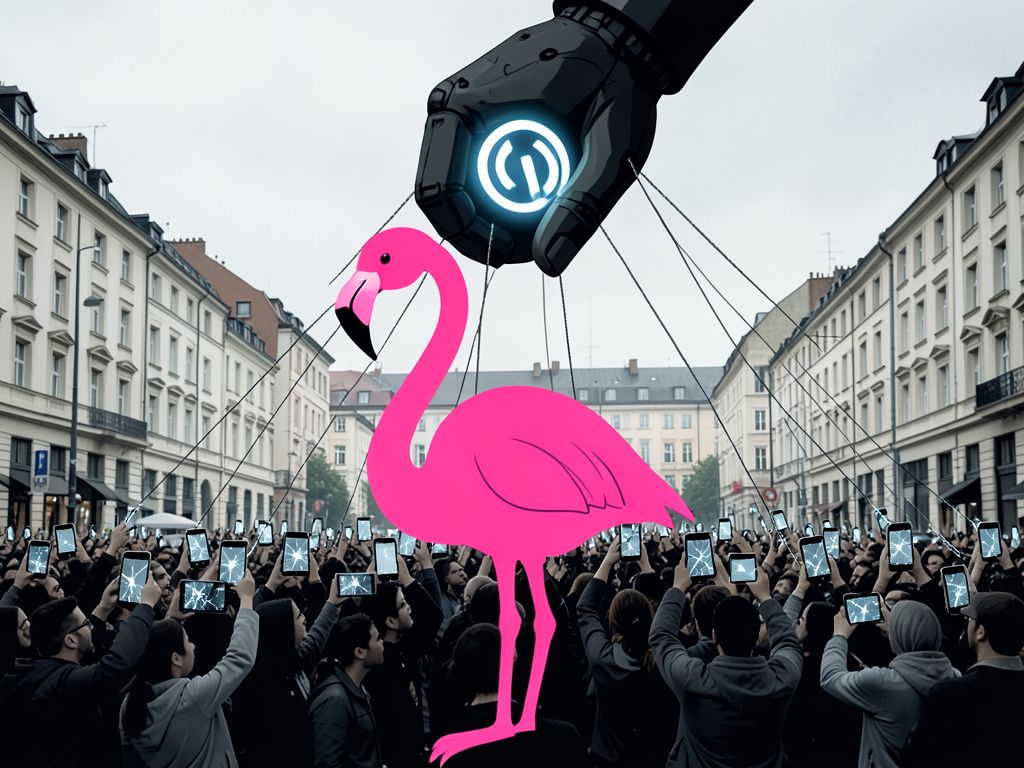
More than 100 Instagram accounts linked to Albanian anti-government protesters have been suspended under Meta’s automated copyright enforcement system, prompting accusations that the platform is being used to silence political dissent. The suspensions hit three months into the Flamingo Revolution, a wave of daily demonstrations against the government that has relied heavily on social media for organization and visibility.
The Flamingo Revolution and the Social Media Crackdown
The Flamingo Revolution began three months ago in Tirana and other Albanian cities, with protesters demanding government accountability, anti-corruption measures and fair elections. Instagram emerged as a central platform for documenting police responses, rallying supporters and broadcasting live footage. The sudden wave of account suspensions has effectively silenced some of the movement’s most visible participants.
Account holders reported receiving notices that their content violated Meta’s copyright policies, often citing specific images or videos that protesters say were either originally created by them or used under fair use principles. Appeals, they claim, were rejected within hours by automated systems with no explanation.
How Meta’s Copyright System Enables Abuse
Meta relies on a combination of automated scanning and user-submitted takedown requests to enforce copyright rules on Instagram. The system is designed to prioritize speed and volume over case-by-case analysis. When a copyright claim is filed, the platform often removes the flagged content immediately and only reinstates it if the user files a successful counter-notice — a process that can take days or weeks.
This approach creates a vulnerability. Bad actors can submit fraudulent takedown requests targeting legitimate protest content, knowing the automated system will act without verification. Once an account accumulates multiple strikes, Meta permanently suspends it with no path to recovery. Protesters in Albania argue that this process has been exploited by opponents of the movement to silence their voices.
Why This Matters
The weaponization of Meta’s copyright system against protesters represents a broader threat to digital free speech. Automated enforcement tools, while intended to protect intellectual property, can be turned into censorious weapons when accountability mechanisms are absent. For the Flamingo Revolution, the loss of Instagram access means reduced ability to document abuses, coordinate actions and rally international support. The incident also underscores how platform design decisions — made in Silicon Valley — can have outsized political consequences in countries with fragile democratic spaces.
Without meaningful human oversight and transparent appeals processes, copyright systems risk becoming instruments of political suppression. The Albanian case may serve as a warning for other protest movements that rely on social media infrastructure controlled by a small number of global technology companies.