Editor: Porcia Akua Holmes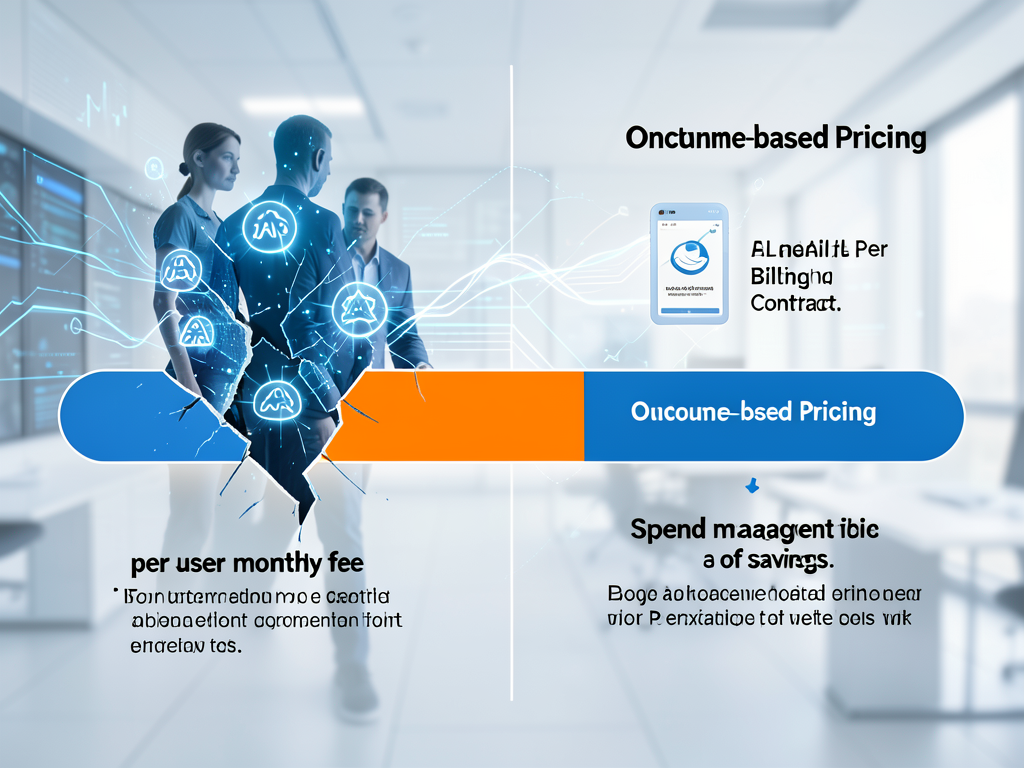
The $300 billion single-session selloff in January 2025 sent a clear message to investors: the classic software-as-a-service model has passed its peak. For decades, horizontal platforms from Salesforce to Workday delivered predictable returns through per-seat subscriptions. But the rise of AI agents that replace human users is upending that structure. The old pricing model is evaporating. A new era of AI-native software built on outcomes and vertical specialization is taking its place.
The Collapse of Per-Seat Pricing
Software pricing has long been simple: charge per user per month. That logic breaks when AI agents handle the work instead of people. A company that once needed 100 CRM licenses may soon need only 50. The per-seat model cannot survive in a world where headless software performs tasks autonomously.
Technology companies are now choosing between two new pricing paths. The first ties charges to actual usage, such as a legal AI platform that bills per contract drafted. The second ties charges to outcomes, for example a spend management tool that takes a percentage of recovered overages. Both models price the software as a fraction of the labor it replaces. This shift reaches beyond traditional IT budgets. AI-native software now targets the larger labor budgets of white-collar services, a $2 trillion market.
Why Vertical Specialists Hold the Advantage
Generic horizontal SaaS faces the greatest risk. Products that wrap around basic workflows such as form builders or project management tools lose value when AI agents handle those workflows autonomously. Category compression is accelerating and many of these platforms may never recover.
Defensible positions now belong to vertical niche specialists. These companies build moats through three assets: distribution via long-term customer relationships, domain expertise in regulated or complex industries and proprietary data that frontier AI models cannot access. A legal contract repository or an insurance underwriting dataset embedded in a workflow creates switching costs far beyond anything a generic SaaS contract produced. Exporting a contact list is easy. Exporting underwriting logic is nearly impossible.
Why This Matters
This transition affects every stakeholder in the software ecosystem. Investors must rethink valuation models based on recurring per-seat revenue. Companies that fail to pivot from horizontal to vertical models risk obsolescence. End users in white-collar professions will see their roles transformed as AI agents take over tasks once done by humans.
The productivity gains from outcome-based software are unprecedented. A legal AI platform that drafts contracts at a fraction of the cost of a human lawyer delivers immediate ROI. However, the labor implications are significant. Roles that involve repetitive knowledge work may shrink, while demand for experts who manage AI systems will grow. The software industry is not contracting. It is expanding into a larger opportunity but with a different structure.
History offers a parallel. Just as SaaS replaced on-premise software by offering lower upfront costs and easier scaling, AI-native software is now displacing SaaS by automating outcomes instead of connecting workflows. Each wave has unlocked new productivity but also required adaptation. The companies that invest in vertical expertise and outcome-based pricing will command premiums. Those that cling to generic platforms and per-seat models will lose ground fast.
The Road Ahead for Software
The next decade of business software will be defined by automation and performance. Products that combine software and human oversight, sometimes called human-in-the-loop systems, will dominate. The most successful companies will build deep data moats in specific industries, price based on results and replace workers rather than connect them. The market rout in January was not a correction. It was a signal that the old playbook no longer works.