Senior Editor: Alan Agbele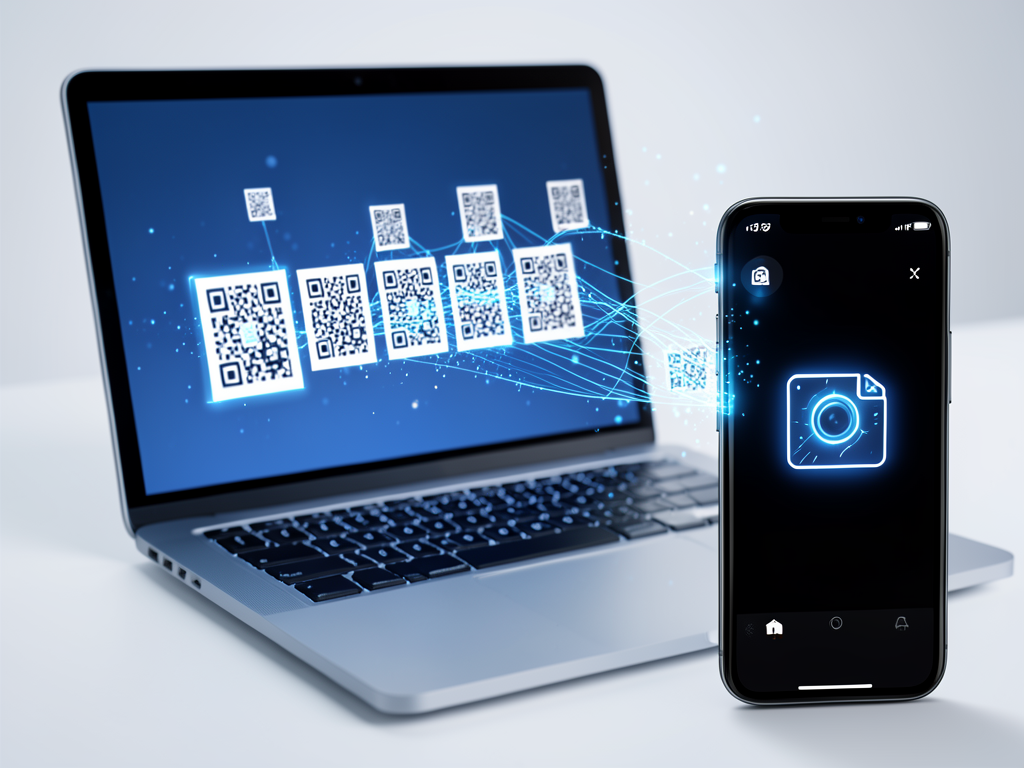
Decimen Optical Transfer introduces a new method for moving files between devices using nothing more than a screen and a camera. The system encodes file data into a sequence of QR codes where fountain codes, a type of erasure code, allow any subset of the transmitted codes to reconstruct the original file. This approach eliminates the need for a network connection and turns optical scanning into a viable data transfer channel.
How Fountain Codes Enable Reliable Transfer
Fountain codes, also known as rateless erasure codes, work by producing a potentially infinite stream of encoded symbols from a fixed source. In the case of Decimen Optical Transfer, each symbol is a QR code fragment. A receiver needs only enough symbols to exceed the original data length; missing or corrupted codes do not require retransmission. This property is critical for optical channels where frame loss is common due to motion blur or misalignment.
The Role of QR Codes in Offline Data Exchange
QR codes have long been used for small payloads such as URLs or contact details. Their capacity, however, is limited to a few kilobytes. Decimen Optical Transfer overcomes this limitation by splitting large files across many codes. The fountain code layer ensures that the transfer succeeds even when some codes are not captured. This turns the QR code from a static information carrier into a dynamic, streaming protocol.
The system is well suited for environments where digital networks are absent, restricted or expensive. Examples include field research, disaster response, secure government facilities and air-gapped systems. Users can transfer documents, images or small software packages by simply pointing a camera at a screen.
Why This Matters
The practical impact of Decimen Optical Transfer lies in its ability to bridge the gap between physical and digital data exchange without infrastructure. For workers in remote areas or high-security zones, this method provides a simple, verifiable and low-cost alternative to network-based transfers. The use of fountain codes also means the system is inherently resilient to channel noise, which is a common problem in optical communication. As devices continue to pack high-resolution cameras, the effective throughput of optical transfer may increase, making this approach more practical for everyday use. The technology, however, is still in its early stages and transfer speeds remain slower than conventional wireless methods. The key advance is the introduction of rateless coding to the QR medium, which could inspire further innovations in offline data sharing.