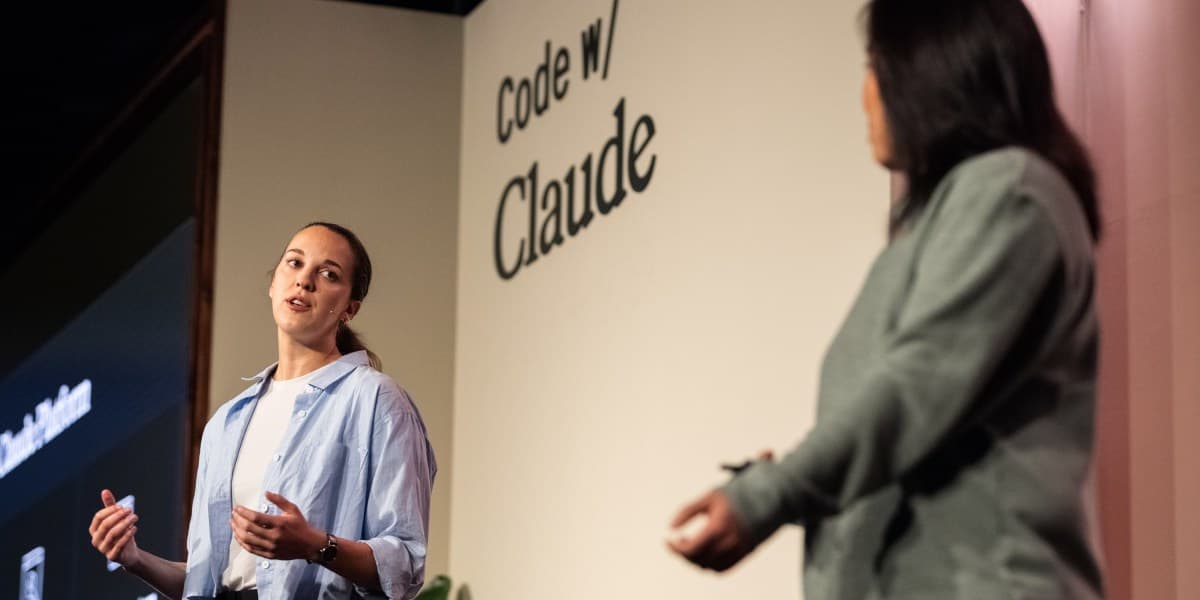
At Anthropic's Code with Claude event in London, nearly half of the developers in attendance raised their hands when asked if they had shipped a pull request written entirely by Claude. When the follow-up question came — who had done so without reading the code at all — most hands stayed up.
The show of confidence reflects a rapid shift in software development. AI coding tools such as Anthropic's Claude Code and OpenAI's Codex have moved from experimental assistants to primary code generators in just over a year. At Anthropic, most software is now written by Claude, according to engineer Jeremy Hadfield. Claude even wrote most of the code inside Claude Code itself.
Yet outside the conference halls, a different mood is taking hold. Developers in online forums have begun to question whether handing over core coding tasks to large language models erodes code quality, job satisfaction and long-term skill development. The divide between enthusiastic early adopters and skeptical practitioners is widening.
The Let It Cook Philosophy
Anthropic's strategy pushes automation further than most competitors. The company wants Claude not only to generate code but also to test, debug and refine it without human intervention. Engineers should not even see error messages, said Boris Cherny, who heads Claude Code. The goal is to get out of Claude's way.
A new feature called dreaming, part of the recently announced Claude Managed Agents system, allows AI agents to write notes about their work. When another agent tackles the same codebase, it reads those notes to learn from past errors and speed up future tasks. In theory, the system improves over time without human input.
Companies including Spotify, Delivery Hero and several AI-focused startups have restructured their development teams around Claude Code. At the event, no one expressed unease. Every developer I met wanted in.
Why This Matters
The shift affects millions of professional developers and the companies that rely on their work. If AI writing and reviewing its own code becomes standard, the role of the human developer changes dramatically. Junior developers may lose opportunities to learn through hands-on coding and debugging. Senior engineers face pressure to trust black-box outputs they cannot easily verify.
For businesses, the trade-off is speed versus control. Faster development cycles appeal to startups and product teams racing to market. But unchecked AI-generated code can introduce subtle bugs, security flaws or architectural debt that only human review would catch. The industry is still learning where to draw that line.
Anthropic says its vision is not to replace developers but to change what they do. Whether the broader engineering community agrees remains an open question.