Senior Editor: Alan Agbele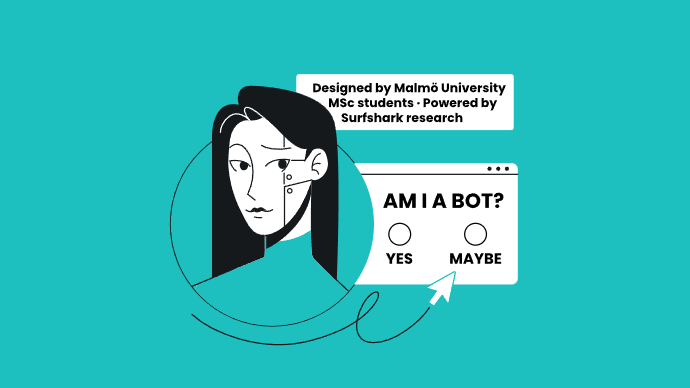
Nearly half of people cannot distinguish between AI bots and real humans in online conversations, according to a new experiment from cybersecurity firm Surfshark. The company's "Bot or Not" test found that 47% of participants failed to correctly identify AI-generated interactions on simulated social platforms.
The experiment highlights a growing challenge in digital communication as AI language models become more sophisticated. Surfshark designed the test to mimic real social media exchanges, mixing bot messages with human replies.
The Experiment
Surfshark's test presents users with short conversations from a fictional platform called "Squad." Participants must decide whether each message comes from a human or an AI bot. The experiment uses OpenAI's GPT models to generate bot responses, which are woven into casual exchanges about hobbies, travel and daily life.
The results show that even when people are told to look for bots, they struggle. Only 53% of answers were correct, barely above chance. The test is still live for anyone to try on Surfshark's website.
The company said it created the experiment to raise awareness about AI impersonation risks. Surfshark warns that similar bots could be used for phishing, misinformation campaigns or social engineering attacks.
Why This Matters
This directly affects anyone who interacts with strangers online. As AI bots become harder to detect, users face greater risks of being manipulated or deceived. Scammers can use bots to build false trust, extract personal data or spread false narratives.
For businesses and social platforms, the experiment underscores the need for better detection tools and transparency measures. If half of people cannot spot a bot, current safeguards may be insufficient.
The findings also raise broader questions about digital identity and trust. As AI blurs the line between human and machine, verification systems may need to evolve. Surfshark's test is a reminder that the Turing test is no longer a simple benchmark.
Individuals should remain cautious about who they engage with online. Looking for unnatural phrasing, overly generic responses or rapid topic shifts can help, but the experiment shows these cues are not reliable.