Senior Editor: Alan Agbele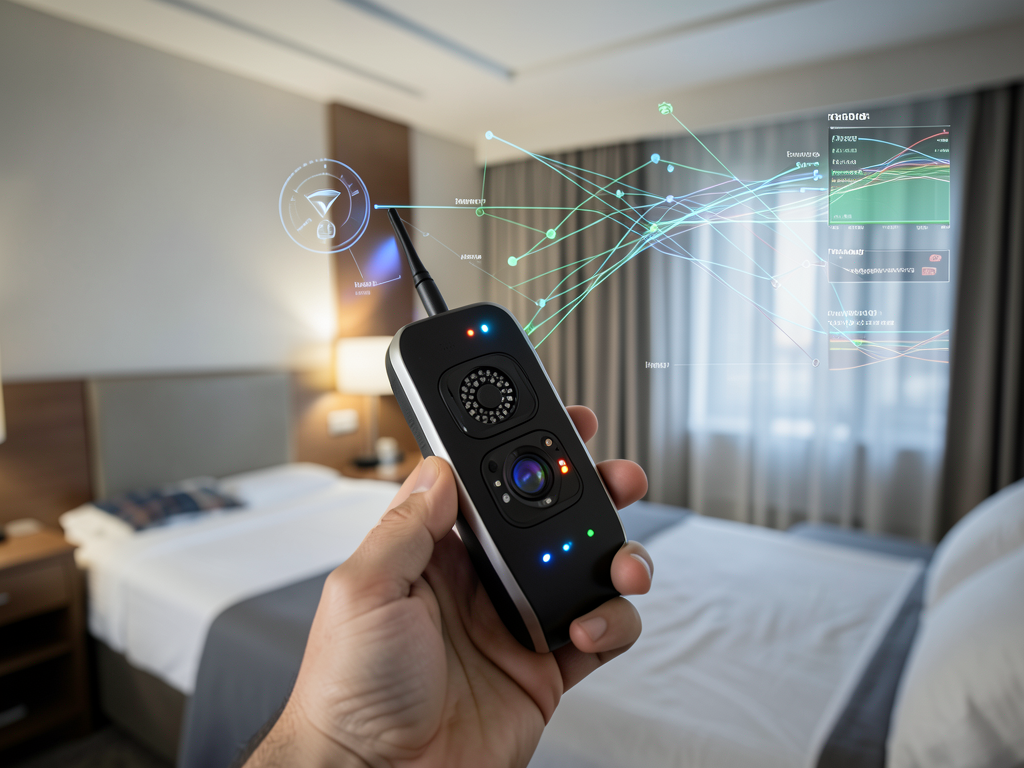
A new privacy tool called ZuckOff Know promises to alert users whenever a camera is present in a room, addressing escalating fears about hidden surveillance. The device, designed for travelers, renters and remote workers, uses multiple detection methods to identify both visible and concealed cameras. Its launch comes amid rising reports of unauthorized recording in short-term rentals and corporate spaces.
How the Detection System Works
ZuckOff Know employs a three-layered approach to find cameras. The core hardware includes an infrared lens array that identifies reflective optics from any camera sensor. A second subsystem scans for radio frequencies emitted by wireless transmitters. The third component analyzes Wi-Fi traffic for packet patterns typical of streaming video. These methods operate simultaneously, cross-referencing results to reduce false positives.
Users receive an alert on a companion application when any of the three detection methods triggers. The app also displays a rough location estimate for the detected camera, helping users pinpoint its hiding spot.
Market Context and Privacy Trends
The arrival of ZuckOff Know sits within a broader surge in consumer privacy products. Hidden camera detectors have grown from niche USB-powered gadgets to sophisticated electronic devices as concerns about surreptitious recording spread. Regulatory pressures, including the 2023 U.S. Preventing Ransomware and Protecting Americans Act, have raised awareness but not eliminated the threat. Hotel chains and short-term rental platforms now face lawsuits over undisclosed cameras, fueling demand for personal detection tools.
Privacy advocates note that existing solutions often rely on manual visual sweeps or smartphone apps that miss many camera types. ZuckOff Know claims to offer a more comprehensive alternative by combining multiple detection modes in a single portable device. Independent testing results have not yet been published, but early beta users report reliable identification of common pinhole cameras and smart home security cameras that guests might not expect.
Why This Matters
The proliferation of cheap, miniaturized cameras has created a surveillance gap that most individuals cannot close without technical knowledge. ZuckOff Know matters because it lowers the barrier to privacy protection, giving non-experts a practical tool. For business travelers, corporate tenants and families in vacation rentals, the device could become as routine as a smoke detector. For the privacy technology industry, its success may accelerate development of even more accurate detection systems. The real test will come when the tool faces a wide array of environments and camera makes, but its multi-sensor approach represents a meaningful step forward.
Limitations and Considerations
No consumer detector can guarantee 100 percent accuracy. Cameras that are turned off or physically disconnected from power remain invisible to ZuckOff Know. Additionally, some environments with heavy radio interference may produce false alerts. The device also requires periodic firmware updates to stay current with new wireless protocols used by covert cameras. Pricing has not been announced, but the hardware cost will determine how widely the tool can be adopted.
Nevertheless, the introduction of ZuckOff Know signals a maturation of the personal counter-surveillance market. As hidden cameras become smaller and cheaper, the tools to find them must evolve just as quickly. Whether this particular product succeeds or not, the direction is clear: privacy is becoming a product category of its own.