Editor: Porcia Akua Holmes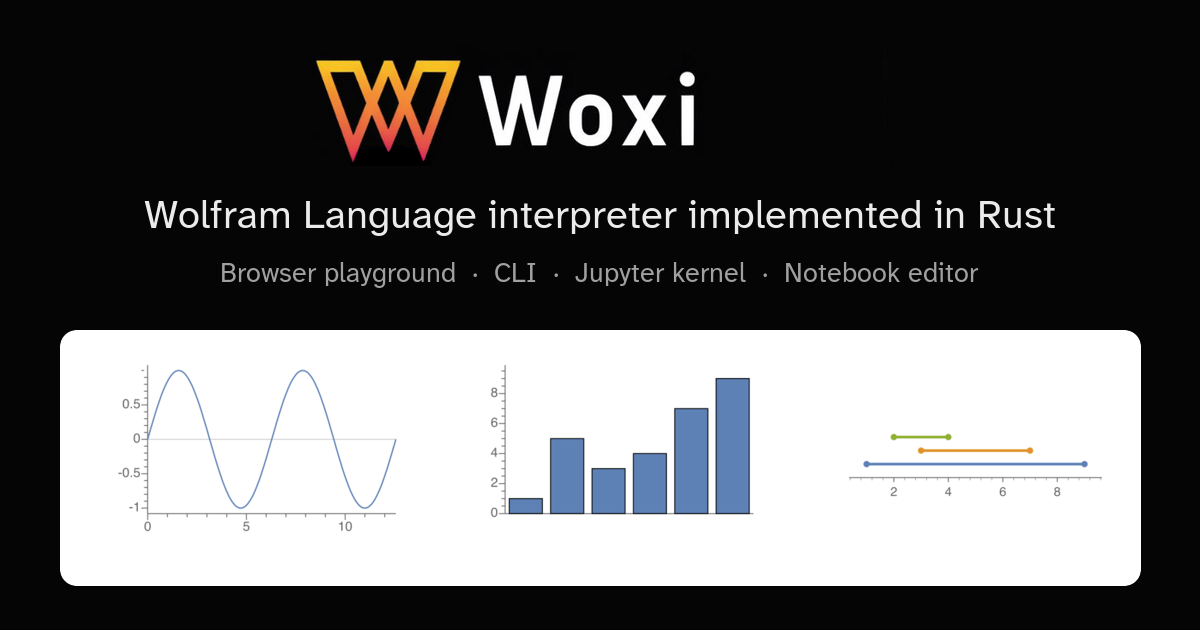
A new open-source project called Woxi is attempting to recreate the core functionality of Mathematica and its Wolfram Language, offering a free alternative to the proprietary computational system. The project was introduced on Hacker News as a Show HN submission, quickly attracting attention from the developer community.
What Woxi Offers
Woxi aims to replicate key capabilities of Wolfram Language, including symbolic algebra, calculus, and matrix operations. The project, still in its early development, relies on a custom parser and interpreter designed to handle Wolfram Language syntax. While it does not yet support the full ecosystem of Mathematica, its developers have outlined several target features:
These features place Woxi in direct competition with well-known open-source symbolic computation tools such as SymPy and SageMath. However, its focus on Wolfram Language compatibility sets it apart for users already familiar with Mathematica's syntax.
The Open-Source Shift in Scientific Computing
Woxi joins a growing roster of open-source projects that offer alternatives to proprietary scientific software. GNU Octave reimplements MATLAB, while R and Julia provide open-source environments for statistical computing. The trend reflects a broader demand for accessible, auditable, and cost-free tools in research and education.
Mathematica, developed by Wolfram Research, remains widely used in academia and industry for its depth and integration. Its license costs, however, can be prohibitive for individual researchers and institutions in developing countries. Woxi, by offering a free reimplementation, could lower the barrier to entry for symbolic computation, especially in educational settings where budget constraints are common.
Why This Matters
The emergence of Woxi signals a potential shift in how the scientific computing community approaches symbolic mathematics. If the project matures, it could reduce dependence on a single proprietary vendor, providing flexibility and long-term sustainability for computational workflows. For educators, the availability of a free, compatible tool may reshape curriculum design, allowing students to experiment with symbolic computation without licensing hurdles. For researchers, an open-source alternative creates opportunities for customization and integration with other open tools. Wolfram Research, on the other hand, will likely need to respond with new features or pricing models to retain its user base. The success of Woxi will depend on its ability to achieve high compatibility and performance, as well as sustain community contributions over time.