Senior Editor: Alan Agbele
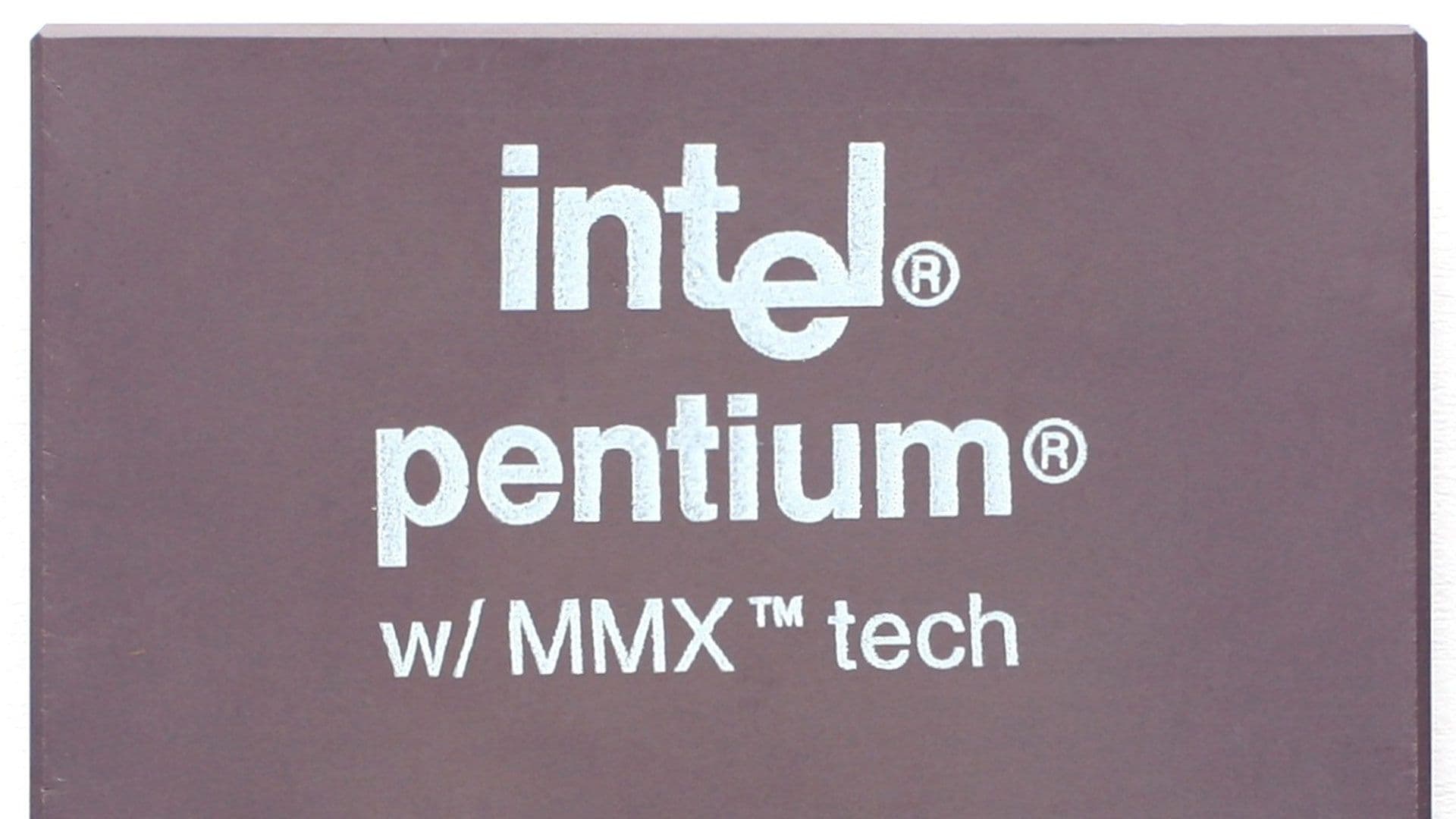
Linux developers are preparing to delete the last remnants of Intel MMX optimization from the kernel, a cleanup that will land in Linux 7.5 and formally retire code tied to the Pentium era. The patch targets the software RAID XOR routines, where MMX fast paths have lingered long after the hardware they served fell out of use.
The Final MMX Fast Path Disappears
The patch, expected to merge into mainline Linux 7.5, removes MMX-optimized code from the kernel's software RAID XOR implementation. That code path once gave Pentium MMX and Pentium II systems a performance edge when rebuilding or checking RAID arrays without dedicated hardware.
Most other MMX-optimized code left Linux about half a decade ago, when memory management routines were cleaned up. The RAID XOR path survived as a quiet holdover, kept alive by inertia rather than active demand.
Users who still run software RAID on late-1990s hardware will retain the functionality. The MMX fast path, however, will no longer be available, and the kernel will fall back to generic code.
How Intel MMX Became a Kernel Relic
Intel introduced MMX with Pentium MMX chips in January 1997, marketing the feature as MultiMedia extensions for the emerging multimedia boom. The branding was deliberately vague, and Intel trademarked MMX as a meaningless initialism.
A later trademark dispute with AMD surfaced a court document describing MMX as Matrix Math Extensions. AMD used that disclosure to argue the term could not be protected, since an initialism cannot be trademarked.
Rival chipmakers soon integrated MMX to avoid being sidelined. Alongside Pentium MMX, vendors including AMD, Centaur, Cyrix, Rise and Transmeta shipped MMX-capable CPUs, turning a proprietary Intel feature into a broad x86 baseline.
From MMX to SSE and the Wider Vector Era
Intel's marketing success with MMX pushed the industry toward richer SIMD instruction sets. AMD pioneered 3DNow! instructions, and Intel responded roughly a year later with SSE and SSE2, which became the foundation for modern vector processing.
Those successors made MMX redundant for performance-sensitive code. Compilers and kernel developers gradually shifted optimizations to SSE, AVX and later extensions, leaving MMX paths as historical artifacts.
The Linux 7.5 change is a textbook example of kernel housekeeping. Removing over 800 lines and replacing them with 12 reduces maintenance surface, shrinks the codebase and eliminates a branch that no realistic deployment exercises.
Why This Matters
The removal signals that Linux no longer treats 1990s Intel hardware as a performance target. Developers maintaining the kernel can now focus optimization effort on instruction sets that current CPUs actually execute, which lowers the risk of stale code accumulating bugs.
For the small community still running Pentium MMX or Pentium II machines, the practical impact is limited to software RAID performance. The functionality remains, but the MMX-accelerated path does not, and those systems will rely on generic routines.
The broader lesson concerns how open-source projects retire legacy support. Linux carries decades of hardware compatibility, and each cleanup like this one is a deliberate trade between preservation and maintainability. The MMX removal shows the project choosing maintainability as the Pentium era recedes further into computing history.