Senior Editor: Alan Agbele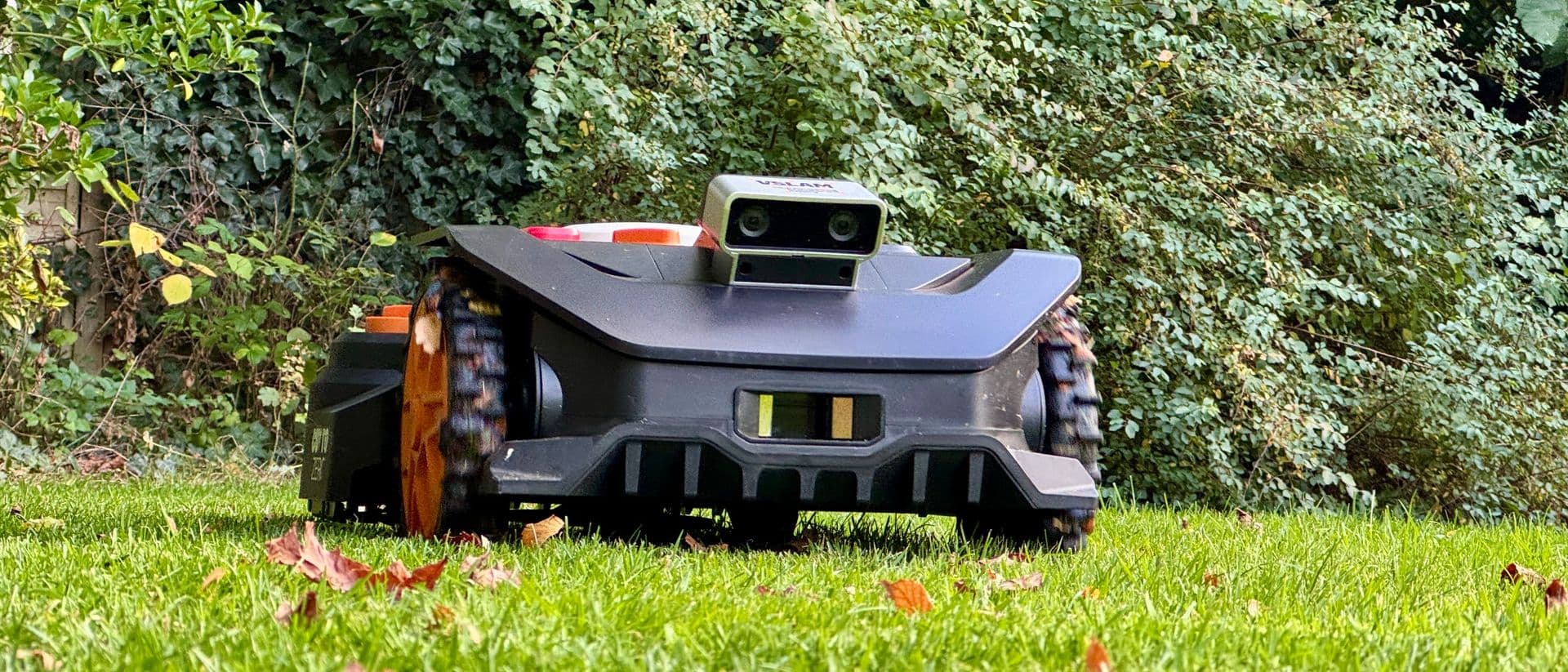
Robot lawn mowers have long depended on buried boundary wires to keep them on the grass. The Worx Landroid Vision Cloud WR306E aims to change that with a combination of stereo vision and cloud-based satellite positioning. The result is a mower that can recognize the shape of a lawn, avoid obstacles and maintain its bearings without any perimeter wire or additional RTK aerials.
Vision-Based Navigation Eliminates Boundary Wires
The core innovation of the Vision Cloud WR306E is its V-SLAM stereo vision system. Two cameras allow the mower to see the lawn’s shape, identify obstacles and map its route in real time. A cloud-based RTK satellite service provides sub-inch positional accuracy without needing a ground-based reference station. This combination lets the mower operate on lawns that lack the traditional boundary wire that earlier robot mowers required.
Despite these advanced capabilities, initial setup proved clunky according to early testing. Connecting and configuring the various stages demanded patience before the mower ran reliably. Once set up, however, the navigation was excellent. The mower stayed on the lawn without veering into flower beds and avoided obstacles consistently.
Pricing and Market Position
The WR306E sits in the mid-price tier of robotic mowers. It does not include remote motorized cutting height adjustment, which some rivals offer. But the combination of wire-free operation and edge-trimming capability makes it attractive for homeowners who want a cleaner lawn without installing boundary wire. (Image credit: Future)
The Euro-spec model is available now in the UK and Europe. A US equivalent, the 1/4 Acre WR310, retails for about $984 on Amazon.
Cut-to-Zero Solves the Edge Problem
One of the most frustrating issues with robot mowers is the strip of uncut grass they leave along fences and walls. The Vision Cloud WR306E includes a Cut-to-Zero side module that allows the blades to reach the very edge of the lawn. This accessory, which can also be purchased separately for the WR305E, addresses a major consumer complaint.
And then there is the cut quality. Tests showed generally excellent results with consistent coverage. The mower’s ability to navigate tight corners and irregularly shaped lawns without drifting into borders impressed reviewers. The manual cutting height adjustment (30–60 mm) is a trade-off, but many users will accept it for the wire-free convenience.
Why This Matters
The shift toward vision-based, wire-free navigation lowers the barrier for homeowners who found traditional robot mowers too complex to install. It also opens the market to renters and those with irregularly shaped lawns where laying boundary wire is impractical. For manufacturers, the technology represents a competitive differentiator that could accelerate adoption of robotic lawn care. The Worx Landroid Vision Cloud WR306E demonstrates that reliable, boundary-free mowing is no longer a premium-only feature. As more brands adopt similar systems, the days of digging trenches for perimeter wire may be numbered.