Editor: Porcia Akua Holmes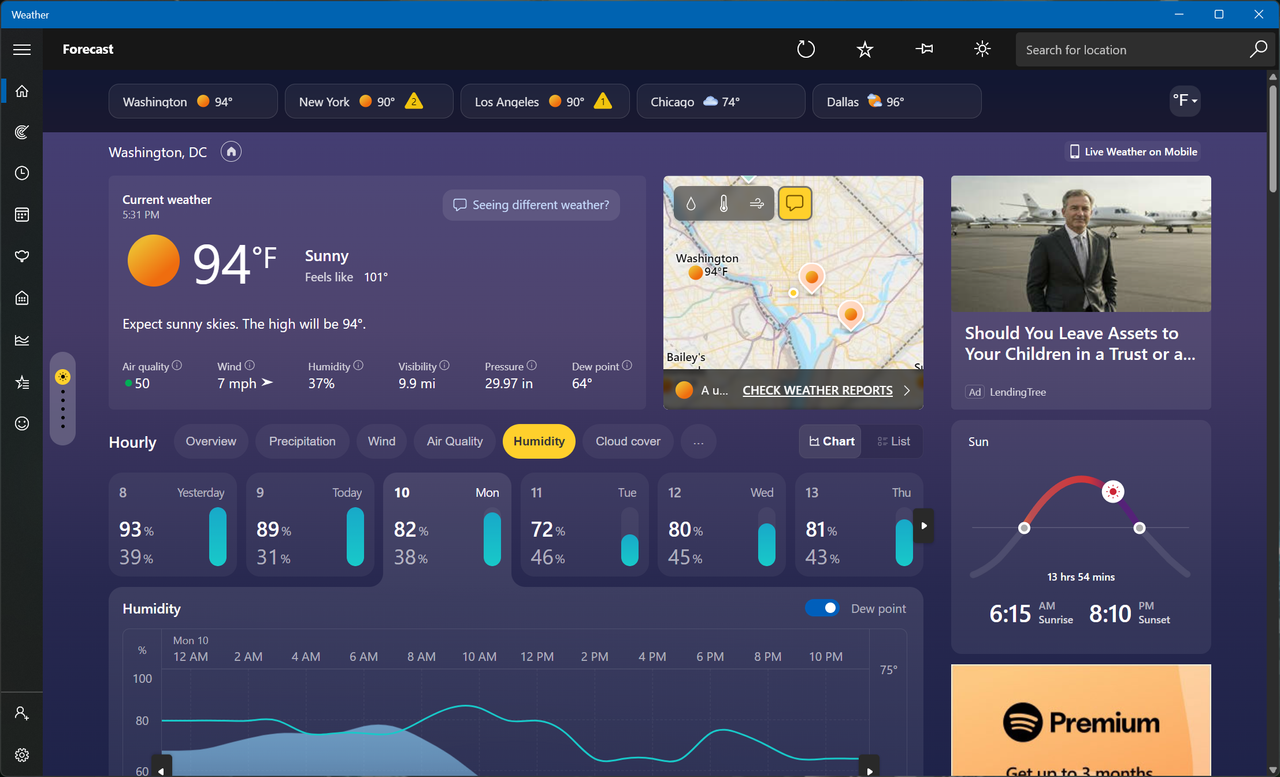
Windows 11 ships with a weather app that consumes more than 1.2GB of RAM while idle, a figure that dwarfs the memory usage of competing operating systems and reveals deeper issues with Microsoft's software strategy. The MSN Weather app, designed to deliver forecasts and live radar overlays, also serves advertisements despite being part of a paid operating system. Testing by Windows Latest confirmed the app runs as a web wrapper using WebView 2, which explains the excessive memory footprint.
The Web Wrapper Problem
Unlike native Windows applications that adhere to the WinUI framework, MSN Weather relies on Chromium-based subprocesses to render its interface. When the author opened Task Manager, they observed eight subprocesses running under the app's entry, confirming it is essentially a web page displayed through WebView 2. This architecture drives RAM usage five times higher than Apple's weather app on macOS, which runs natively and consumes roughly 250MB of memory. The comparison underscores a fundamental difference in design philosophy: Microsoft ships a memory-hungry web wrapper while Apple delivers a lightweight, ad-free native app.
Why This Matters
This memory bloat affects all Windows 11 users, especially those with 8GB of RAM, a configuration Microsoft recently promised to optimize. The persistence of ads in a paid operating system undermines user trust and raises questions about Microsoft's priorities. If Microsoft fails to rebuild MSN Weather as a native Win32 app, the company's broader commitments to performance improvements may ring hollow. For users, the practical impact is slower system performance and a cluttered experience, forcing many to rely on third-party apps or their phones for weather information.
Microsoft's Path Forward
Microsoft has pledged to rebuild all native Windows 11 apps, moving from the older Win32 and UWP frameworks to the modern WinUI framework. However, the company has not explicitly stated that MSN-branded services such as MSN Weather and MSN News will be part of this overhaul. Given that these apps are effectively web wrappers, a conversion to native code could significantly reduce RAM usage and eliminate the need for WebView 2. The Image credit for the screenshots in the original report goes to Future, and the testing was conducted by Windows Latest. For now, the most reliable way to avoid the memory drain is to disable the weather widget or use a dedicated weather app on a smartphone.