Editor: Porcia Akua Holmes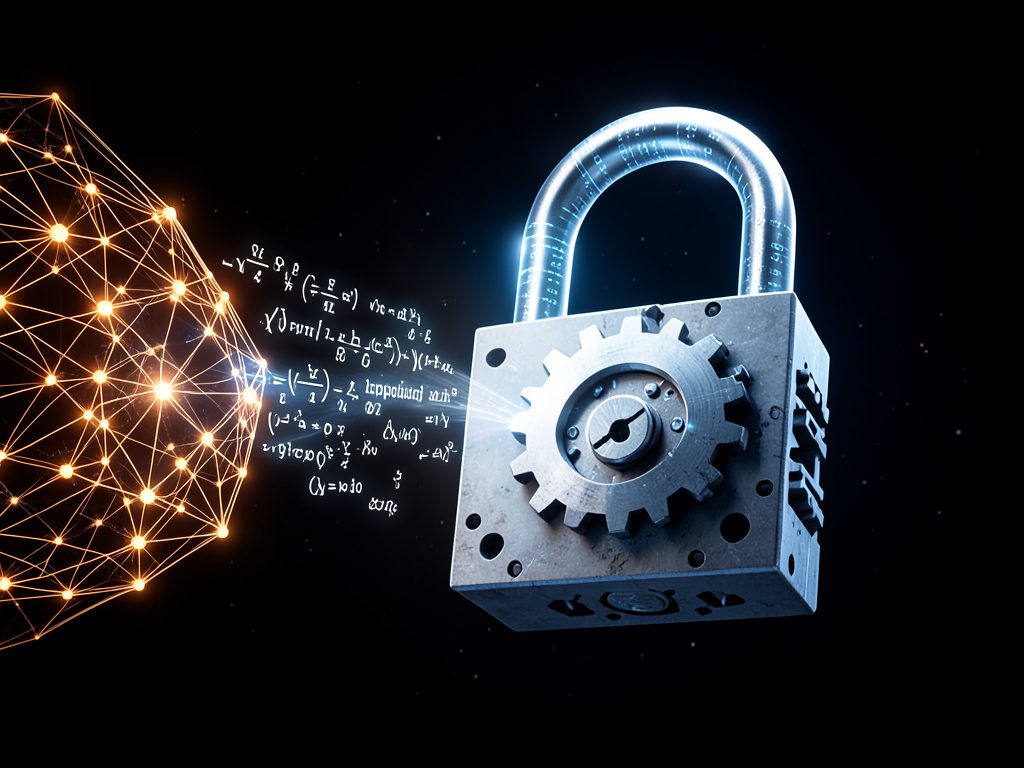
Large language models will not crack symmetric encryption, according to a growing consensus among cryptographers and security researchers. Despite widespread speculation that advanced AI could dismantle modern cryptography, the underlying mathematics of symmetric ciphers remains impervious to LLM-powered attacks.
The Fundamental Barrier
Symmetric ciphers achieve security through mathematical properties that resist any shortcut. The best known attack on AES-128 still requires roughly 2^126 operations, a number that dwarfs the computational capacity of any LLM. LLMs operate by predicting tokens based on training data, but they cannot reduce the search space of a well-designed cipher.
Cryptographers emphasize that LLMs lack the deterministic reasoning required for cryptanalysis. Breaking a symmetric cipher demands either a mathematical breakthrough or an immense amount of computation. LLMs, however, are optimised for language understanding and generation, not for solving discrete logarithm problems or factoring large integers.
What LLMs Actually Do
Large language models excel at pattern recognition in natural language and structured data. They can generate code, summarise texts and even assist in vulnerability discovery in software. But these capabilities stop at the boundary of cryptographic primitives. Symmetric encryption produces output that is statistically indistinguishable from random noise, leaving LLMs with no meaningful patterns to learn.
Researchers have tested LLMs on simplified cryptographic tasks, such as breaking substitution ciphers. While LLMs can succeed on toy problems, they fail catastrophically on real-world ciphers like AES. The gap between a classroom cipher and a standardised algorithm is vast.
Why This Matters
The persistent fear that AI will render encryption obsolete has real consequences. Organisations might delay adopting strong cryptography or divert resources to unproven AI-based security solutions. This article puts that fear to rest: symmetric crypto remains safe from LLMs, and the cryptographic community sees no imminent threat.
For users, this means that encrypted messaging, VPNs and secure websites continue to provide the protection they promise. For security professionals, the focus should remain on implementation flaws and side-channel attacks, not on the idea that LLMs will crack the cipher itself. The real risk lies in how AI might be used to automate traditional attacks, such as phishing or social engineering, but not in breaking the mathematical foundation of encryption.