Editor: Porcia Akua Holmes
The gap between AI performance in natural language and its capability in rigorous mathematical reasoning has become a central concern for researchers. A growing body of evidence suggests that current large language models, despite impressive benchmarks, lack the structural understanding needed for formal proof verification and theorem generation.
The Core Failure in Mathematical Reasoning
Large language models generate text that mimics correct mathematical language but often breaks down under formal verification. Researchers have documented cases where models produce plausible-looking derivations that contain hidden contradictions or logical leaps. The problem stems from how these systems are trained: they optimize for likelihood of next token prediction, not for consistency with axioms.
Why This Matters
The implications extend beyond academic curiosity. As AI tools are increasingly integrated into scientific workflows, trusting them for mathematical verification could lead to erroneous results in fields like engineering, pharmacology and finance. The failure to align AI with formal reasoning undermines its reliability in any domain that demands provable correctness. Without fundamental architectural changes, large language models will remain unreliable partners in rigorous mathematics.
Bridging the Alignment Gap
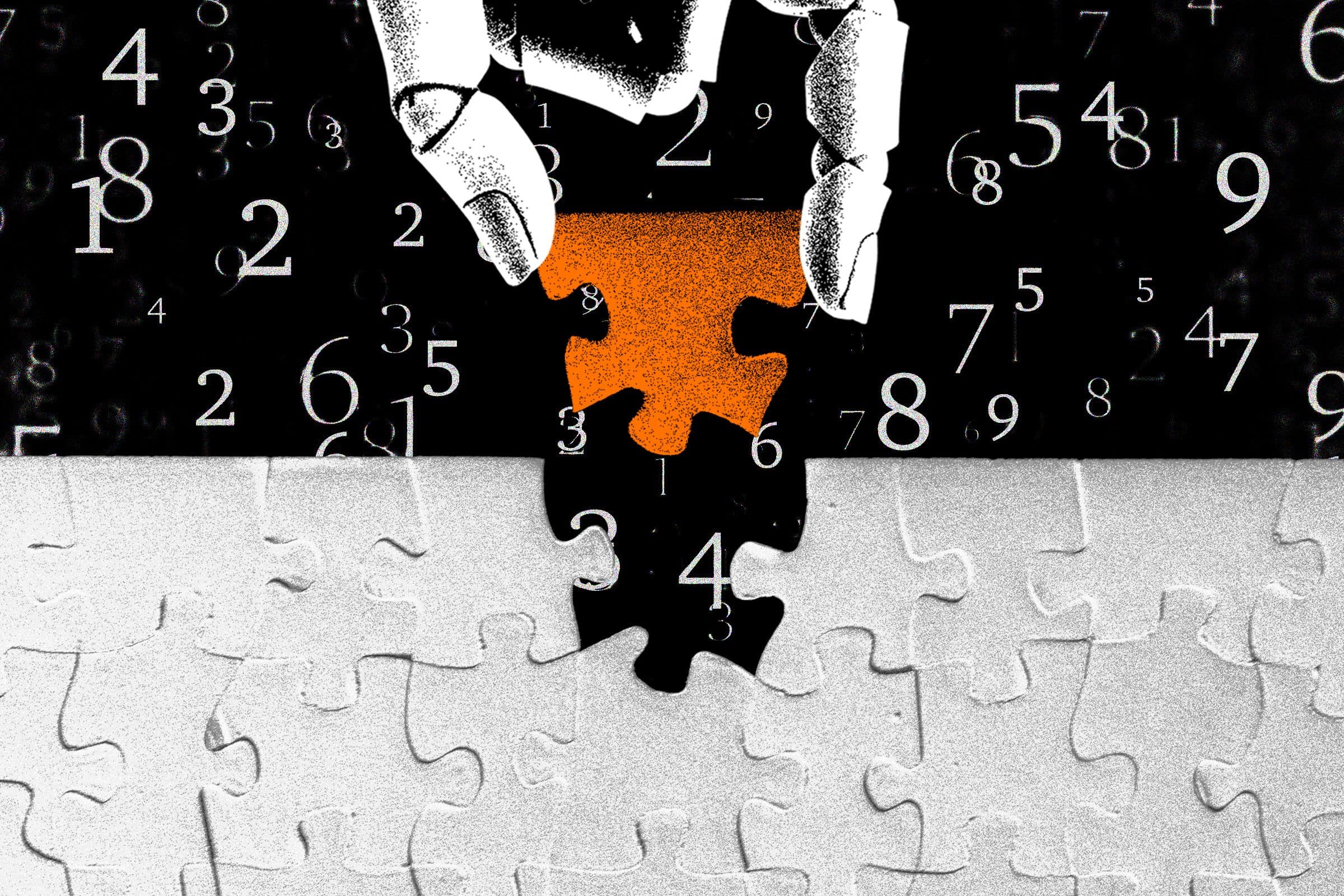
Some researchers propose hybrid systems that combine neural networks with symbolic reasoners. These systems use AI to generate candidate proofs and then rely on external verifiers to check validity. Companies like Google DeepMind and OpenAI have explored this approach with limited success. The technical challenge is immense: integrating continuous representations with discrete logical rules requires new algorithms that do not yet exist at scale.
What This Means for Users
For mathematicians, AI remains a brainstorming assistant rather than a trusted collaborator. Students and educators should be cautious about using AI tools to check proofs or generate solutions for advanced problems. The gap between AI fluency and genuine understanding will likely persist until models can perform explicit symbolic reasoning. Until then, human oversight remains indispensable.