Senior Editor: Alan Agbele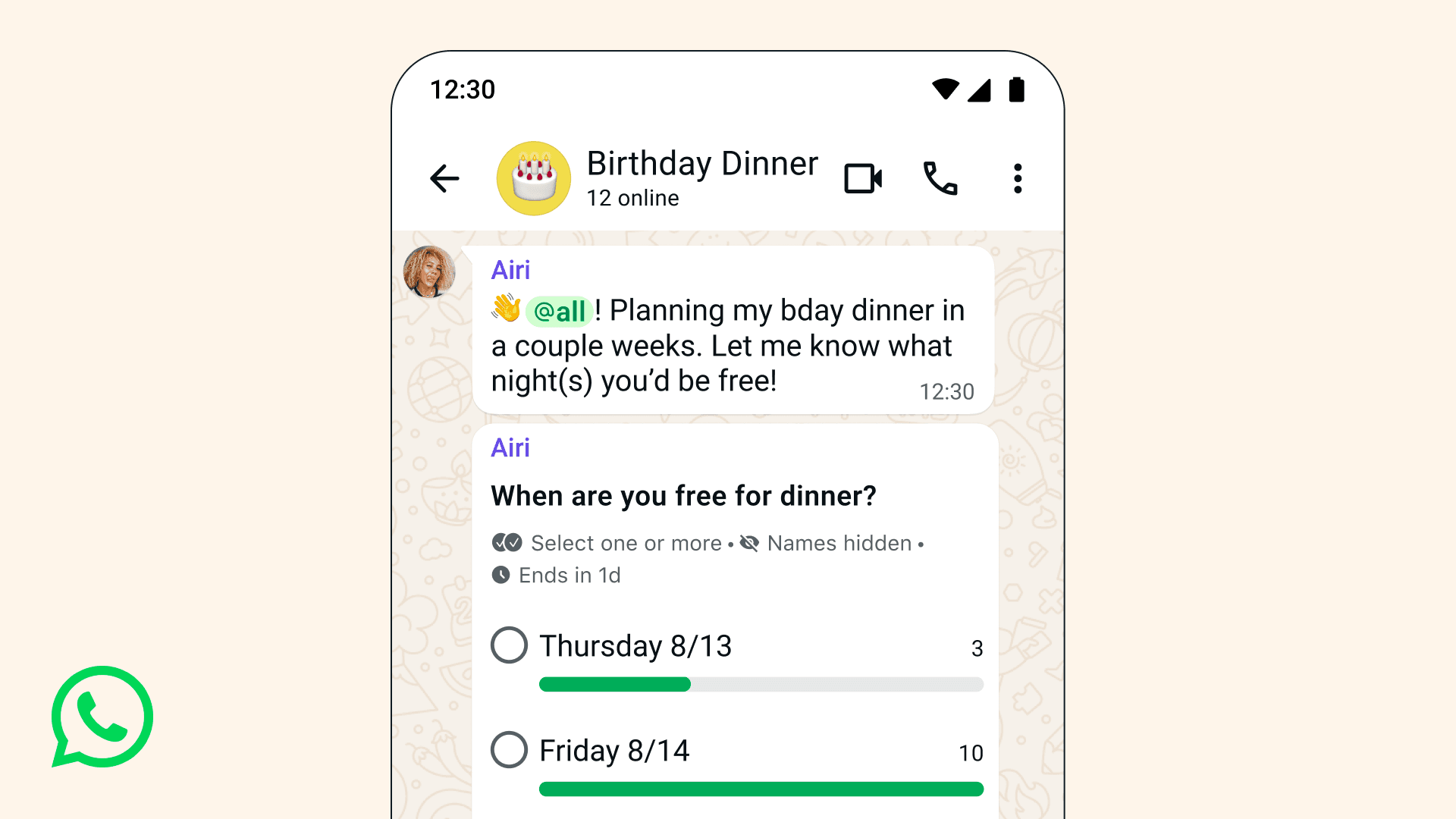
WhatsApp gets a handy @all feature for group chats, alongside anonymous polling and a one-tap option to spin up smaller private conversations, as part of its latest software update. The new tools address long-standing demands from users who manage large community groups on the messaging platform.
New Group Tools Target Community Leaders
The update centers on three capabilities designed for groups that have grown too large for manual coordination. The @all mention, triggered by typing "@everyone" or a similar command, alerts all participants in a single notification. This eliminates the need to manually tag each member or rely on broadcast lists.
The @all feature works in any group, but WhatsApp is likely to recommend its use in communities with dozens or hundreds of members where reaching everyone individually is impractical. The company has not specified notification limits, raising the risk of spam or alert fatigue in extremely large groups.
Anonymous Polls and Private Spaces
Anonymous polling addresses a privacy gap that had frustrated group leaders. Previously, any vote in a WhatsApp poll revealed who voted for which option. The new setting lets admins toggle anonymity before launching a poll. Private subchats, meanwhile, function as a lightweight alternative to WhatsApp Communities. A group member can initiate a private conversation with a subset of the group's participants; the main group sees no record of that discussion, preserving privacy for sensitive topics.
Why This Matters
The updates shift WhatsApp further toward a platform for structured group interaction rather than simple peer-to-peer messaging. For businesses and community organizers, the @all feature and anonymous polls reduce administrative overhead. But the changes also create new moderation challenges: unmoderated @all mentions can overwhelm members, and private subchats may fragment group visibility. As messaging apps add work-focused features, WhatsApp's moves could pressure competitors such as Telegram and Slack to respond with similar tools. The broader trend points to messaging platforms evolving into full-featured collaboration hubs, blurring the line between social chat and workplace software.