Senior Editor: Alan Agbele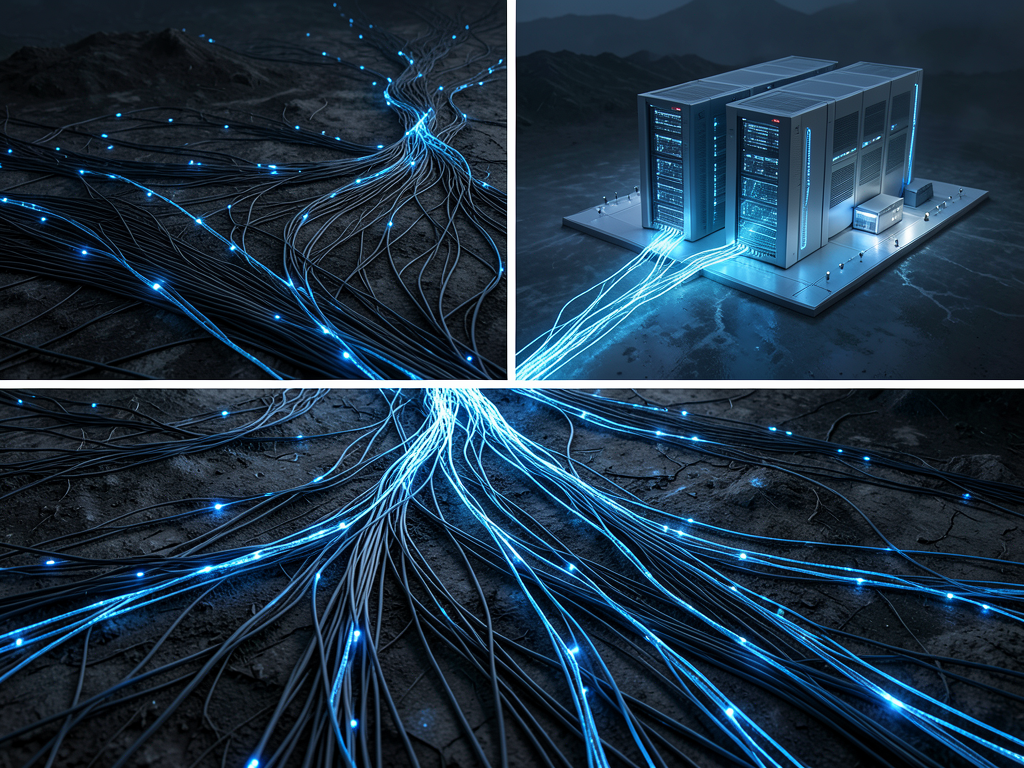
Verizon sealed a $1 billion deal with Google to connect AI data centers across the United States using its existing dark fiber network. The agreement is the first major contract under Verizon's AI Connect initiative, which aims to support the growing infrastructure demands of artificial intelligence.
Verizon's AI Connect and Dark Fiber Strategy
CEO Dan Schulman has made fiber expansion a central part of Verizon's turnaround. The company recently completed its $20 billion acquisition of Frontier Communications, expanding its US Fiber footprint to 31 states. At the same time, Verizon has been removing old copper lines from central offices and replacing them with modern fiber to meet AI demand. The Google deal is the first public result of the AI Connect initiative, which Schulman expects to grow over the next decade.
Dark fiber gives Verizon a cost advantage. Since the cables are already in the ground, the company can activate them at a fraction of the cost of building new routes. This lets Verizon offer competitive pricing to hyperscale customers like Google while improving its own margins.
What the Deal Means for AI Infrastructure
AI data centers increasingly need to connect with each other to share computing tasks, train large models and run inference. These connections demand high bandwidth and low latency, which dark fiber can provide better than traditional leased lines.
Verizon's mobile business also benefits from the fiber expansion. The company has tested connectivity for autonomous robotaxi fleets, and Schulman said on an earnings call that Verizon sold out capacity in 24 hours for one such trial. That suggests commercial demand for AI-driven services extends beyond data centers.
Pressure on Rivals and the Broader Market
The Google deal puts additional pressure on T-Mobile and AT&T. New Street Research analyst David Barden noted that Verizon's recent moves and second-quarter results are forcing competitors to defend their market share rather than attack. The shift may also accelerate cable companies' wireless push and increase broadband churn.
Verizon's strategy appears to be a strong bet on AI infrastructure. With data center installations approved almost weekly, the $1 billion Google deal could be the first of many. If Verizon can dominate direct fiber links between AI data centers, it could reshape the competitive landscape for telecom and cloud services alike.
Why This Matters
This deal signals that large telecom companies are becoming essential players in the AI economy. Verizon's ability to monetize its dark fiber assets gives it a low-risk path to revenue growth. For Google, the agreement ensures dedicated, high-capacity connections for its AI workloads without relying on public internet or spot-market bandwidth. The broader impact is that fiber infrastructure, long considered a legacy asset, is now a strategic resource for the AI era. Other telecom firms will likely follow Verizon's lead, and the US Fiber network will become a critical backbone for data center interconnects.