Senior Editor: Alan Agbele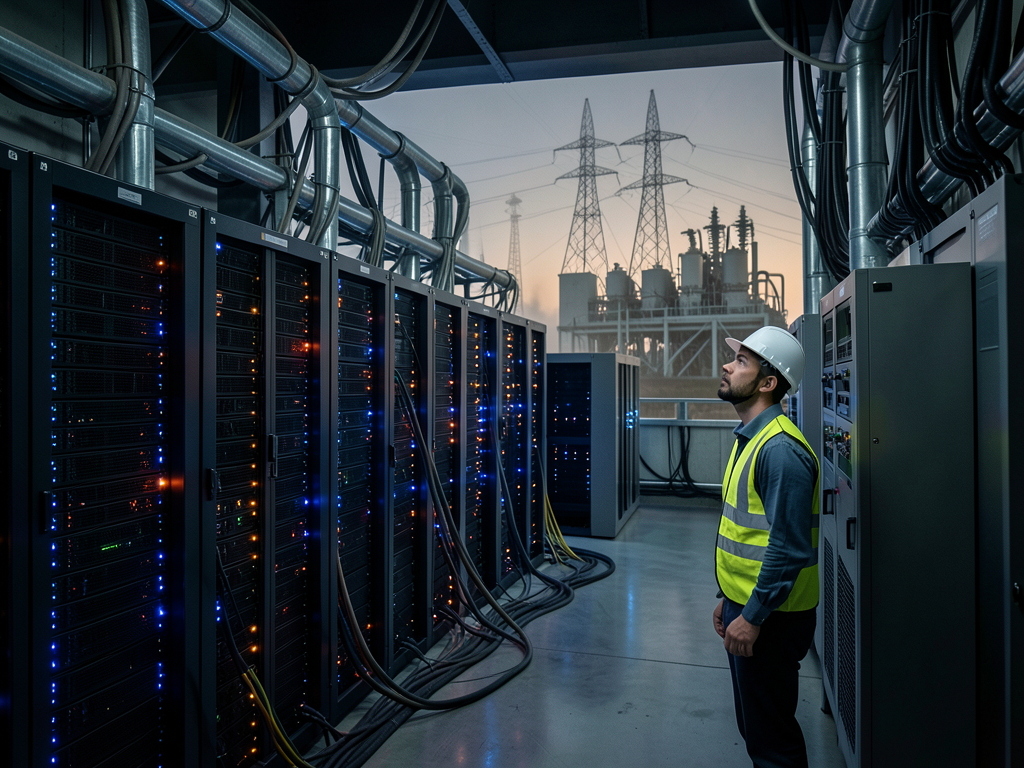
A new wave of artificial intelligence known as agentic AI is consuming far more electricity than traditional chatbots, forcing Silicon Valley data center operators to rethink their energy strategies. The shift from simple query-answering models to autonomous agents that can plan, execute tasks and interact with software is driving an exponential increase in computational load. Industry observers say the trend, sometimes dubbed 'AI Agents Are Thirsty,' is testing the limits of existing power grids.
The Rise of Agentic AI
For much of the past two years, companies focused on generative AI models that respond to prompts with text or images. Those models typically run in short bursts, allowing data centers to manage power loads. Agentic AI, however, operates continuously, orchestrating multi-step workflows that keep thousands of graphics processing units busy for hours or days. This persistent computation changes the energy equation entirely.
Major tech firms and startups alike are pivoting to agentic architectures. The result is a surge in power procurement requests across Northern California, where Power Silicon Valley initiatives are being launched to upgrade transmission lines and add substations. Utility providers report that connection requests from new data centers have doubled year over year.
Infrastructure Pressure Points
Data center operators face a trio of challenges as they scale for agentic workloads:
Why This Matters
The power bottleneck threatens to slow the adoption of agentic AI for companies that cannot secure reliable, low-carbon electricity. Smaller startups may be priced out of the region as costs rise, pushing innovation to other states or countries with less strained grids. For consumers, the shift means faster and more capable AI services but also higher energy bills passed through cloud providers. Silicon Valley's ability to sustain its AI leadership now depends as much on energy infrastructure as on algorithmic breakthroughs.
Broader Market Implications
The energy appetite of agentic AI is reshaping investment patterns. Venture capital is flowing into nuclear microreactor startups and geothermal projects that promise around-the-clock carbon-free power. Major cloud providers are signing long-term purchase agreements for renewable energy at record levels. This creates a feedback loop: as AI becomes more autonomous, it accelerates the transition to new energy sources. The race is on to see whether grid upgrades can keep pace with model releases.
Industry analysts warn that without coordinated action from regulators, utilities and tech companies, the power crunch could become a bottleneck within two years. The term 'AI Agents Are Thirsty' captures the urgency of finding sustainable solutions for an industry that shows no sign of slowing its computational thirst.