Senior Editor: Alan Agbele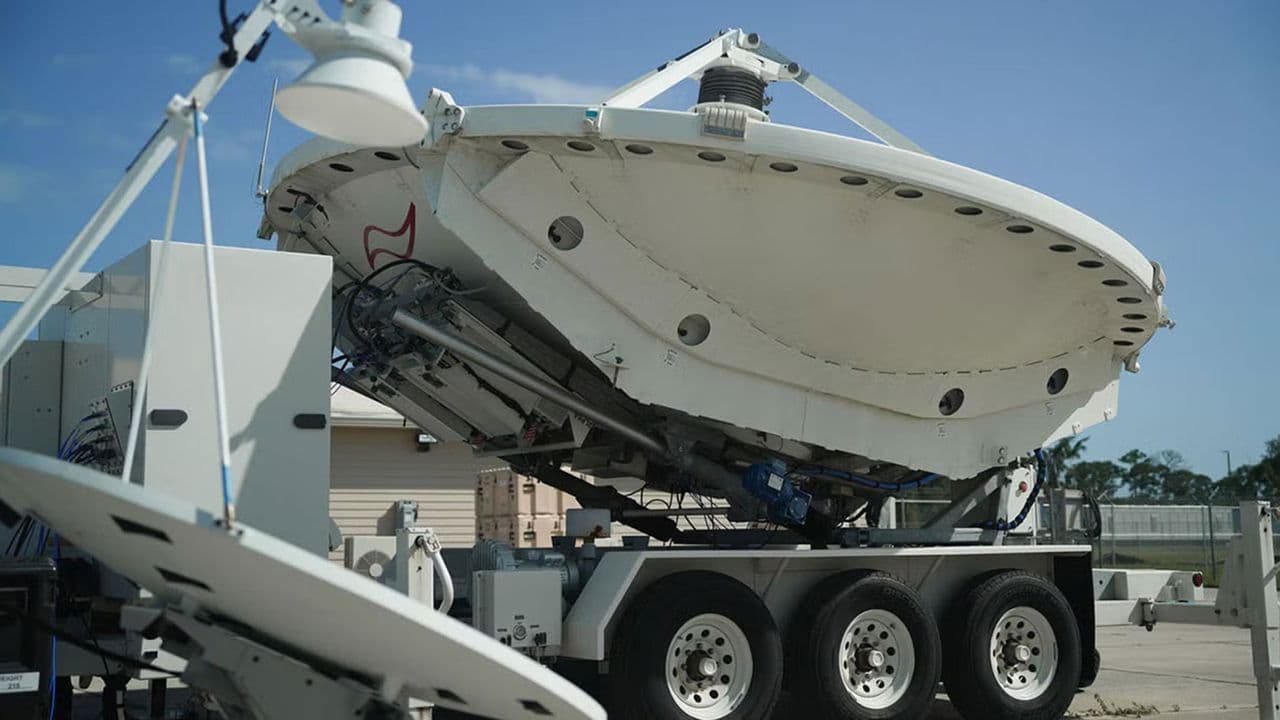
The U.S. Space Force has accepted delivery of the first Meadowlands Counter Communications System (CCS), a mobile electromagnetic warfare platform designed to disrupt enemy satellite operations. This system, which fits into a wheeled transportable form factor, represents a significant upgrade in the military's ability to contest control of the electromagnetic spectrum in space.
A New Generation of Electromagnetic Warfare
Meadowlands provides a critical leap beyond the current CCS 10.2 system, offering enhanced mobility and effectiveness. The system's electromagnetic warfare abilities rely on a muscular array of directional antennas and high-power RF amplifiers rather than lasers or microwave beams. This approach allows for highly targeted disruption of adversary capabilities across the globe and in space.
Typical tasks for the Meadowlands include:
Operational Significance and Future Plans
Space Force Lt. Col. Ryan Skilling, commander of the 4th Electromagnetic Warfare Squadron, said the system enables forces to more effectively support the joint scheme of maneuver across the continuum of conflict. The delivery marks what Space Force Combat Forces Command calls a huge milestone in capability, with the new kit being lighter and more easily transportable than its predecessor.
More than just a single unit, the command intends to build its Meadowlands fleet to 32 systems in due course. This expansion will provide U.S. Space Command with a robust toolkit for achieving spectrum dominance in contested environments.
Why This Matters
The arrival of Meadowlands signals a decisive shift toward non-kinetic space warfare capabilities. Unlike anti-satellite missiles that create dangerous debris, electromagnetic weapons can disable or degrade satellites without physical destruction. This reduces collateral risk while still denying adversaries the use of their space assets.
For commanders, Meadowlands offers a flexible, scalable option for controlling the electromagnetic spectrum. As satellite constellations become central to modern military operations, the ability to deny, disrupt, and degrade those systems becomes a strategic imperative. Nations that cannot protect their space-based communications and reconnaissance face a growing vulnerability. The U.S. Space Force's commitment to deploy 32 Meadowlands units underscores the priority placed on electromagnetic warfare in the emerging domain of space conflict.