Senior Editor: Alan Agbele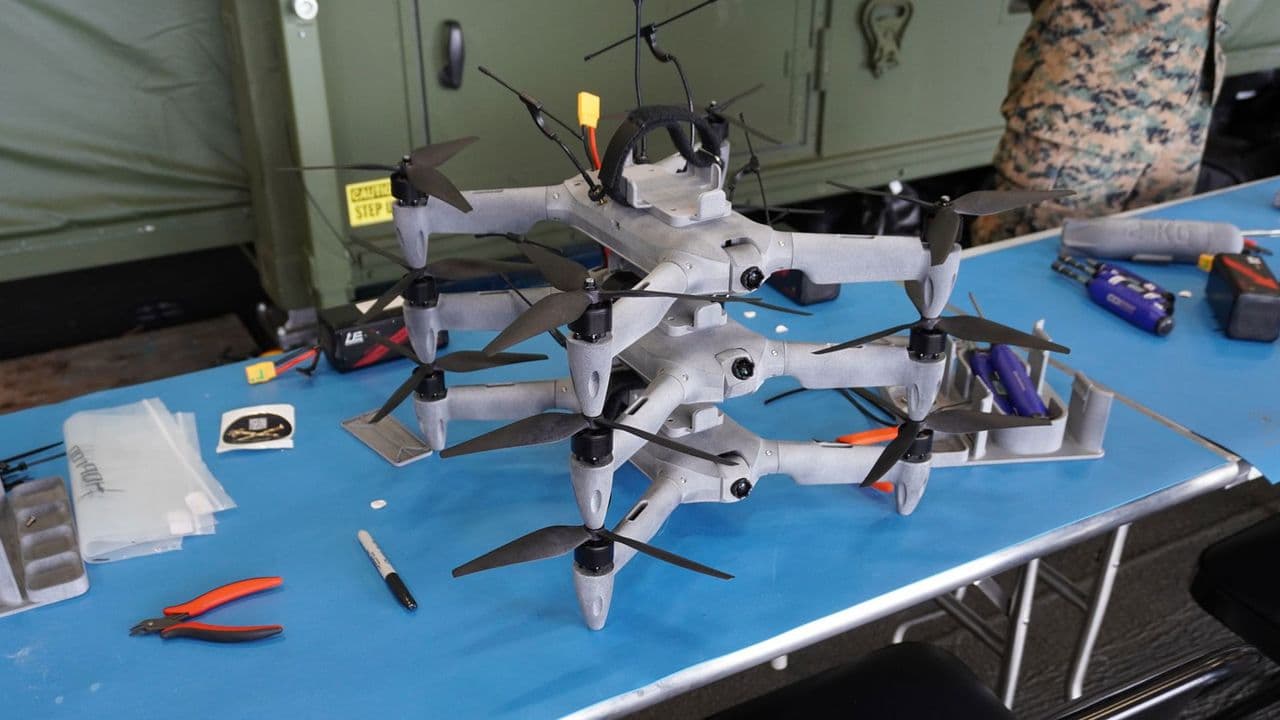
For the first time, a containerized additive manufacturing factory aboard a US Navy amphibious assault ship produced flight-ready drones and hundreds of spare parts while underway to a major exercise. The USS Essex printed 12 Squall FPV drones and more than 1,000 components during its two-week transit to RIMPAC in Hawaii, proving that expeditionary manufacturing can function in rough seas and 12-foot waves.
How the Production Worked at Sea
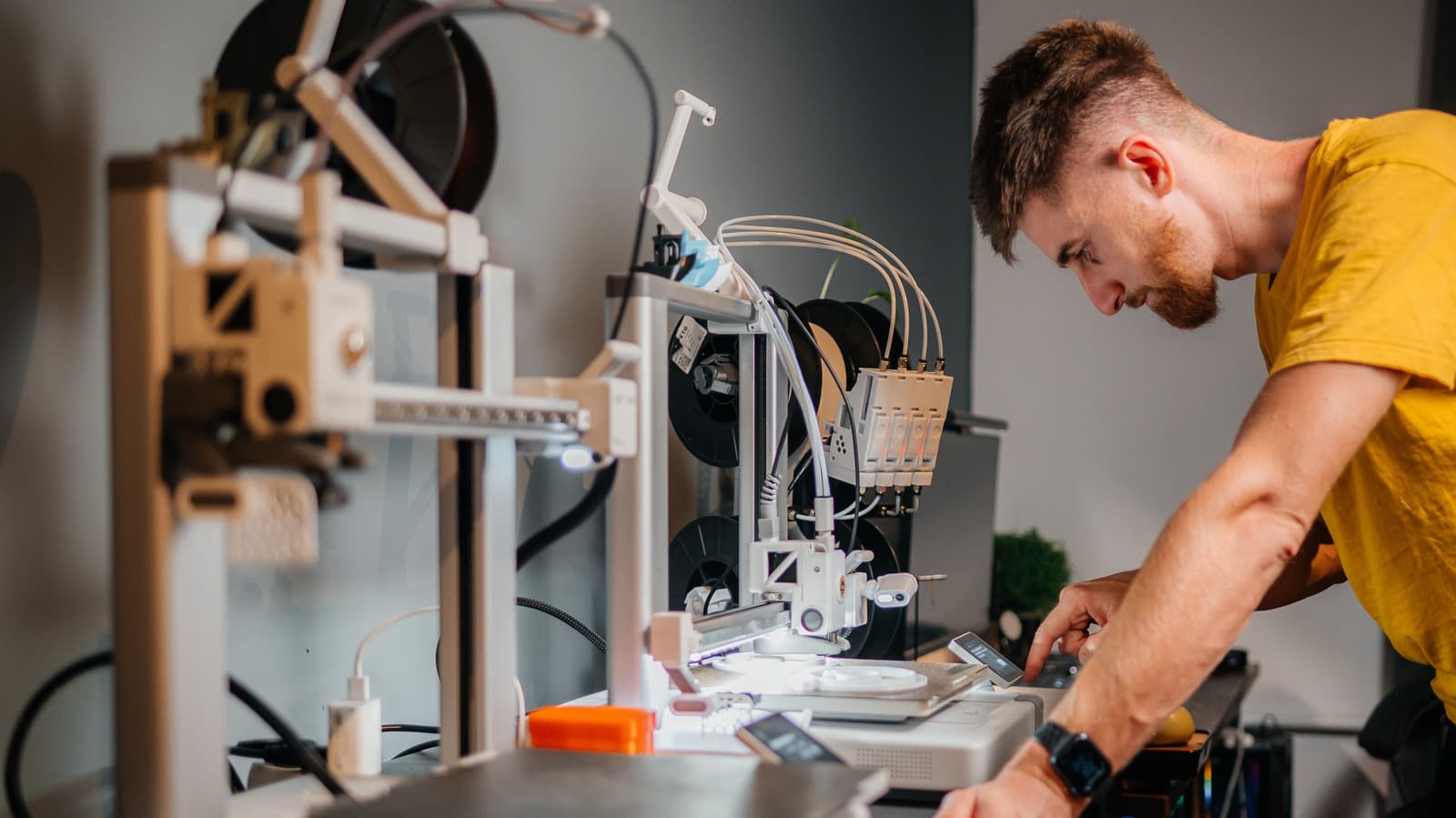
Firestorm Labs deployed its xCell expeditionary manufacturing platform for the first maritime run. The system fits inside two expandable 20-foot ISO containers or a single 40-foot equivalent. Inside, industrial HP Multi Jet Fusion polymer printers worked alongside semi-automated assembly stations to produce parts on demand.
Throughout the voyage, the xCell platform kept producing despite rolling seas and 12-foot waves. Firestorm Labs stated that the milestone “just proved expeditionary manufacturing works in real conditions.”
Why This Matters
This demonstration shifts the logistics paradigm for naval operations. A ship that can manufacture its own drones and replacement parts no longer must wait for resupply convoys or airlift. In contested waters, every part printed on deck is one that does not need to be flown or shipped across dangerous territory. The US Navy cuts fuel, aircraft hours and personnel required to keep a ship operational. For repairs that once meant days or weeks of delay, the turnaround now shrinks to hours. The ability to print NDAA-compliant Squall drones on demand also gives commanders immediate access to reconnaissance and counter-UAS assets without relying on external deliveries. As the Navy continues to test distributed advanced manufacturing, the USS Essex voyage sets a new benchmark for self-sufficient naval warfare.