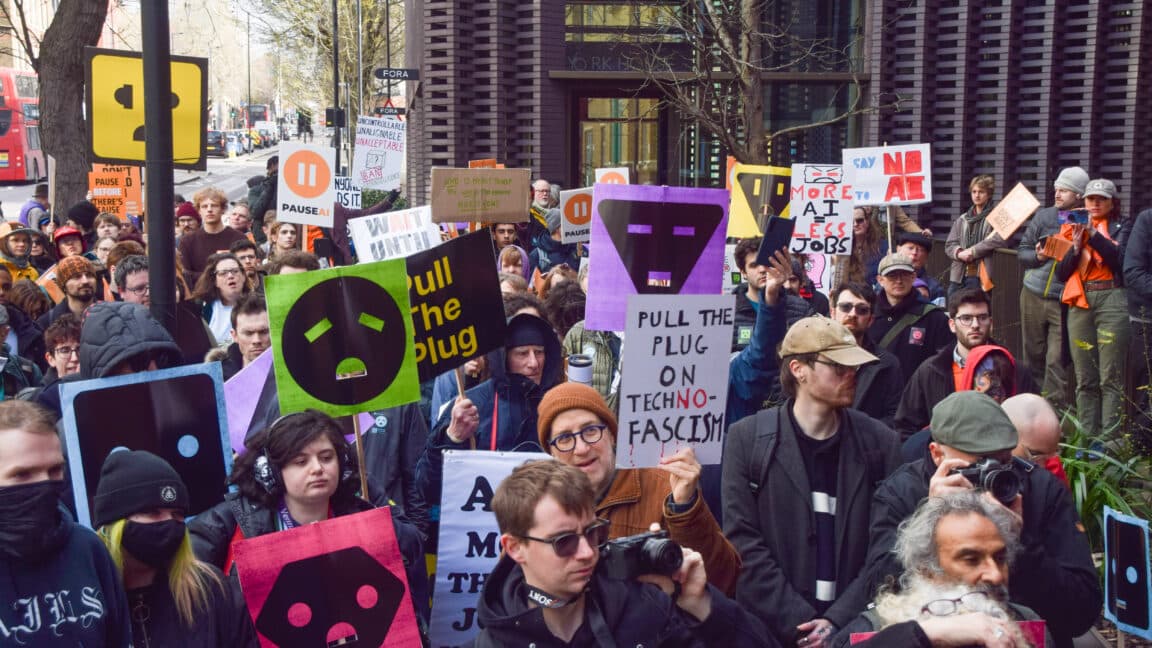
Attacks on tech CEOs, protests outside data centers and widespread fear of AI-driven job loss have triggered a new law enforcement priority. Federal intelligence agencies and domestic police are now circulating reports warning of an emerging threat they call anti-tech extremism.
More than 1,000 pages of unpublished documents from the Department of Homeland Security, the FBI and fusion centers obtained by WIRED reveal a national shift. Authorities are broadening surveillance to include a wide range of activities deemed potentially dangerous. The effort follows President Donald Trump's National Security Presidential Memo 7, which orders the Justice Department to target people holding anti-American, anti-Christian or anti-capitalist beliefs.
New Surveillance Focus
The counterterrorism strategy released earlier this month by Trump's counterterrorism czar Sebastian Gorka explicitly lists left-wing extremists as one of the three top domestic threats. The definition of anti-tech extremism remains vague, covering anyone from protesters blocking data center construction to individuals expressing strong opposition to artificial intelligence.
Law enforcement fusion centers across the country have begun collecting intelligence on activists, online commentators and groups that criticize the rapid expansion of AI. The reports cite the recent attack on OpenAI CEO Sam Altman at his home and a growing movement of resistance to new data centers as catalysts for the heightened concern.
Broad Definition Raises Concerns
Civil liberties advocates warn that the broad sweep of the new classification could chill legitimate dissent. The government documents do not distinguish between violent acts and peaceful protest. Critics argue that labeling opposition to AI as extremism risks targeting journalists, academics and community organizers who raise questions about automation and job displacement.
The Department of Homeland Security has not publicly defined the specific behaviors that trigger an anti-tech extremist label. Internal guidance reportedly includes activities such as spreading alleged misinformation about AI's environmental impact or calling for boycotts of major technology companies.
Why This Matters
This new law enforcement focus directly affects anyone who participates in public debate about artificial intelligence. Protesters, researchers, labor advocates and tech workers who speak out could find themselves under surveillance. The economic implications are significant as automation continues to reshape entire industries. The government's response signals that dissent against the tech sector will face increased scrutiny, potentially reshaping how Americans engage with one of the most consequential technological shifts of the decade.
The shift also raises questions about the balance between national security and First Amendment rights. With no clear legal threshold for what constitutes anti-tech extremism, the door is open for overreach. As AI hatred grows, so does the tension between protecting public safety and preserving the right to criticize powerful institutions.