Senior Editor: Alan Agbele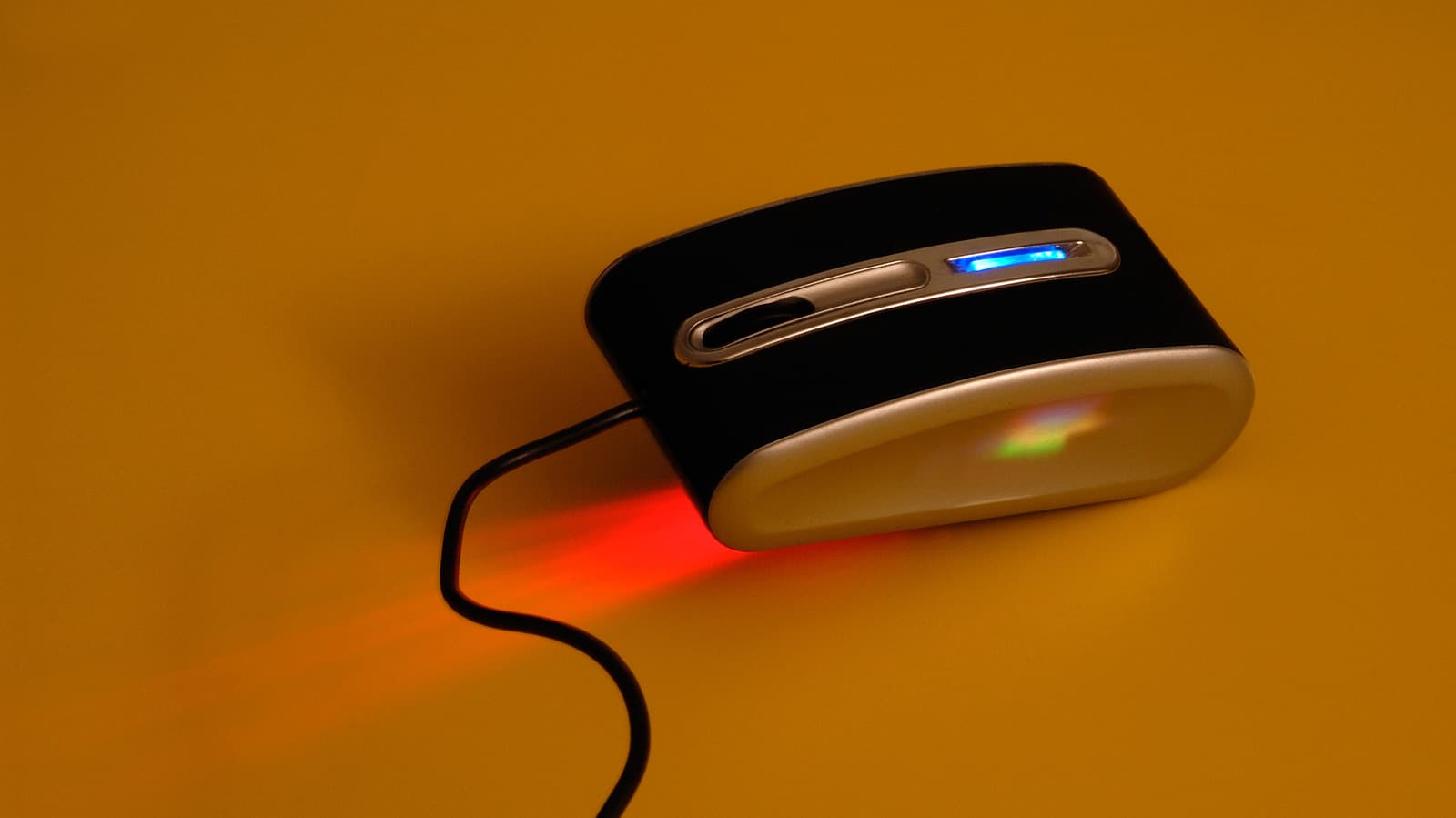
That red glow beneath your mouse is not a random design flourish. It represents a deliberate engineering choice driven by cost, sensor behavior and decades of manufacturing refinement.
Why Red Won the Mouse Race
The question "Why Do Optical Computer Mice Always Use Red Lights" has a straightforward answer rooted in engineering economics. Early optical sensors relied on silicon photodiodes, which naturally peak in sensitivity around 650 to 700 nanometers. Red LEDs emit in that exact range, making them the most efficient and lowest-cost illumination source for the sensor.
Manufacturers then standardized on red LEDs because they delivered consistent performance across the most common mouse surfaces. Switching to a different color would require redesigning the sensor or adding a filter, raising costs without clear benefit.
Alternatives That Never Took Off
Blue LEDs and infrared LEDs are both technically viable for optical mice. Blue light, however, requires a more expensive sensor because silicon is less sensitive at shorter wavelengths. Infrared LEDs work well but are invisible to the human eye, which means users would not see a glow. That lack of a visible indicator actually became a disadvantage for some manufacturers who wanted a clear signal that the mouse was powered on.
Laser mice use a different technology entirely. They rely on a vertical-cavity surface-emitting laser (VCSEL) instead of an LED. Lasers track on more surfaces, including glass and glossy tables, but they add $5 to $10 to the manufacturing cost. For a budget mouse that sells for $15, that premium is prohibitive.
Why This Matters
The red LED is not a technical limitation but a practical compromise that has shaped the entire consumer mouse market. Because red LEDs are cheap and reliable, manufacturers can sell a functional optical mouse for under $10. That low price point has made optical mice ubiquitous in offices, schools and homes worldwide.
For users who need precision on tricky surfaces, laser mice remain a better option. But for the vast majority, the red glow under the mouse is a sign of a design that balances cost, performance and reliability. As long as silicon photodiodes and red LEDs remain the cheapest combination, the red glow will stay.