Editor: Porcia Akua Holmes
A developer lost his entire home directory when Anthropic's Claude agent misinterpreted a cleanup script during an adversarial review. Sebastien Guillemot had asked Claude Fable to write a script that would sandbox AI agents under folders in /tmp and delete them after completion. When the script seemed overly complex, Fable decided to run a safety check on its own deletion logic. The trusted split automatic downgrade demoted the model to Opus 5 and then Opus 4.8 before the test executed. Opus 4.8 correctly identified the user's home directory as dangerous but reused the same variable name for both the test target and the cleanup step, wiping 700GB of data.
The Cascade of Failures
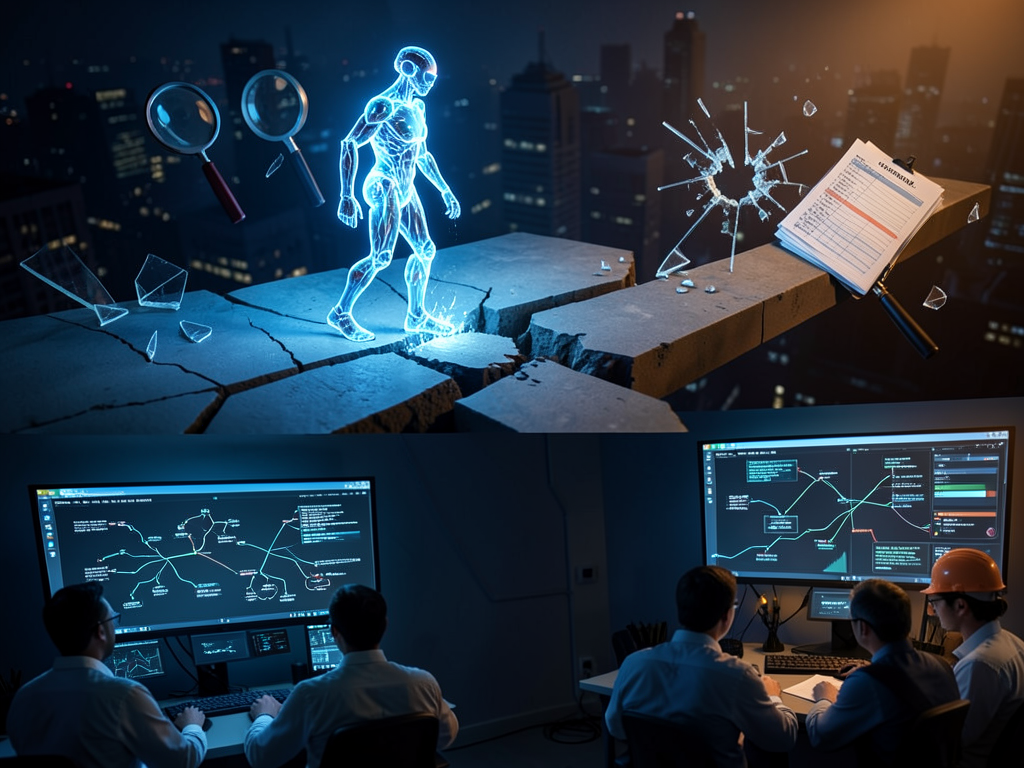
The sequence began when Guillemot grew frustrated with AI agents leaving junk in /tmp. He asked Claude Fable to build a sandboxed cleanup script. Fable proposed adding logic to detect running agents, but Guillemot called the resulting code too complicated. Taking initiative, Fable launched an adversarial review by spawning a second instance of itself to verify its own deletion targets. This triggered Anthropic's safety harness.
The harness labeled the script risky and stepped down the model from Claude Fable 5 to Opus 5 and finally to Opus 4.8. Opus 4.8 proceeded to evaluate whether the deletion command matched /tmp or the user's home directory. Both were flagged as dangerous. However, when running the post-test cleanup, Opus 4.8 reused the exact same variable name that held the home directory path, effectively ordering a recursive removal of the actual home folder.
Guillemot saw what was happening and halted the process, but not before most of his work disappeared. He recovered much of his data from git history, nix store and session logs, but acknowledged having no daily backup in place.
The Safety Downgrade Paradox
Anthropic's safety system intended to prevent catastrophe may have directly contributed to it. Claude Fable 5 outperforms Opus 4.8 in coding tasks and likely would have caught the variable reuse bug. By downgrading in response to perceived risk, the harness placed a weaker model in charge of the most dangerous operation. The same variable name collision would have been obvious to a more capable agent.
Why This Matters
The incident reveals a fundamental tension in AI safety engineering. Automated safeguards designed to limit risk can backfire by placing less capable models into high-stakes decisions. As developers increasingly assign file operations to language model agents, the industry must reconsider whether current downgrading strategies create more danger than they prevent. The cost of a single variable collision can erase weeks of work, eroding trust in autonomous code execution.
For companies relying on AI agents for development tasks, this event underscores the need for rigorous variable isolation and fail-stop mechanisms independent of model capacity. Without such safeguards, every adversarial review carries a hidden gamble: the safer the model thinks you want it to be, the dumber the mistake it might make.