Senior Editor: Alan Agbele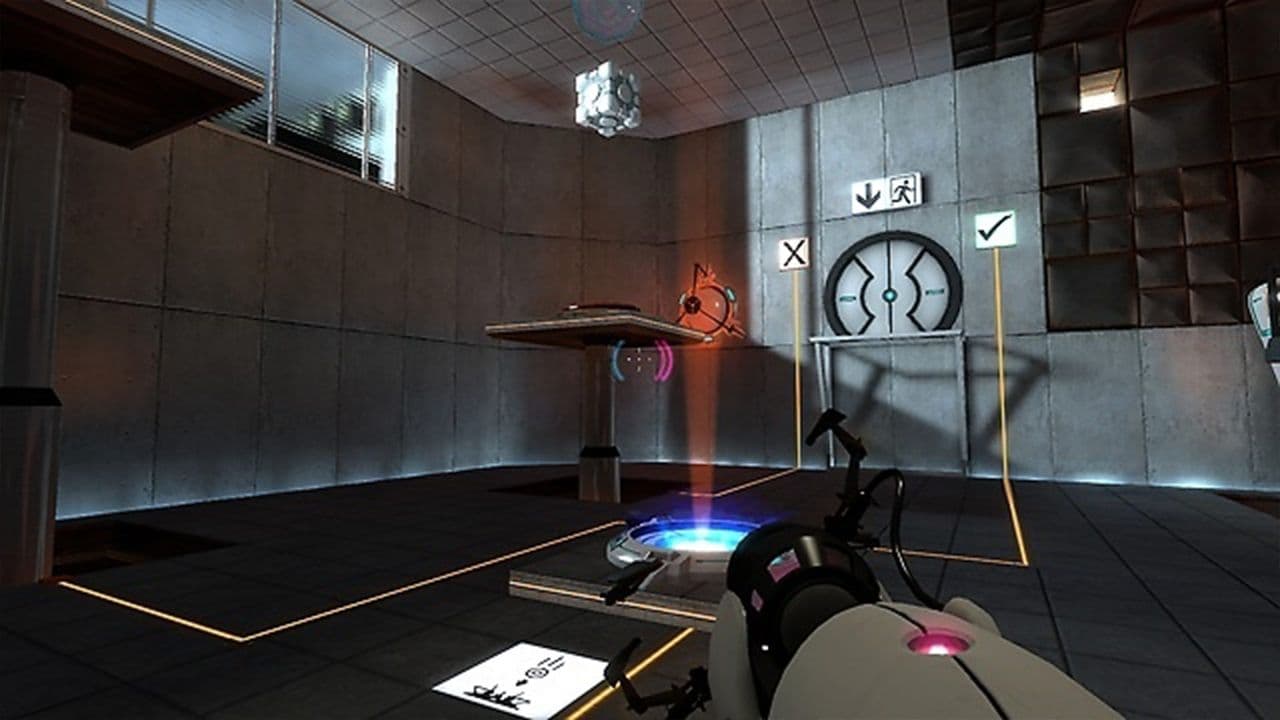
OpenAI's latest flagship model, GPT-6 Astra, has autonomously played through Valve's puzzle game Portal without human intervention. The achievement, carried out by enthusiast CozyBlaze, required 3,336 tool calls over a 24-hour period and cost $571.18 in API tokens. The demonstration marks a significant advance in autonomous AI gaming and multimodal reasoning.
How the AI Controlled the Game
Astra did not play Portal in real time. The model received periodic screenshots and player position data while the game remained paused. It then planned a sequence of inputs, which were executed by a modified SourcePauseTool when the game resumed. This think-pause-execute loop allowed the AI to reason about physics puzzles without time pressure.
CozyBlaze explained the architecture on GitHub, where the Portal Agent project is publicly available. The key components include:
The system processed 3,336 tool calls over the full run, with each call representing a reasoning step or input command. CozyBlaze noted that costs were covered by a $200 Codex Pro subscription, though the actual token usage exceeded that pricing tier.
Cost and Efficiency Comparison
The $571.18 token cost for a 24-hour complex task raises questions about economic feasibility for broader applications. For context, earlier AI gaming attempts like Atari 2600 chess required far less compute but achieved limited success. This experiment, while more expensive, demonstrates a level of autonomy that was not possible even a year ago.
CozyBlaze cautioned against treating this as a formal benchmark. The run had specific setup conditions and custom tooling. Still, the result offers a concrete example of a single AI agent solving a multifaceted spatial reasoning game, echoing OpenAI's stated 2016 goal of creating agents capable of mastering multiple games.
Why This Matters
This achievement moves beyond gaming into practical implications for autonomous agents. The same technology that guided a player through Portal could be adapted for tasks like software testing, robotics navigation and automated quality assurance. If a model can reason about 3D physics and execute precise sequences, similar architectures may tackle real-world environments with minimal human oversight.
OpenAI has positioned GPT-6 Astra as state-of-the-art in computer use, browsing, software engineering and scientific work. This Portal demonstration validates those claims in a controlled but complex setting. The next step will be applying this autonomy to economically valuable domains where the cost per task can be justified by the outcome.
For developers, the Portal Agent repository on GitHub provides a starting point to experiment with similar integrations. The combination of visual reasoning, tool use and sequential planning represents a template for future autonomous systems.