Senior Editor: Alan Agbele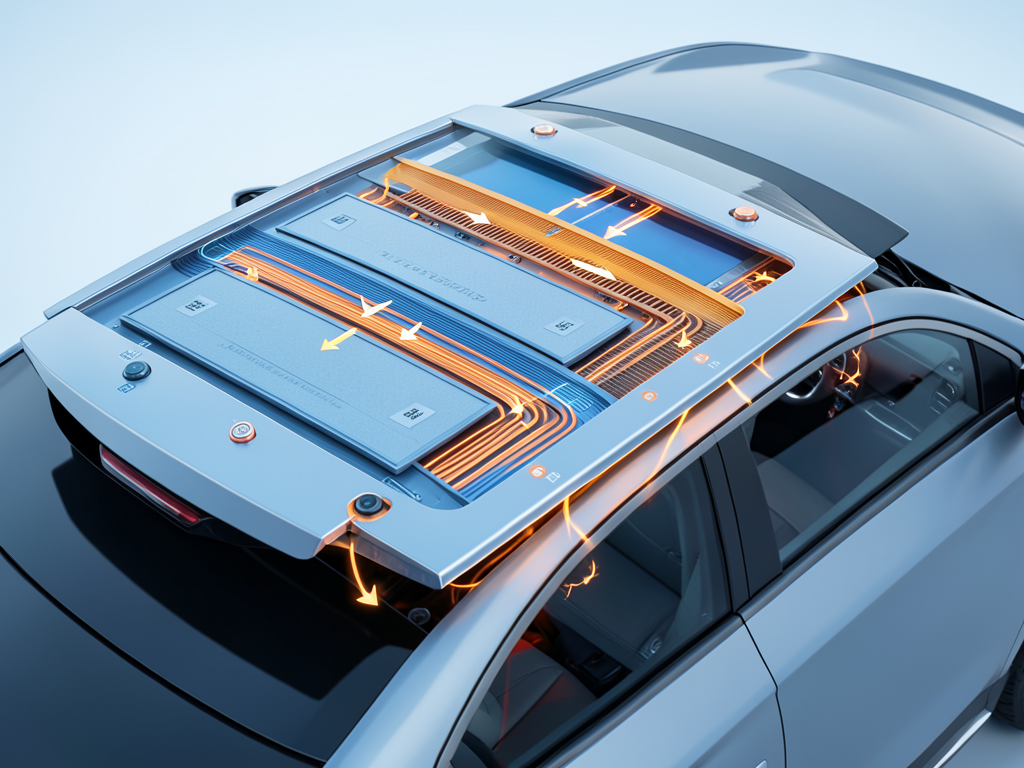
Tesla has filed a patent outlining a novel approach to cabin climate control that would turn the vehicle's roof into an active component of the air conditioning system. The design described in the patent shows how the roof could absorb, store or dissipate heat to regulate interior temperature more efficiently than current methods.
How the Roof Climate System Works
Tesla's patent details a multi-layered roof design that includes phase-change materials and airflow pathways. The roof can either capture solar heat to warm the cabin in cold weather or vent hot air away during summer. The system uses sensors to detect interior and exterior temperatures, then adjusts the roof's thermal behavior automatically. This approach shifts part of the climate control burden from the battery-powered compressor to passive thermal exchange.
Key aspects of the patent include:
The patent builds on Tesla's existing heat pump technology, which already improves efficiency in newer models. Adding the roof as an active thermal element could extend that gains further by managing heat directly at the vehicle's largest surface area.
Why This Matters
For Tesla owners, the most immediate benefit would be extended driving range in extreme temperatures. Heating and cooling can reduce EV range by 20 to 30 percent in winter or summer. A roof that handles part of that load could translate into tens of miles of additional range per charge. For the broader auto industry, this patent points toward a future where every surface of a vehicle contributes to energy efficiency. If Tesla brings this to production, competitors may face pressure to develop similar integrated thermal solutions.
What This Means for EV Efficiency
Cabin climate control remains one of the biggest challenges for electric vehicles because it drains the same batteries that power the drivetrain. Traditional systems rely on resistive heating or power-hungry compressors. Tesla has already led the industry with heat pump adoption. Now the company appears to be exploring how passive building science principles can apply to cars. The roof patent suggests Tesla is thinking beyond conventional HVAC to treat the entire cabin envelope as a thermal system. This could lead to lighter, simpler climate hardware and faster temperature changes with less battery consumption.
The patent filing shows the roof concept is still in early stages. Tesla's production timelines and implementation details remain unclear. However, the direction is consistent with the company's broader push to maximize efficiency across every component of its vehicles. If successful, the smart roof air conditioner could become a standard feature in future Tesla models, setting a new benchmark for EV climate technology.