Senior Editor: Alan Agbele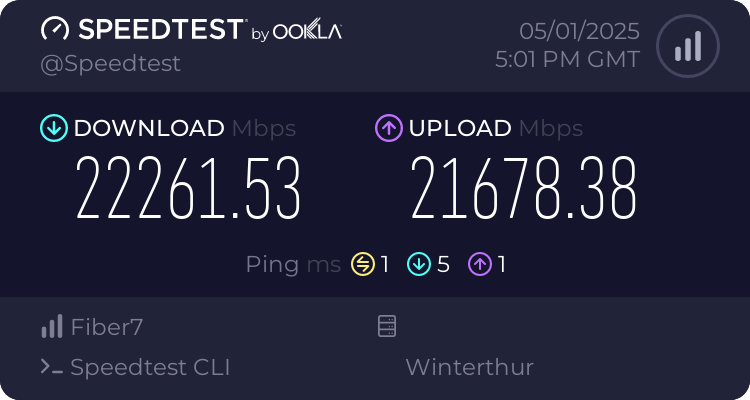
A stark broadband divide separates Switzerland and the United States. Swiss residents routinely access 25 Gbit internet connections, a speed that remains a distant promise for most American households. This gap has fueled a debate about whether market forces alone can deliver next-generation infrastructure.
The Swiss Broadband Model
Switzerland's approach to high-speed internet is rooted in a long history of utility-led infrastructure. Local electricity and telephone companies, often publicly owned, began deploying fiber optic networks years ago. These entities were not driven solely by profit but by a mandate to serve citizens. They laid fiber to the home across dense urban areas and even in many rural regions. The result is a network that can support symmetric 25 Gbit speeds as a standard offering.
The argument often framed as The Free Market Lie: Why Switzerland Has 25 Gbit Internet and America Doesn't points to these structural differences. In Switzerland, the government set clear long-term goals and provided funding. In the US, the market was left to decide, leading to uneven coverage and slower average speeds.
Key factors behind Switzerland's broadband leadership include:
Where the US Falls Behind
The United States, with its fragmented telecom landscape, has taken a different path. Private companies such as Comcast, AT&T and Verizon have built networks primarily in profitable urban areas, leaving rural and lower-income regions with slower options. Federal programs like the Broadband Equity, Access and Deployment program aim to close gaps but face implementation challenges and political uncertainty.
Market incentives have not produced Switzerland's level of universal high-speed access. The premise that competition alone would drive investment has proven insufficient. Many Americans still rely on asymmetric connections with much slower upload speeds, limiting remote work, education and online business capabilities.
Why This Matters
The broadband divide directly affects economic opportunity, educational equity and healthcare access. Swiss households and businesses can upload large datasets, stream high-resolution video and participate in advanced telemedicine without bottlenecks. American homes with slower connections face constraints on productivity and innovation. As data demands grow with technologies like 4K streaming, cloud computing and virtual reality, the gap will widen unless policy changes occur.
The Swiss example shows that achieving symmetrical multi-gigabit speeds is not a technical impossibility but a political and economic choice. For US policymakers, the lesson is clear: relying solely on private investment risks leaving millions behind. The Gbit Internet gap is not about technology but about the willingness to treat broadband as essential infrastructure rather than a luxury good.
Lessons for American Broadband Policy
To close the gap, US policymakers could adopt elements of the Swiss model: encourage municipal broadband, enforce open access, and provide stable long-term funding. The current patchwork of federal grants and tax credits lacks the coherence needed to replicate Switzerland's success.
The statement America Doesn have the same level of state-led coordination underscores a deeper structural issue. Until the US aligns investment incentives with universal service goals, the broadband disparity will persist. Switzerland's 25 Gbit internet is not a fluke; it is the result of deliberate policy.