Senior Editor: Alan Agbele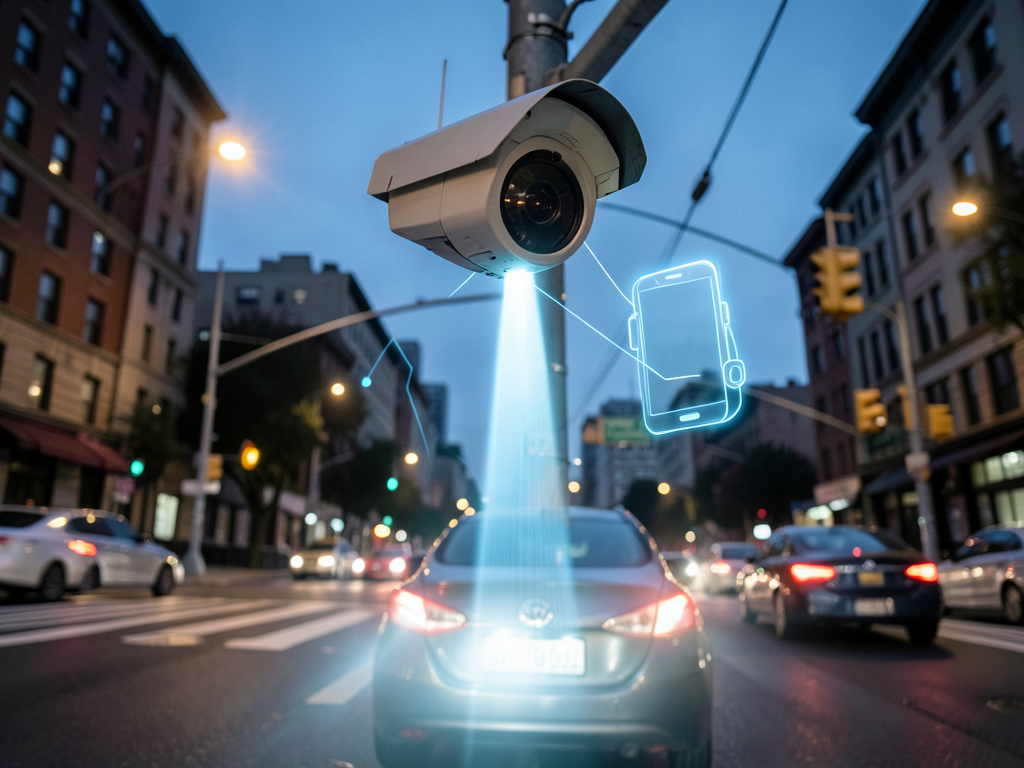
A new surveillance system marketed by the defense company Leonardo allows police investigators to link mobile devices such as phones and smartwatches to specific vehicles without ever capturing a name or carrying out a warrant. The technology, called SignalTrace, was designed to work alongside existing automatic license plate readers already deployed on roads across many cities.
How the Device Tracking Works
The process begins when a vehicle passes a camera equipped with an automatic license plate reader. The camera records the plate number while a secondary sensor detects Bluetooth and Wi-Fi beacon frames transmitted by nearby gadgets such as phones, fitness trackers and smartwatches. Over multiple passes, software analyzes which device identifiers consistently accompany the same license plate.
SignalTrace users can set a threshold for how often a group of devices must appear together before they are treated as a recurring electronic signature for that vehicle. Once that profile exists, law enforcement can search for instances where one of those device IDs appeared near another car connected to an open investigation. The technique does not reveal the owner's name directly but gives detectives a new starting point for building a case.
Privacy Implications Under Scrutiny
While Leonardo markets SignalTrace as a tool for narrowing investigations faster, critics argue that the system represents a significant expansion of dragnet surveillance. Because the technology links everyday consumer gadgets to license plates without probable cause, it can generate detailed movement histories for thousands of people who have never been charged with a crime. Courts have yet to rule on whether this type of inferred identification violates Fourth Amendment protections against unreasonable search.
The product arrives amid broader debates over the use of automated license plate readers and cell-site simulators. Some states have already restricted how long police can retain ALPR data, but SignalTrace could sidestep those limits by relying on device fingerprints instead of plate numbers alone. Legal experts say existing privacy laws were written before such cross-referencing techniques existed, creating a regulatory gap that lawmakers may need to close.
Why This Matters
The availability of SignalTrace shifts the balance between investigative utility and personal privacy. For law enforcement, the ability to identify a person by their phone’s proximity to a suspect vehicle could solve cases faster and with less physical surveillance. For the general public, however, the technology means that routine commutes and errands now feed into a searchable database of associations between people and cars. If adoption spreads widely, anyone carrying a smartphone could become part of a de facto location registry tracked by government cameras. Policymakers face pressure to update legal frameworks that have not kept pace with this kind of signal-to-plate correlation, especially given that the system operates without a warrant based solely on passively collected broadcast data.