Senior Editor: Alan Agbele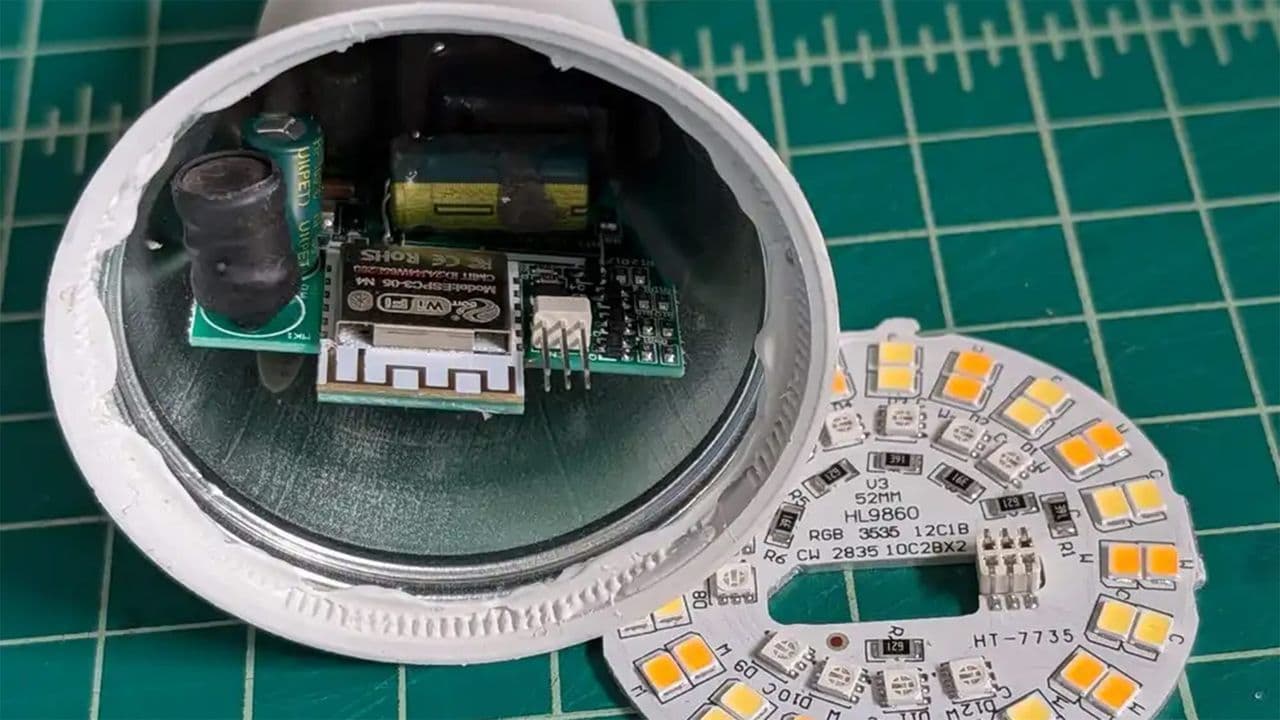
A security researcher has transformed a common Wi-Fi smart lightbulb into a clandestine digital library. The project, described as a 'cyberpunk digital dead drop', makes banned books available through an open Wi-Fi access point embedded in the bulb's firmware.
The hack targets an ESP32-powered smart lightbulb. The researcher loaded the bulb with a custom server that broadcasts an open Wi-Fi network. Anyone within range can connect and browse a collection of digital books that are often restricted or censored in certain regions.
How the Hack Works
The ESP32 microcontroller, commonly found in smart bulbs, offers enough processing power to run a lightweight web server. The researcher replaced the bulb's original firmware with custom code that creates a Wi-Fi access point. When a user connects, they are served a simple interface listing the available books. The bulb continues to function as a light source, making the digital library virtually undetectable.
This approach leverages the fact that many IoT devices have underused capabilities. The researcher noted that the project was inspired by the idea of using everyday objects to distribute information in restricted environments.
Broader Implications for IoT Security and Censorship
The project highlights both the versatility and the potential risks of connected devices. While the intention is to promote access to banned literature, the same technique could be used to host other types of content without the owner's knowledge. This raises questions about IoT device security and the need for manufacturers to protect firmware against unauthorized modifications.
From a censorship perspective, the hack offers a novel method for circumventing content restrictions. Banned books can be distributed locally without relying on centralized servers or the internet. This makes it harder for authorities to detect or block the content.
Why This Matters
This project directly affects IoT device users and manufacturers. For users, it shows that smart devices can be repurposed in unexpected ways. For manufacturers, it underscores the importance of securing firmware to prevent tampering. More broadly, it demonstrates a new tool for activists and journalists seeking to distribute censored information in repressive environments. The technique is low-cost and uses hardware already present in millions of homes.
Security experts have long warned about the risks of insecure IoT devices. This hack flips that narrative, using a potential vulnerability for a constructive purpose. Yet it also serves as a reminder that any connected device can be hijacked for unintended uses.