Senior Editor: Alan Agbele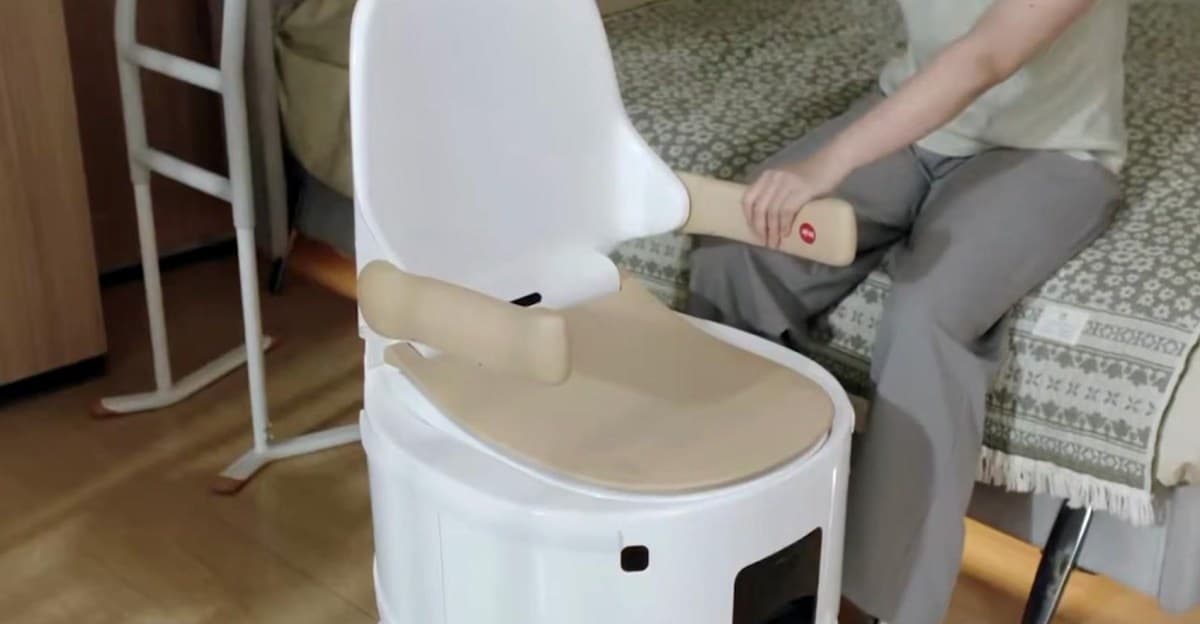
A Chinese company has unveiled a toilet that drives itself to the user, aiming to solve one of the most basic challenges for people with limited mobility. The Xiaoban, developed by Yueban, made its debut at an elderly care expo in Shanghai. It uses LIDAR and a suite of sensors to navigate homes autonomously, similar to high-end robot vacuums.
Designed for elderly individuals, people recovering from injuries and those with disabilities, the Xiaoban toilet eliminates the need to walk to a bathroom. Yueban positions it as an assistive device rather than a luxury smart home gadget. The company has not confirmed international availability. In China, the price is set at 28,999 yuan, roughly $4,300.
How the Xiaoban Works
The toilet relies on the same technology that powers modern robotic vacuum cleaners. LIDAR sensors map the surrounding environment. Cameras and infrared sensors detect obstacles and people. The unit can be summoned via a remote control or a mobile app. Once the user is done, the toilet returns to its charging dock automatically.
The system includes features common in high-end toilets such as heated seats, bidet functions and self-cleaning capabilities. But the key differentiator is the autonomous movement, which Yueban says was developed specifically for accessibility. The toilet can navigate around furniture, open doors and stop if it detects a person or pet in its path.
Why This Matters
This device directly addresses a growing need as populations age in many developed countries. Falls and mobility issues make bathroom trips dangerous for elderly individuals. A self-driving toilet reduces the risk of falls and allows people to live independently longer. It also reduces the burden on caregivers who often assist with bathroom visits.
However the high price tag limits its reach to those who can afford a significant investment. For now the Xiaoban is a premium product. If production scales and costs drop, such devices could become standard assistive technology in nursing homes and private residences. The expo in Shanghai underscores a broader trend of robotics companies focusing on elderly care rather than industrial applications.
Market and Industry Trends
Yueban is not the first company to apply autonomous navigation to unconventional objects. Robot wheelchairs, self-driving hospital beds and even autonomous shopping carts have emerged in recent years. The bathroom remains a frontier for smart home innovation. Combining sanitation with mobility is a logical next step for assistive robotics.
The global market for assistive technologies is expected to grow rapidly as the number of people over 65 increases. Products that merge robotics with daily living tasks often carry high upfront costs. But they may reduce long term healthcare expenses by preventing injuries and delaying the need for full time care. The Xiaoban toilet represents a specific solution that could inspire similar products from competitors.
Yueban has not announced plans to sell the Xiaoban outside China. Export would require certifications and adaptations to different plumbing standards. Still the concept demonstrates how far autonomous navigation technology has come. It is no longer limited to cleaning floors. It now helps with intimate human needs.