Editor: Porcia Akua Holmes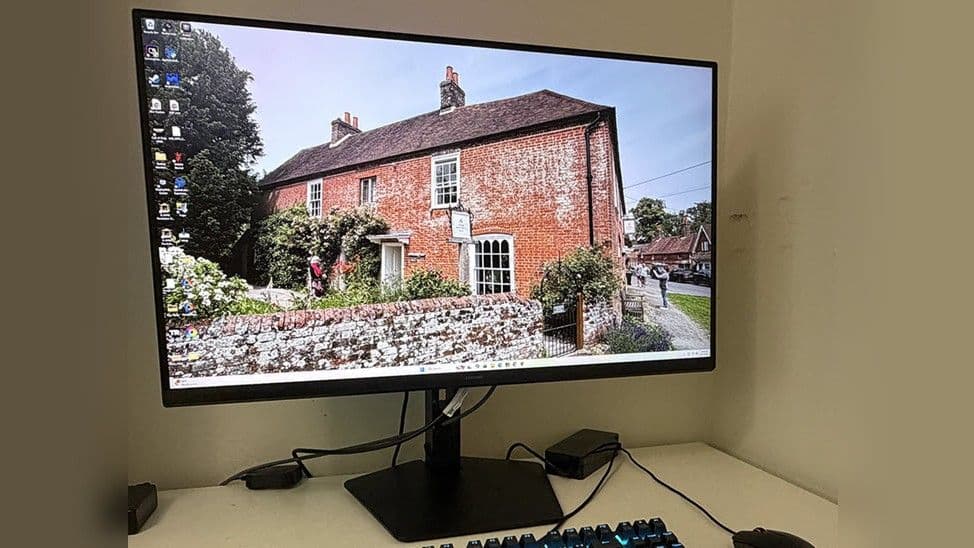
Samsung has introduced the Odyssey G80HS, a 32-inch IPS gaming monitor that delivers a native 6K resolution of 6144x3456 pixels at 165 Hz. The display also includes a dual-mode function that drops to 3072x1728 at 330 Hz, allowing gamers to choose between maximum detail and extreme refresh rates.
The 6K Leap
Since the early days of flat-panel displays, pixel density has steadily climbed. The Odyssey G80HS takes a significant step with 224 pixels per inch on a 32-inch screen. That density rivals professional reference monitors while maintaining a 16:9 aspect ratio. The monitor achieves this with a 1ms response time and wide DCI-P3 color coverage exceeding 90%.
The panel does not use Quantum Dots, yet it delivers solid out-of-box accuracy. With calibration, users can reach reference-level color gamma and grayscale tracking. An sRGB mode is available for content creators who need accurate BT.709 color for SDR content.
Dual-Mode and Hardware Demands
Running 6K at high frame rates requires serious hardware. The G80HS needs a GPU with DisplayPort 2.1 or HDMI 2.1. Only cards like the GeForce RTX 5090 can push over 120 fps at full resolution. The dual-mode feature addresses this gap: at 3072x1728 the monitor runs at 330 Hz, making it accessible to RTX 4090 owners as well.
Adaptive-Sync works across both modes, and input lag remains extremely low. One tradeoff exists: overdrive and Adaptive-Sync cannot be enabled simultaneously. By upping the pixel density, Samsung gives gamers and creators a single screen that serves both high-fidelity work and competitive gaming at extreme speeds.
Why This Matters
The Odyssey G80HS signals a shift in what consumers can expect from gaming monitors. It demonstrates that 6K is no longer reserved for professional editing bays. For gamers and creators, the monitor offers a single screen that serves both high-fidelity content work and competitive gaming at extreme refresh rates. The dual-mode resolution is a pragmatic solution to the GPU power gap, ensuring the monitor remains relevant as hardware evolves. Pricing at $1,599 positions it as a premium but not inaccessible option, potentially accelerating adoption of higher-resolution displays in the mainstream market.