Editor: Porcia Akua Holmes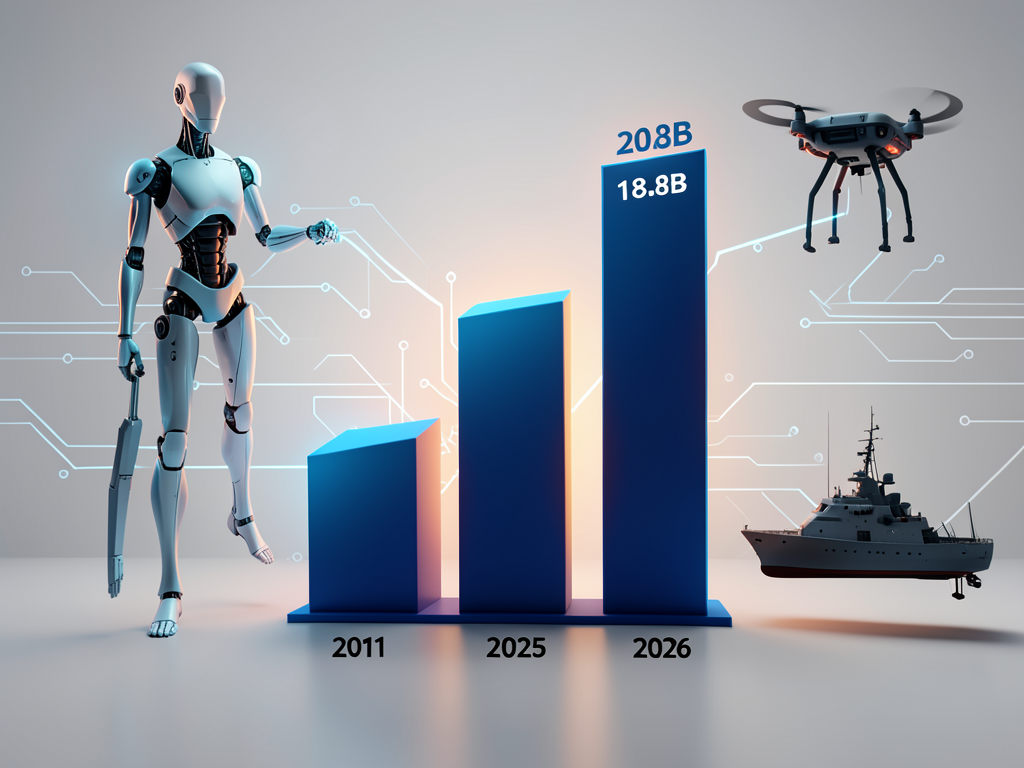
A dramatic shift in venture capital sentiment has propelled robotics startup funding to unprecedented levels in 2026. Global investment in the sector has already reached $18.8 billion, surpassing the $15 billion raised in all of 2025 and eclipsing the previous record of $14.1 billion set in 2021. With more than six months remaining in the year, the total is expected to climb even higher.
What Is Driving the Surge
The record funding reflects a fundamental change in how investors view robotics. Traditionally seen as an expensive, asset-heavy hardware gamble, the sector now attracts capital through advances in embodied AI. This technology gives robots a physical form that can perceive and act in the real world in real time. Investors are betting that these machines will transform industries ranging from defense to manufacturing to logistics.
The shift is also fueled by a growing appetite for autonomous systems. Military applications, in particular, are drawing massive investments as nations race to deploy unmanned vessels and drones. At the same time, general-purpose humanoid robots promise to reshape labor markets, spurring interest from both venture firms and corporate venture arms.
Key Players and Mega-Rounds
A handful of startups have captured the largest chunks of capital this year. Three of the biggest rounds illustrate the breadth and ambition of the current wave.
Other notable raises include a $1 billion Series A for Beijing-based Shihang Intelligent, which builds water robots, and a $520 million extension for Apptronik, an AI-powered humanoid robotics company backed by Google and Mercedes-Benz. Austin has emerged as a hotbed, with Mind Robotics, a Rivian spinout, also raising $500 million in a Series A co-led by Accel and Andreessen Horowitz.
Why This Matters
The robotics funding boom signals more than just investor optimism. It points to concrete shifts in technology, economics and global power dynamics. The implications extend well beyond the startup ecosystem.
For consumers and businesses, these developments mean robots will become more capable and accessible sooner than expected. Logistics companies, manufacturers and even healthcare providers are likely to integrate autonomous systems in the next few years. The current funding wave is laying the groundwork for a world where intelligent machines work alongside humans in everyday settings.