Senior Editor: Alan Agbele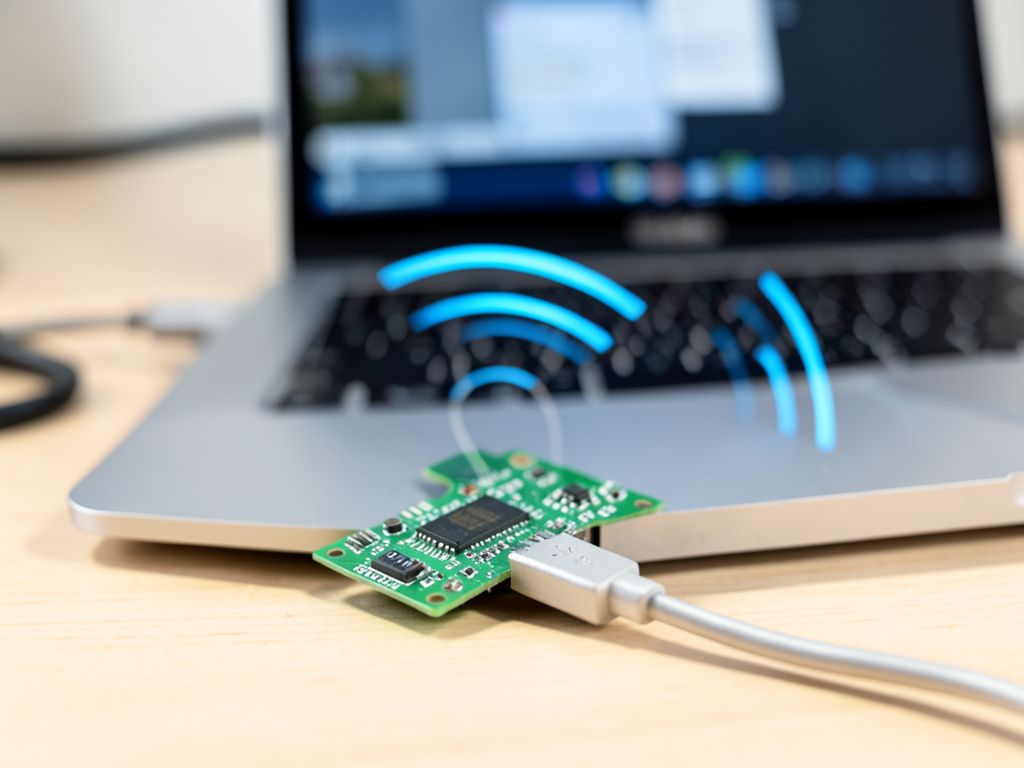
The Raspberry Pi Pico W, a microcontroller board priced around $6, has gained a new capability. A community-driven project now allows the device to function as a USB Wi-Fi adapter. This turns the tiny board into a flexible networking tool for computers or single-board systems lacking built-in wireless connectivity.
How a Microcontroller Becomes a Network Adapter
The Pico W is built around the RP2040 microcontroller and includes an Infineon CYW43439 chip for Wi-Fi and Bluetooth. By default, the board runs standalone code. However, custom firmware can enable USB device mode, allowing the Pico W to appear as a network interface to a host computer. When connected via USB, the Pico W bridges the host to a Wi-Fi network, effectively functioning as a USB dongle.
This process requires flashing special firmware onto the board and configuring the host system to recognize it as a network adapter. The project is open source and relies on the Pico SDK and LWIP network stack. Early reports indicate that the setup works on Linux systems and may extend to other operating systems with additional drivers.
Implications for Prototyping and IoT Development
This development matters for several reasons:
However, there are trade-offs. Performance will not match dedicated adapters. The Pico W's Wi-Fi chip supports 2.4 GHz only and the USB interface uses the RP2040's limited USB controller, which may cap throughput. Compatibility with Windows or macOS may require additional driver work.
Why This Matters
This project lowers the barrier to adding Wi-Fi to devices that lack it. For makers prototyping on older desktops or single-board computers with only Ethernet, a $6 Pico W can provide wireless connectivity. It also supports IoT development where temporary network access is needed during testing. As open-source hardware continues to blur lines between categories, the Pico W example shows how a single board can serve multiple roles, reducing cost and waste in prototyping cycles.
The broader trend is clear: microcontrollers are becoming more versatile, often replacing specialized peripherals. The Pico W as a USB Wi-Fi adapter is a small but practical step in that direction.