Senior Editor: Alan Agbele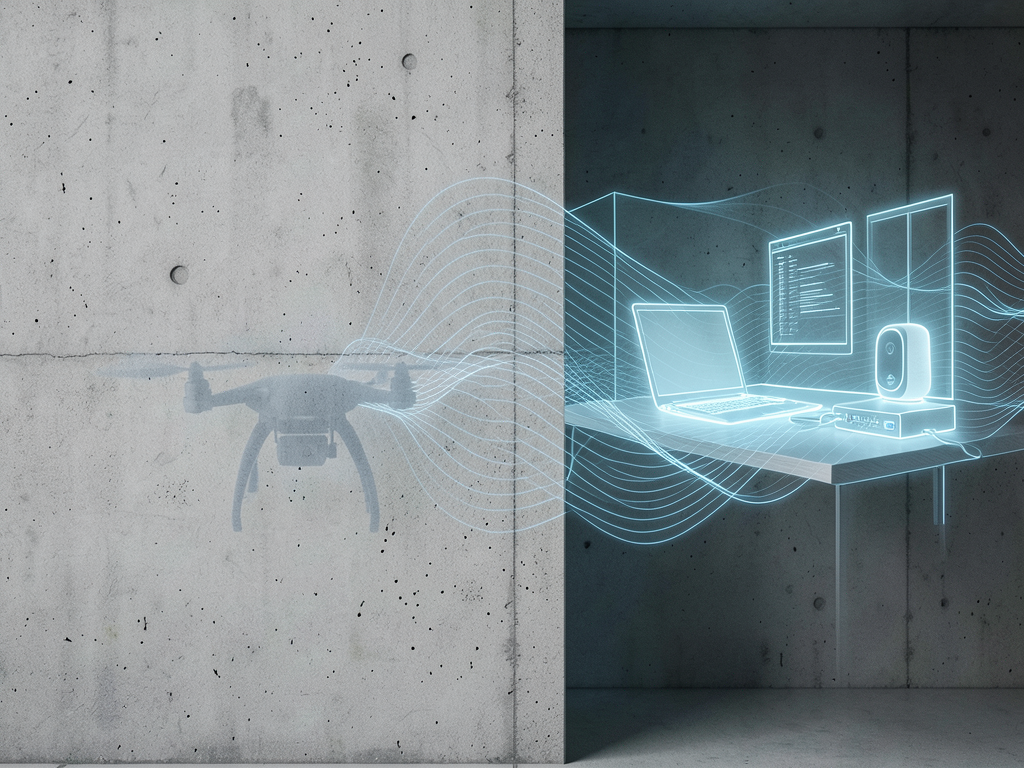
A newly demonstrated technology called QuadRF can detect drones and identify WiFi signals through solid walls, marking a significant advance in radio frequency surveillance. The system analyzes ambient radio waves to locate and classify devices without physical access, raising urgent questions about privacy and security in both consumer and military contexts.
How QuadRF Detects Through Walls
QuadRF works by analyzing changes in radio frequency patterns caused by objects and electronic devices. When a drone flies near a building or a WiFi signal propagates through a wall, QuadRF’s algorithms interpret those distortions to identify the source. The system can map WiFi networks and detect unauthorized drones without requiring line-of-sight access.
Privacy and Security Implications
The ability to see WiFi through walls and track drones without consent introduces serious privacy risks for individuals and organizations. Personal devices such as laptops, smart speakers and phones emit identifiable RF patterns. QuadRF could allow adversaries to map home layouts or monitor occupancy. Security teams, however, may find value in using the technology to detect unauthorized drones near sensitive sites such as airports or government buildings.
Why This Matters
The arrival of QuadRF shifts the balance between surveillance and privacy. For consumers, the technology means that private spaces may no longer be shielded from remote sensing. For regulators, it creates pressure to update laws governing passive RF monitoring, which currently has few restrictions. Security professionals will need to develop countermeasures, and manufacturers of WiFi equipment may face demands to obscure device signatures. The broader trend toward using radio frequency intelligence for everyday sensing will continue to accelerate, making this a milestone worth watching.