Editor: Porcia Akua Holmes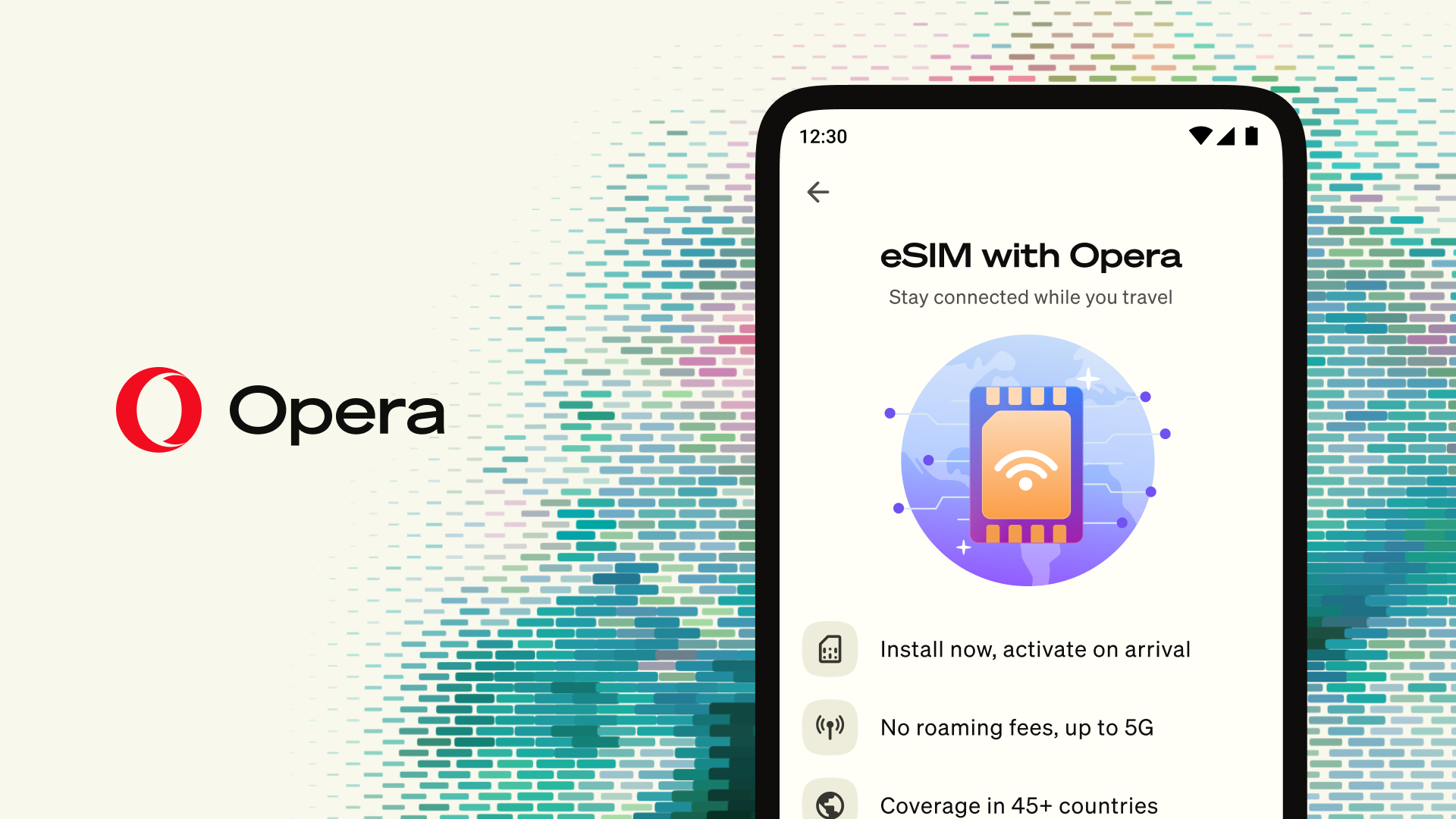
Opera has turned its Android browser into a mobile connectivity hub, embedding a built-in eSIM that gives travelers 3GB of complimentary data across 47 destinations. The free tier lasts three days and requires no payment, email entry or separate app download, solving one of the most common frustrations for international travelers.
How Opera's eSIM Changes Travel Connectivity
The new feature installs directly inside the Opera browser for Android. Travelers can set up the eSIM before departure and activate it upon arrival, bypassing the need to find a local SIM or rely on expensive carrier roaming. The free 3GB allowance refreshes with a new three-day window each time it is used, though users can purchase additional plans once it expires.
Paid options include 3GB, 5GB and 10GB plans valid for 30 days. Opera says its pricing is about 33% cheaper than six major competitors based on a 5GB United States comparison, though actual costs vary by destination. The service supports 5G where networks allow, and users can keep their normal cellular number active on a separate SIM.
Opera's Broader Platform Play
The eSIM joins a suite of travel tools already inside the browser, including a VPN and data-saving mode. Tim Lesnik, Product Manager of Opera, noted that the company has spent decades getting people online where data is expensive. “Roaming is the same problem in a different shape: you pay a disproportionate amount for the same internet you have at home,” he said.
The combination of eSIM, VPN and compression tools positions the browser as a travel utility rather than a simple web gateway. Travelers no longer need to juggle multiple apps for connectivity. The browser itself becomes the entry point for data, a shift that other browser makers including Chrome may need to evaluate as user expectations evolve.
Why This Matters
This move puts direct pressure on mobile carriers to reconsider pricing for international roaming. If a free browser-based eSIM can handle basic connectivity, the value of expensive roaming plans erodes. For travelers, the feature removes friction at the border and reduces reliance on unpredictable public Wi-Fi.
Opera's move also signals a wider trend of browsers absorbing functions once handled by dedicated apps. With VPN and now eSIM built in, the browser becomes a platform capable of managing network access itself. Competitors like Chrome may be forced to respond, although Google has shown little interest in bundling carrier services. The long-term implication is that connectivity could become a standard browser feature, fundamentally altering how travelers stay online abroad.