Senior Editor: Alan Agbele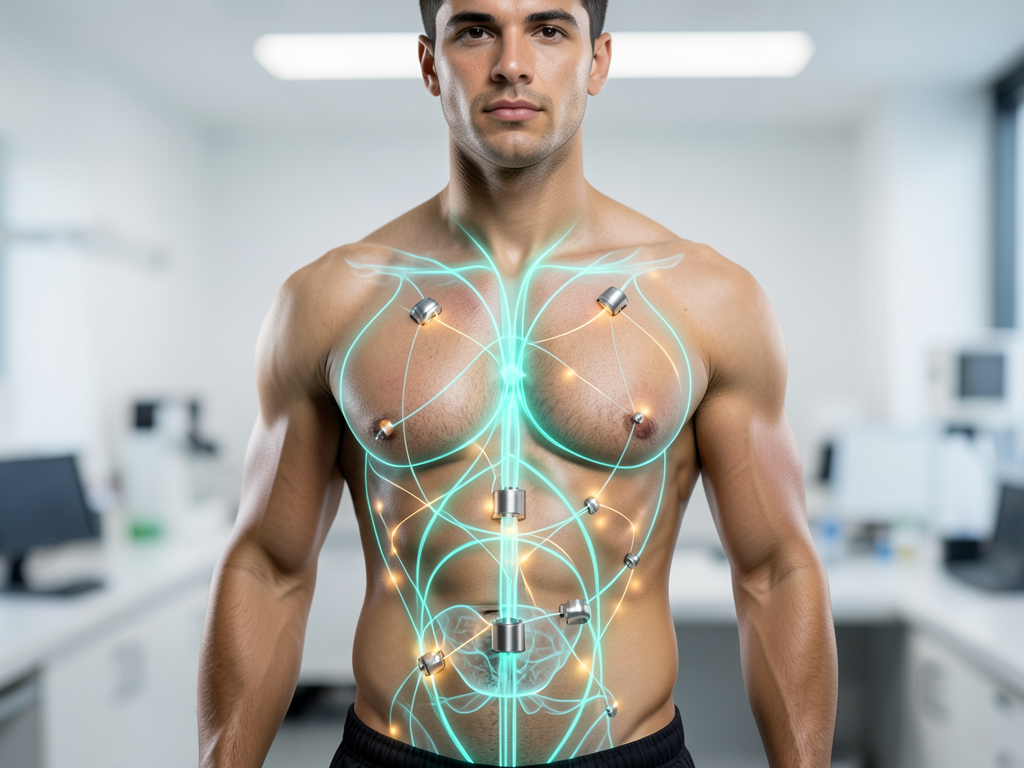
Researchers at Georgia Tech have built a communication system that turns human tissue into a living network cable for medical implants. The approach eliminates the need for radio antennas and could significantly extend battery life for devices like pacemakers and insulin pumps.
How the System Works
The new network sends signals through the body's conductive tissue instead of through the air. Alex Abramson, a Georgia Tech engineer and co-author of the study, says the problem with existing radio protocols is clear. Bluetooth components, when activated, can cut an implant's battery life by up to 90 percent. The tissue-based approach keeps implants in a low-power state until they need to communicate, enabling millisecond response times without the constant energy drain.
This method, described as intrabody networking, uses the body itself as the wiring. Sensors and actuators can exchange data without the interference and energy costs of radio waves. The team demonstrated the concept in a laboratory setting, showing that signals transmitted through tissue maintain integrity over distances relevant to human anatomy.
Key Advantages Over Bluetooth
Why This Matters
Current implant technology treats each device as an island. A pacemaker and an insulin pump, for example, operate independently even when a patient needs both. With intrabody networking, those implants could share data and coordinate therapy automatically. This could lead to smarter treatment regimens that adjust doses or pacing in real time based on combined sensor readings.
The work from Georgia Tech addresses a fundamental limitation of wireless implants: battery life. Bluetooth Low Energy, despite its name, still imposes a heavy cost on small batteries. By using the body itself as the communication channel, the new system could extend implant lifespan and reduce the need for surgical replacements. Clinical adoption, however, will require further testing in living tissue and miniaturization of the circuitry.
What Comes Next
The Georgia Tech team plans to test the system in animal models and eventually in human subjects. They also aim to integrate the intrabody networking protocol with existing implant designs, making it a practical upgrade for manufacturers. If successful, this approach could redefine how medical implants communicate, turning the human body into a coordinated network of smart devices.