Senior Editor: Alan Agbele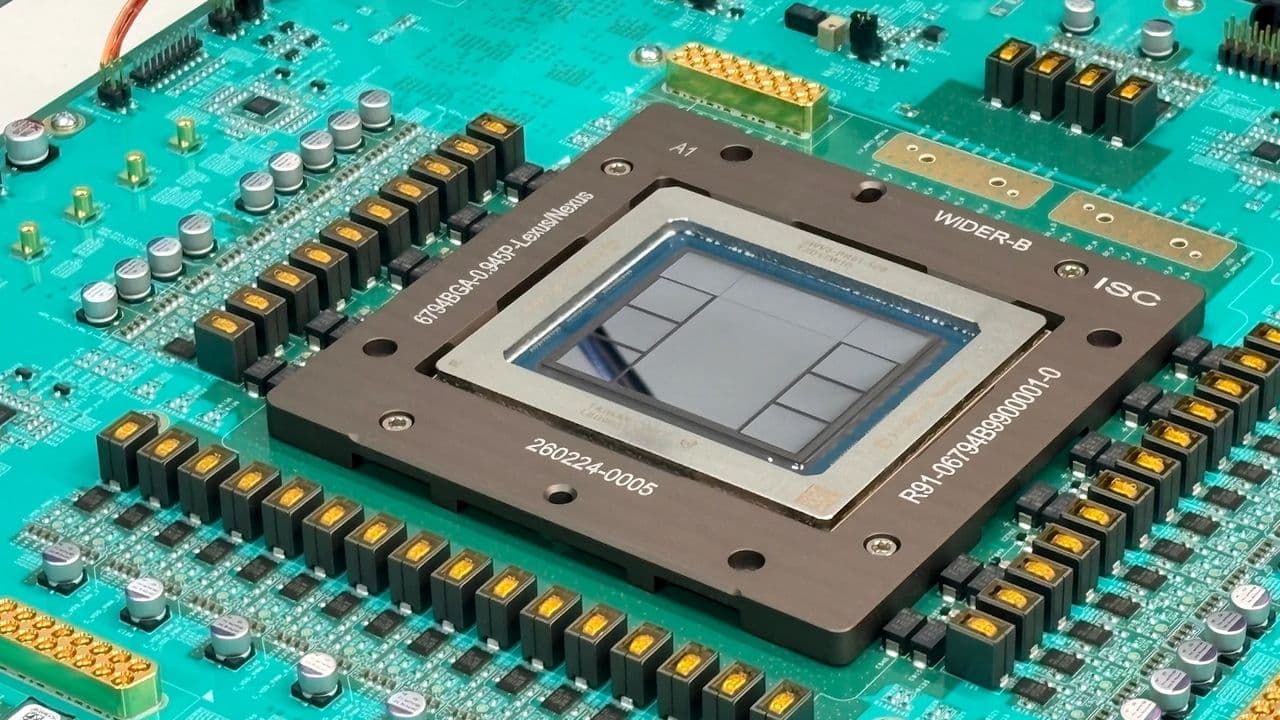
OpenAI is preparing to tap Samsung Foundry for production of its upcoming artificial intelligence processors, signaling a major expansion of its chip manufacturing strategy. Harrison Kim, General Manager of OpenAI Korea, disclosed the plan at a press conference in Seoul, revealing that the AI company intends to double-source its next-generation chips with both TSMC and Samsung Foundry.
The Dual-Sourcing Strategy
Kim said that joint production and research on next-generation chips has been one of the most significant areas of progress between OpenAI and Samsung Electronics. The comment came days after Samsung Electronics and Broadcom announced a $200 billion strategic partnership through 2030 covering foundry, memory and packaging technologies for AI infrastructure.
The company did not specify whether Samsung will make a second source for the current Jalapeño chip or an entirely new processor. Analysts suggest that the first-generation chip is already in mass production at TSMC, so the dual source likely applies to its successor.
Why This Matters
This move reshapes the AI chip supply chain. By adding a second foundry partner, OpenAI reduces its reliance on a single manufacturer in Taiwan, a critical consideration given geopolitical tensions. For Samsung Electronics, winning OpenAI as a foundry customer validates its advanced process technology and could lead to billions of dollars in revenue. The strategy also puts pressure on AMD and other AI chip designers as OpenAI moves toward vertically integrated hardware production. If OpenAI can secure massive volumes from both TSMC and Samsung, it may accelerate deployment of inference accelerators across data centers worldwide, driving down costs and expanding access to AI compute.
Scalability and Volume Implications
The decision to double-source points to extraordinary volume requirements. Tesla's AI5 processor uses a similar dual-sourcing approach across three high-volume applications. OpenAI, however, faces even greater demand from cloud inference workloads. The company's need for CPUs and dedicated AI accelerators continues to grow as its models expand. Dual-sourcing from TSMC and Samsung Foundry ensures supply chain flexibility and cost optimization. It also signals confidence in Samsung's foundry capabilities, which have lagged behind TSMC in recent years.
Harrison Kim noted that the progress with Samsung Electronics extends beyond chip manufacturing to include research collaboration on next-generation silicon. The general manager of OpenAI Korea emphasized that this cooperation marks a deep strategic relationship, not merely a supply contract. For Samsung Foundry, landing a customer like OpenAI provides a high-profile win that could attract other AI companies.
Broadcom remains a central partner in this effort. Under the existing agreement, OpenAI pays Broadcom to design each custom ASIC and then selects the foundry. Broadcom's alliance with Samsung, valued at over $200 billion through 2030, covers advanced foundry, memory and packaging technologies. This structure allows OpenAI to leverage Broadcom's expertise while gaining access to multiple manufacturing sources. The result is a production ecosystem that can scale to meet OpenAI's massive requirements for next-generation AI accelerators.