Senior Editor: Alan Agbele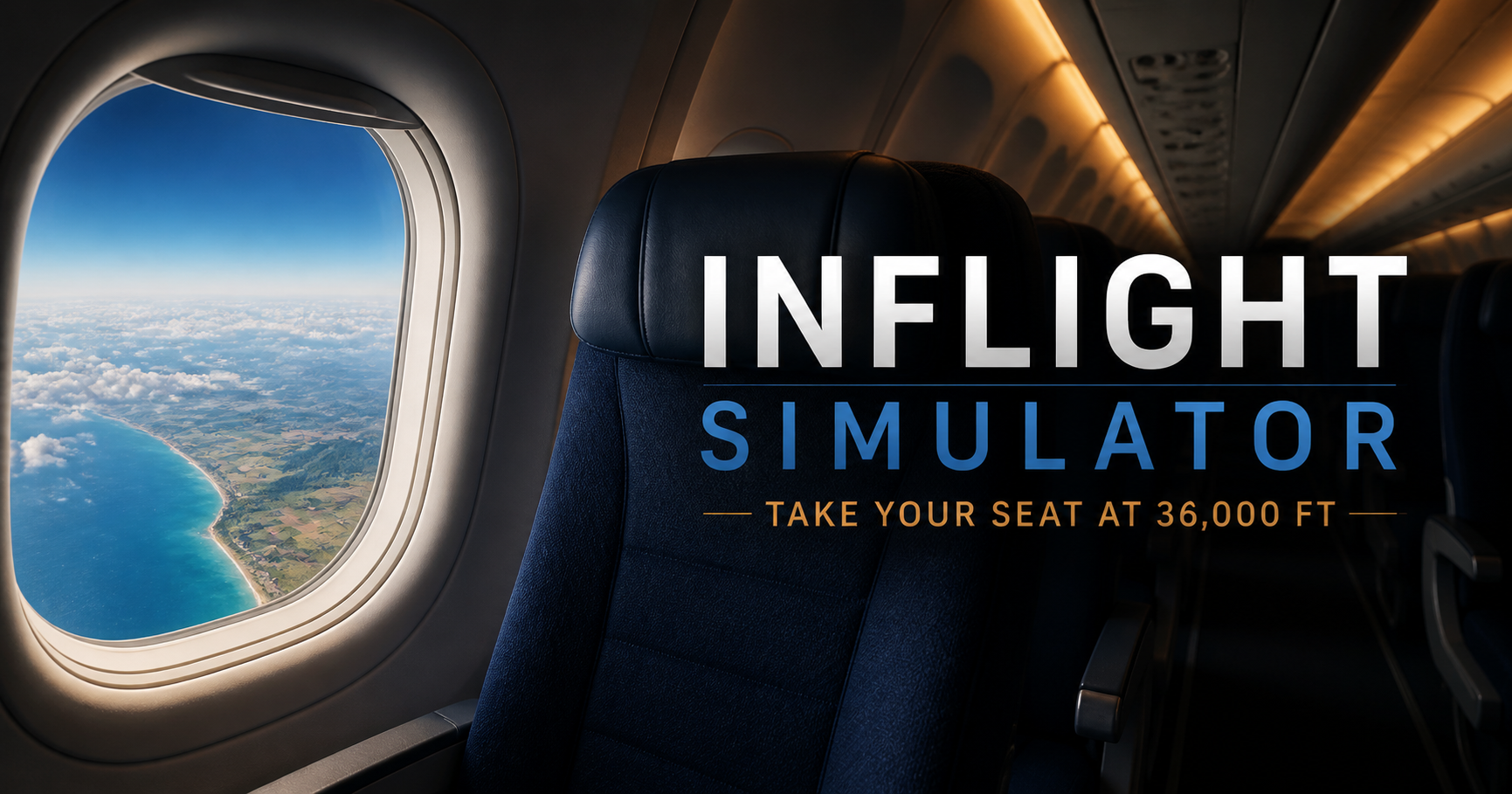
A developer has released a new project on Show HN that challenges the core fantasy of most simulation games. Instead of placing players in the cockpit as a skilled pilot, this flight simulator puts them in the economy seat as a passive passenger. The experience is deliberately uneventful, designed to replicate the tedium and isolation of commercial aviation.
The Passenger Perspective
Most flight simulators reward skill, precision and control. This one rewards patience. Players board a plane, take their seat and observe the journey from start to finish. There are no controls to manipulate, no emergencies to solve and no way to influence the outcome. The only task is to sit through the flight.
The developer described the concept as a reaction to the hyperactive nature of most video games. By removing agency, the project forces players to confront boredom and stillness. Some early commenters on Show HN called the idea refreshing while others questioned whether it qualifies as a game at all.
Features of an Anti-Simulator
The simulator includes a handful of deliberate design choices that reinforce its quiet tone:
Why This Matters
This project signals a growing appetite for unconventional experiences that prioritize mood over mechanics. In an industry dominated by high-stakes action, games that embrace stillness offer a counterprogramming niche. If successful, the concept could inspire other developers to experiment with inactive roles such as museum visitors, hospital patients or courtroom spectators. For players, it raises a question about what makes an activity worthwhile when no goal exists.
The simulator also highlights how Show HN continues to serve as a launchpad for experimental software. The platform let the developer bypass traditional distribution gatekeepers and test a polarizing idea directly with an engaged audience. Whether embraced or dismissed, the project forced a conversation about the boundaries of interactive entertainment.
The Boredom Factor as Design Feature
Boredom rarely appears in discussions of immersive design. Most developers treat any moment of inactivity as a failure state. This simulator deliberately courts that feeling, asking players to sit with discomfort instead of escaping it. Some users on Hacker News reported finding the experience meditative while others called it tedious. The split reflects a deeper divide in how people define fun.
The developer acknowledged these reactions openly in comments on Show HN, noting that the game is not meant for everyone. That honesty itself became part of the story. By refusing to apologize for its slow pace, the project stands as a statement against engagement metrics and dopamine-driven loops.
Asking Different Questions
The flight simulator does not ask players to master a system. It asks them to exist inside one. That shift in focus may seem trivial but it carries implications for how developers think about simulation as a medium. Instead of teaching skills, the game teaches presence. Instead of offering escape into heroism, it offers escape into mundanity.
Whether this specific project gains a lasting audience remains unclear. Its value may lie more in the conversation it started than in the hours logged. For now, the passenger simulator serves as a reminder that even the most established genres can be turned inside out with nothing more than a change in perspective.