Editor: Porcia Akua Holmes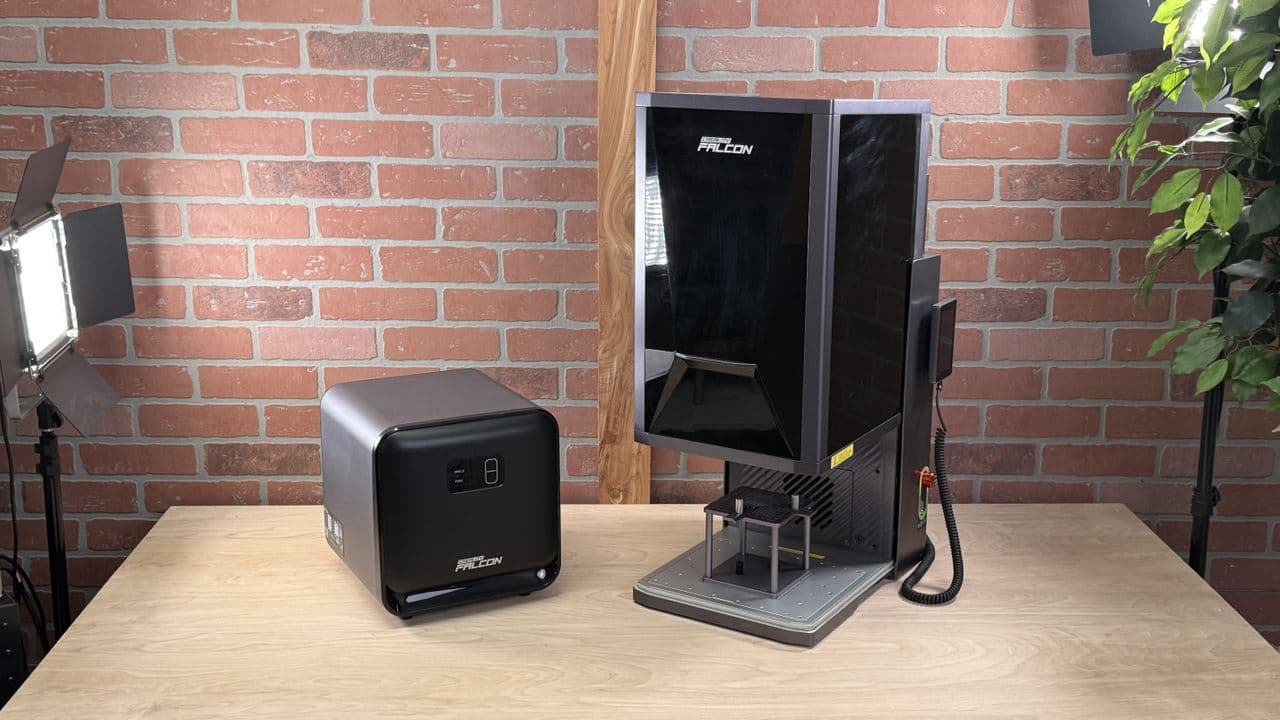
The Creality Falcon T1 promises a one-machine solution for diverse laser engraving tasks. With swappable diode, fiber, UV and MOPA modules, it can handle everything from wood engraving to crystal carving. But early adopters face a steep price, incomplete module lineup and support issues that resemble a beta program more than a finished product.
Creality's Flexi-Drive system uses a galvanometer to position the laser beam at high speeds. The base unit ships with a 20W diode laser and a 175 x 175 mm engraving area. Optional accessories like a conveyor belt and rotary attachment expand its capabilities. The modular approach is appealing on paper but quickly becomes expensive in practice.
The Modular System: Power and Price
The Falcon T1 supports five laser types. Each module targets a specific application and comes with a separate price tag. The total cost for a fully equipped machine exceeds $9,800 before accessories. That figure places the Falcon T1 firmly in professional territory where reliability and support are critical.
Creality shipped three modules for testing: the 40W diode, 20W fiber and 5W UV. The MOPA laser was not available. That missing module is crucial for anyone who needs color marking or high-power versatility.
Staggered Rollout and Support Challenges
The UV module is expected to launch in late July or early August, with the MOPA following roughly one month later. That staggered timeline creates a dilemma for buyers who need all capabilities. Purchasing the base machine now means waiting months for the remaining modules.
Testing revealed several obstacles. Software glitches interrupted workflows. Replacement parts took days to arrive. Creality's support team is based in China and scheduled a late-night video call because no US-based support exists. That level of assistance may be tolerable on a $500 hobby machine but feels inadequate for a system that can exceed $10,000.
These issues suggest the Falcon T1 is not fully mature. Early adopters should expect to act as beta testers while Creality refines hardware and software.
Why This Matters
The Falcon T1 targets serious hobbyists and small business owners who need versatility in a single unit. A comparable collection of dedicated machines from established brands like Epilog or Boss Laser would cost significantly more, but those units come with proven reliability and local support. The Creality system offers lower entry cost for the base unit but carries hidden expenses and uncertainty.
Businesses that depend on consistent output cannot afford downtime from software crashes or delayed parts. Hobbyists with patience may find the modular concept appealing, but the premium price demands a polished experience. Until Creality delivers all modules and stabilizes its support infrastructure, the Falcon T1 remains a promising concept rather than a complete solution.
Buyers should evaluate whether the modular flexibility justifies the risk. Waiting until the full module lineup is available and initial bugs are resolved could save significant frustration and money.