Senior Editor: Alan Agbele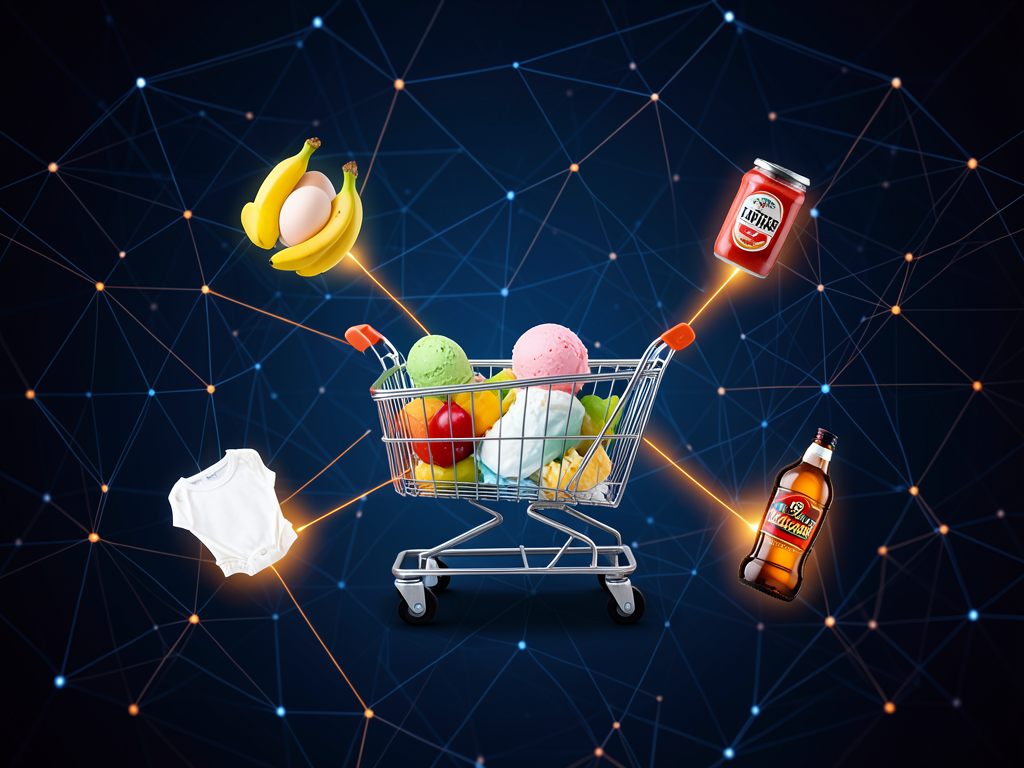
A data scientist’s deep dive into 3.2 million grocery orders from Instacart has surfaced a series of unexpected product pairings, turning the mundane act of shopping into a window on consumer psychology. The analysis, dubbed Funny item co-occurrences, applies market basket analysis to identify items that appear together far more often than chance would predict. The results range from the intuitively logical to the truly bizarre.
Data Mining at Scale
The dataset covers 3.2 million orders placed through Instacart, each containing multiple items. The researcher applied the Apriori algorithm to compute lift scores for every possible two-item combination. A lift above 1 indicates a positive association: items that appear together more frequently than expected. The approach is identical to the market basket analysis that powers recommendation systems across e-commerce platforms. What sets this project apart is the sheer scale of the data and the public’s appetite for quirky correlations.
Funny Co-Occurrences Unearthed
Among the thousands of associations, a handful stand out for their unexpected nature. The analysis groups these into categories such as sweet and savory combos or health versus indulgence. Examples include:
These findings echo the famous Walmart beer-and-diapers correlation, yet the Instacart dataset includes modern twists like plant-based meats paired with craft soda.
Why This Matters
The Funny co-occurrence analysis is more than a novelty. For Instacart and similar platforms, understanding which products naturally go together can improve recommendation algorithms, optimize warehouse picking routes, and even inform promotional bundling. For consumers, these patterns reveal subtle influences on everyday choices: a shopper who buys kale might also buy premium chocolate, suggesting a broader shift toward balancing health with indulgence. The findings underscore how retail data, when mined with the right tools, can expose the unspoken logic behind what ends up in our carts. As online grocery grows, such insights will become central to personalization efforts.
Limitations and Next Steps
Not every high-lift pairing implies causation. The analyst acknowledges that many co-occurrences may stem from shared dietary preferences or seasonal trends rather than direct product complementarity. Future work could incorporate temporal data or customer segmentation to refine the patterns. Nonetheless, the project demonstrates that even a straightforward application of association rule mining on a large dataset can yield engaging and potentially valuable discoveries.