Editor: Porcia Akua Holmes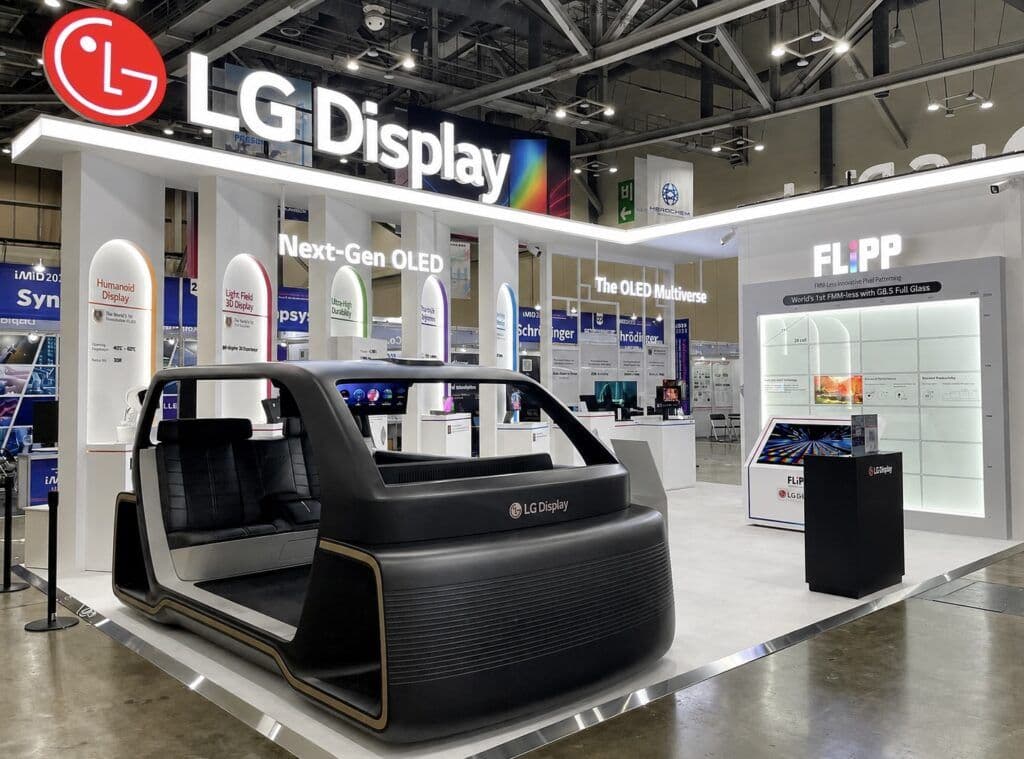
LG Display has unveiled a new OLED manufacturing technique called FLiPP that replaces Fine Metal Masks with photolithography. The method promises brighter, longer-lasting panels and lower production costs, potentially reshaping the display industry.
How Photolithography Replaces Metal Masks
Traditional OLED deposition relies on Fine Metal Masks as stencils to deposit organic LEDs onto the glass. The mask can sag, causing uniformity problems, and it wastes up to 70% of the organic material. FLiPP instead deposits the organic layer uniformly across the substrate. A photoresist layer is applied, and ultraviolet light through a photomask hardens the desired areas. A chemical bath removes the rest, leaving only the patterned subpixels.
The process repeats for red, green and blue subpixels. Key advantages of FLiPP include:
Why This Matters
FLiPP could make RGB OLED more commercially viable. Current flagship approaches from Samsung Display (QD-OLED) and LG Display (WOLED) rely on white or blue LEDs passing through color filters. RGB OLED directly emits red, green and blue light, offering wider color gamut and better efficiency. Combining FLiPP with RGB OLED could deliver exceptional color volume and address traditional weaknesses such as burn-in risk. The elimination of Fine Metal Masks also removes a major manufacturing bottleneck, potentially accelerating adoption of OLED for large-screen televisions and monitors. The consumer impact is clear: brighter, longer-lasting displays with potentially lower retail prices.
Industry Implications
LG Display plans to apply FLiPP to its RGB OLED technology, a move that would directly challenge Samsung Display's dominance in high-end panels. The photolithography process borrows from semiconductor manufacturing, allowing finer resolution and better uniformity. The final image quality benefits from the increased aperture ratio, making colors more vivid and text sharper. Industry analysts see FLiPP as a breakthrough that could extend OLED's competitive edge against LCD and microLED alternatives over the next five years.