Senior Editor: Alan Agbele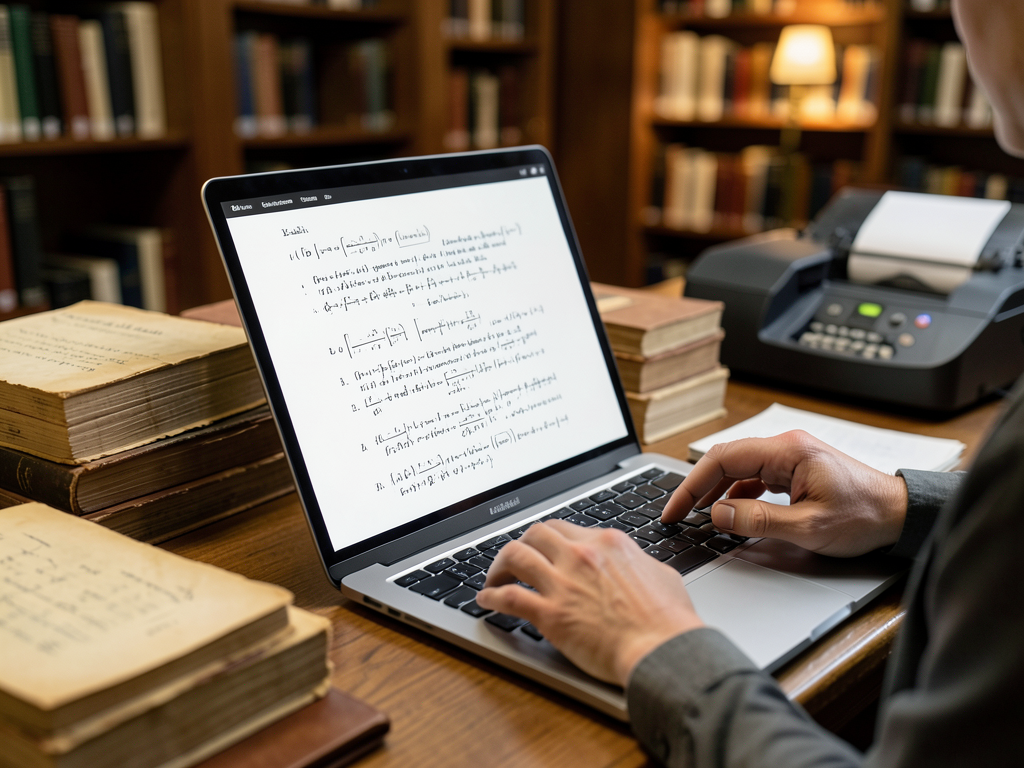
A movement to bring vintage scientific papers into the digital age is gaining traction, fueled by a familiar tool in academic circles: LaTeX. Researchers and archivists are using the typesetting system to faithfully recreate decades-old manuscripts, turning scanned images into machine-readable, citation-friendly documents. The result is a growing library of historically important research that can be searched, copied and built upon with modern tools.
How the Process Works
Converting a vintage scientific paper into LaTeX is a painstaking process. A volunteer starts with a high-resolution scan of the original publication and transcribes every word, equation and footnote. The LaTeX code is then compiled to produce a PDF that matches the original page layout but with live text — selectable, searchable and ready for modern citation managers. Tables and figures must be recreated from scratch using vector graphics or fresh scans.
Why This Matters
The digitization of vintage scientific papers does more than declutter library shelves. It directly affects how quickly researchers can build on old discoveries. When a paper from 1950 exists only as a scan, searching for a specific term or equation is nearly impossible. A LaTeX version makes every word findable, every formula copyable and every reference clickable. The project also acts as a hedge against physical decay. Journals printed on acidic paper from the mid-20th century are literally crumbling in archives. LaTeX digitization creates a permanent, error-checked copy that can be stored and redistributed without further degradation.
The effort, however, raises questions about who owns the rights to early scientific work. Many of the papers being converted were published by societies that still hold copyright. Volunteers typically work only on material that is confirmed to be in the public domain or that has been explicitly released by the publisher. The legal landscape remains uneven across countries, complicating large-scale adoption by institutions.
Community-Driven Preservation
The labor behind these conversions comes almost entirely from volunteers, many of whom are active LaTeX users who want to give back to the scientific community. Forums and mailing lists coordinate which papers are in progress to avoid duplicate effort. A single paper can take anywhere from a few hours to several days depending on its length and the density of equations. The community maintains strict quality checks — each converted paper is reviewed by at least one other volunteer before being made publicly available.
The output is typically hosted on personal websites or academic repositories, sometimes gathered into collections focused on a specific journal or author. The format guarantees that the work will render identically on any system that supports LaTeX, a trait that many older PDFs lack. As a result, the project is slowly building a canonical digital library of 19th and 20th century scientific literature.