Senior Editor: Alan Agbele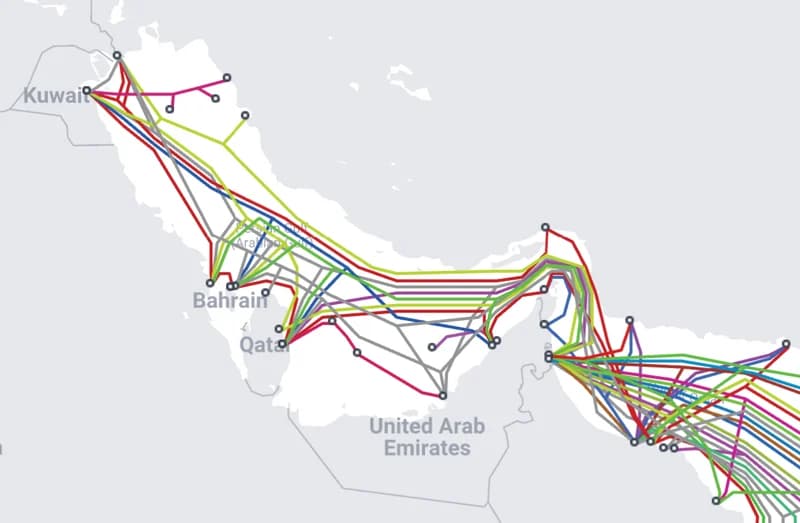
Iran has declared it will impose fees on Big Tech companies for undersea internet cables running through the Strait of Hormuz. The announcement by a military spokesperson signals a new escalation in the region's digital choke point.
Ebrahim Zolfaghari, a spokesperson for Iran's military and the Islamic Revolutionary Guard Corps, posted on May 9 that Iran will impose fees on internet cables. State-linked media outlets Tasnim and Fars later detailed plans to charge license fees to US tech giants for cable usage and maintenance.
According to The Guardian, the Tasnim proposal specifically names Meta, Google, Amazon and Microsoft. It claims Iran alone has the right to repair and maintain subsea cables in the area. The Strait of Hormuz is a critical maritime corridor for global data traffic, with many undersea cables passing through Omani waters.
It remains unclear how Iran could enforce such fees, given that most cable routes run through waters controlled by Oman. The threat may accelerate efforts by tech companies and Gulf states to find alternative routes bypassing the strait.
Why This Matters
Any disruption to subsea cables in the Strait of Hormuz could affect internet connectivity across the Middle East and parts of Asia. Big Tech companies rely on these cables for cloud services, data transfers and global communications. The Iranian move raises the stakes for regional infrastructure security and could push companies to diversify cable routes. For internet users in the region, the threat introduces uncertainty about future access and reliability.
Broader Context
The Strait of Hormuz has long been a flashpoint for geopolitical tension. Previous conflicts have halted cable projects and suspended repairs. The latest Iranian assertion adds a new layer of economic pressure, targeting the digital backbone of major technology firms. If implemented, the fees could set a precedent for other nations seeking leverage over global internet infrastructure.